Noisy continuous--opinion dynamics
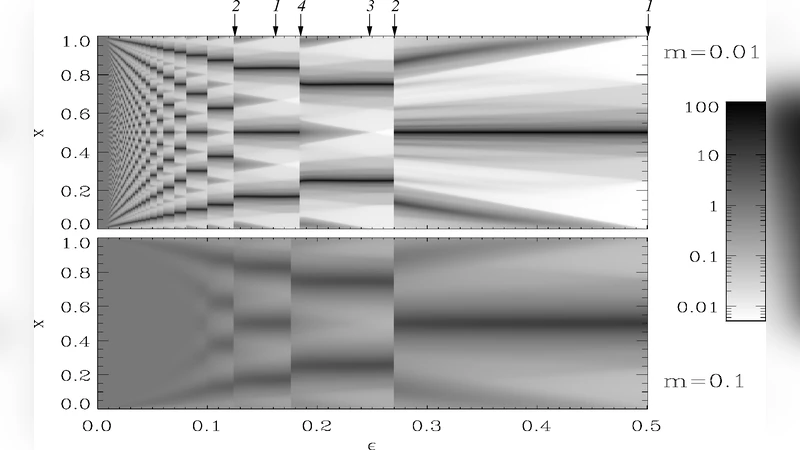
We study the Deffuant et al. model for continuous–opinion dynamics under the influence of noise. In the original version of this model, individuals meet in random pairwise encounters after which they compromise or not depending of a confidence parameter. Free will is introduced in the form of noisy perturbations: individuals are given the opportunity to change their opinion, with a given probability, to a randomly selected opinion inside the whole opinion space. We derive the master equation of this process. One of the main effects of noise is to induce an order-disorder transition. In the disordered state the opinion distribution tends to be uniform, while for the ordered state a set of well defined opinion groups are formed, although with some opinion spread inside them. Using a linear stability analysis we can derive approximate conditions for the transition between opinion groups and the disordered state. The master equation analysis is compared with direct Monte-Carlo simulations. We find that the master equation and the Monte-Carlo simulations do not always agree due to finite-size induced fluctuations that we analyze in some detail.
💡 Research Summary
The paper extends the classic Deffuant model of continuous‑opinion dynamics by introducing stochastic “free‑will” perturbations, referred to as noise. In the original model, agents meet in random pairwise encounters; if the absolute difference between their opinions is smaller than a confidence bound ε, both agents move toward each other’s opinion by a factor μ (usually μ=½). Otherwise no interaction occurs. The authors add a second mechanism: with probability m each agent, independently of any encounter, replaces its current opinion by a new value drawn uniformly from the whole opinion interval
Comments & Academic Discussion
Loading comments...
Leave a Comment