Seeking Core-Collapse Supernova Progenitors in Pre-Explosion Images
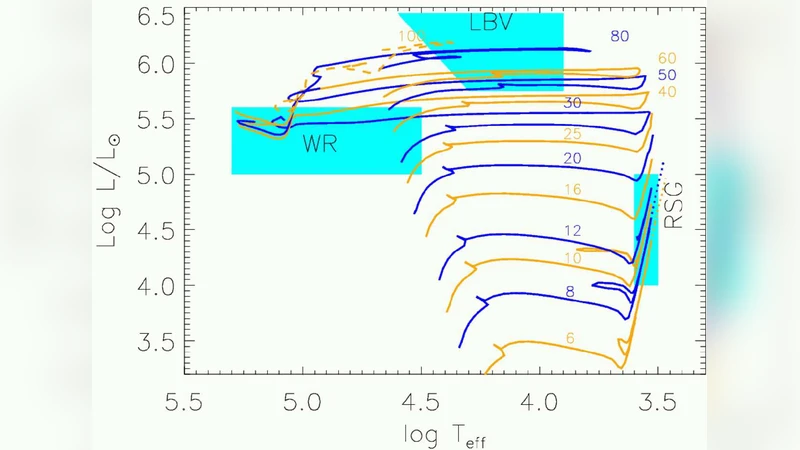
I summarize what we have learned about the nature of stars that ultimately explode as core-collapse supernovae from the examination of images taken prior to the explosion. By registering pre-supernova and post-supernova images, usually taken at high resolution using either space-based optical detectors, or ground-based infrared detectors equipped with laser guide star adaptive optics systems, nearly three dozen core-collapse supernovae have now had the properties of their progenitor stars either directly measured or (more commonly) constrained by establishing upper limits on their luminosities. These studies enable direct comparison with stellar evolution models that, in turn, permit estimates of the progenitor stars’ physical characteristics to be made. I review progenitor characteristics (or constraints) inferred from this work for each of the major core-collapse supernova types (II-Plateau, II-Linear, IIb, IIn, Ib/c), with a particular focus on the analytical techniques used and the processes through which conclusions have been drawn. Brief discussion of a few individual events is also provided, including SN 2005gl, a type IIn supernova that is shown to have had an extremely luminous – and thus very massive – progenitor that exploded shortly after a violent, luminous blue variable-like eruption phase, contrary to standard theoretical predictions.
💡 Research Summary
The paper provides a comprehensive review of what has been learned about the progenitor stars of core‑collapse supernovae (CCSNe) through the analysis of pre‑explosion imaging. By precisely registering high‑resolution pre‑ and post‑supernova images—most often obtained with the Hubble Space Telescope (HST) in the optical or with ground‑based telescopes equipped with laser‑guide‑star adaptive optics (AO) in the near‑infrared—researchers have now directly measured or placed stringent upper limits on the luminosities of roughly three dozen CCSN progenitors. The methodology is described in detail: (1) image alignment using hundreds of common field stars to achieve sub‑0.01″ astrometric precision; (2) photometric extraction of any detected source or, when no source is visible, determination of a 5σ detection limit based on background noise and exposure depth; (3) conversion of observed magnitudes and colors to absolute luminosities, followed by comparison with modern stellar evolution tracks (MESA, Geneva, Padova) that incorporate metallicity, rotation, and mass‑loss prescriptions; and (4) Monte‑Carlo propagation of observational and model uncertainties to derive probability distributions for the progenitor’s initial mass and evolutionary state.
The results are organized by supernova subtype. For Type II‑Plateau (II‑P) events, the progenitors are overwhelmingly red supergiants (RSGs) with initial masses in the range ≈8–16 M⊙, consistent with standard single‑star evolution models. Type II‑Linear (II‑L) supernovae tend to arise from slightly more massive (≈12–20 M⊙) RSGs or yellow supergiants (YSGs) that have experienced enhanced mass loss, accounting for their faster light‑curve decline. The IIb class shows a mixed population: many progenitors appear to be transitional objects that have shed most of their hydrogen envelopes, often evolving from an RSG phase toward a blue supergiant (BSG) or luminous blue variable (LBV) stage, as exemplified by SN 1993J and SN 2011dh (≈13–17 M⊙).
Type IIn supernovae are the most heterogeneous. The paper highlights SN 2005gl, whose pre‑explosion source was an extremely luminous (M_V ≈ –10) LBV‑like star with an estimated initial mass of 50–80 M⊙ that underwent a violent eruptive episode shortly before core collapse. This observation directly contradicts the conventional expectation that very massive stars should evolve to Wolf‑Rayet phases before exploding, and it supports a scenario in which some LBVs can explode during or immediately after an outburst.
For stripped‑envelope SNe Ib/c, direct detections are rare; most constraints are upper limits that suggest progenitors with initial masses ≤20 M⊙, either as helium‑core stars that have lost their envelopes via strong winds or, more plausibly, as members of interacting binary systems that have been stripped by a companion. The lack of luminous single‑star progenitors for Ib/c events reinforces the importance of binary evolution in producing these explosions.
The paper also discusses a few individual cases in depth, such as the nearby SN 2008bk (II‑P) whose progenitor was directly identified as an 8–9 M⊙ RSG, confirming that low‑mass massive stars can undergo core collapse, and SN 2005gl (IIn) as a prototype of LBV‑SN transition.
In conclusion, pre‑explosion imaging has become a cornerstone of CCSN progenitor studies. The growing sample of measured progenitor properties provides critical constraints on stellar evolution models, especially on mass‑loss rates, rotation, and the role of binary interaction. The observed diversity—particularly the presence of very massive LBV progenitors for IIn events and the apparent absence of single‑star Wolf‑Rayet progenitors for Ib/c—demands revisions to existing theoretical frameworks. Future facilities such as the James Webb Space Telescope (JWST) and the Extremely Large Telescopes (ELTs) will extend the reach of these studies to fainter, more distant galaxies, enabling statistically robust determinations of the progenitor mass function and a deeper understanding of the pathways leading massive stars to their spectacular deaths.