X-Ray Spectroscopy of Stars
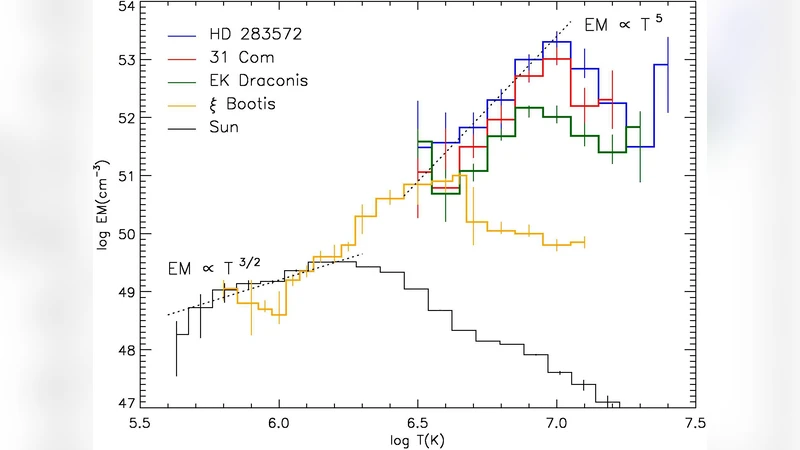
(abridged) Non-degenerate stars of essentially all spectral classes are soft X-ray sources. Low-mass stars on the cooler part of the main sequence and their pre-main sequence predecessors define the dominant stellar population in the galaxy by number. Their X-ray spectra are reminiscent, in the broadest sense, of X-ray spectra from the solar corona. X-ray emission from cool stars is indeed ascribed to magnetically trapped hot gas analogous to the solar coronal plasma. Coronal structure, its thermal stratification and geometric extent can be interpreted based on various spectral diagnostics. New features have been identified in pre-main sequence stars; some of these may be related to accretion shocks on the stellar surface, fluorescence on circumstellar disks due to X-ray irradiation, or shock heating in stellar outflows. Massive, hot stars clearly dominate the interaction with the galactic interstellar medium: they are the main sources of ionizing radiation, mechanical energy and chemical enrichment in galaxies. High-energy emission permits to probe some of the most important processes at work in these stars, and put constraints on their most peculiar feature: the stellar wind. Here, we review recent advances in our understanding of cool and hot stars through the study of X-ray spectra, in particular high-resolution spectra now available from XMM-Newton and Chandra. We address issues related to coronal structure, flares, the composition of coronal plasma, X-ray production in accretion streams and outflows, X-rays from single OB-type stars, massive binaries, magnetic hot objects and evolved WR stars.
💡 Research Summary
This review synthesizes the latest advances in stellar X‑ray spectroscopy made possible by the high‑resolution instruments aboard XMM‑Newton and Chandra. It is organized around two broad classes of objects—cool, low‑mass stars (including pre‑main‑sequence objects) and hot, massive stars (OB, binary systems, magnetic O‑type stars, and Wolf‑Rayet stars)—and examines how their X‑ray emission mechanisms differ, overlap, and inform our understanding of stellar atmospheres, winds, and feedback to the interstellar medium.
For cool stars, the dominant X‑ray source is a magnetically confined coronal plasma whose temperature distribution (10⁶–10⁷ K) and density structure can be diagnosed through line ratios of He‑like triplets (r, i, f components) and Fe XVII line pairs. High‑resolution spectra reveal multi‑thermal emission measures and allow estimates of loop lengths ranging from a few thousand to several hundred thousand kilometres. In pre‑main‑sequence stars, additional components appear: high‑density (nₑ ≈ 10¹² cm⁻³) plasma inferred from suppressed f‑lines points to accretion‑driven shocks at the stellar surface, while detection of fluorescent Fe Kα emission from circumstellar disks demonstrates direct X‑ray irradiation of the disk material. These diagnostics together map the geometry of accretion streams, the extent of the corona, and the interaction between star and disk.
The situation for massive stars is markedly different. Classical wind‑shock models, in which line‑driven outflows develop small‑scale instabilities that heat plasma to a few MK, cannot fully explain the observed hard X‑ray components (up to >10 keV), broad asymmetric line profiles, and periodic variability. High‑resolution spectra of single O‑type stars show that wind material is often channeled by large‑scale magnetic fields (the “magnetically confined wind shock” scenario), producing hot plasma near the magnetic equator and leading to rotationally modulated X‑ray light curves, as exemplified by θ¹ Ori C. In massive binaries, the collision of two supersonic winds creates a distinct, high‑temperature (10⁷–10⁸ K) shock region. The resulting spectra display strong Fe XXV/XXVI lines, phase‑locked flux variations, and Doppler‑broadened profiles that encode the geometry and cooling efficiency of the wind‑wind interaction zone.
Wolf‑Rayet stars, the evolved descendants of the most massive O‑type stars, exhibit even more extreme wind properties. Their X‑ray spectra are characterized by very broad lines, high metal abundances (enhanced N, depleted C and O), and evidence for both wind‑wind and wind‑surface shocks. The presence of CNO‑processed material in the X‑ray emitting plasma provides a direct probe of internal nucleosynthesis and mass‑loss history, linking stellar evolution to galactic chemical enrichment.
Flares on cool stars are also addressed in detail. Time‑resolved spectroscopy captures rapid temperature spikes and density surges, allowing the reconstruction of flare loop sizes, magnetic field strengths, and energy budgets. The subsequent cooling phase, traced by the evolution of line ratios, distinguishes between conductive and radiative loss regimes, offering insight into the physics of magnetic reconnection in stellar coronae.
Finally, the review highlights how elemental abundances derived from X‑ray spectra inform broader astrophysical questions. Coronal abundances in low‑mass stars often show a “FIP effect” similar to the Sun, whereas accretion‑related emission in young stars can display anomalously low Fe/Ne ratios, reflecting the composition of the infalling material. In contrast, the winds of OB and WR stars are enriched in He and N, depleted in C and O, consistent with CNO cycle processing. These abundance patterns affect the ionization balance and cooling rates of the surrounding interstellar medium, thereby influencing star‑formation feedback on galactic scales.
In summary, high‑resolution X‑ray spectroscopy provides a multi‑dimensional diagnostic toolkit—temperature, density, velocity, and composition—that enables quantitative modeling of stellar coronae, winds, and their interactions with the environment. The forthcoming generation of missions (e.g., XRISM, Athena) promises even finer spectral resolution and greater sensitivity, which will refine current models, resolve lingering ambiguities, and deepen our understanding of the pivotal role stars play in shaping the galactic ecosystem.
Comments & Academic Discussion
Loading comments...
Leave a Comment