A New Scheme for Minimizing Malicious Behavior of Mobile Nodes in Mobile Ad Hoc Networks
The performance of Mobile Ad hoc networks (MANET) depends on the cooperation of all active nodes. However, supporting a MANET is a cost-intensive activity for a mobile node. From a single mobile node perspective, the detection of routes as well as forwarding packets consume local CPU time, memory, network-bandwidth, and last but not least energy. We believe that this is one of the main factors that strongly motivate a mobile node to deny packet forwarding for others, while at the same time use their services to deliver its own data. This behavior of an independent mobile node is commonly known as misbehaving or selfishness. A vast amount of research has already been done for minimizing malicious behavior of mobile nodes. However, most of them focused on the methods/techniques/algorithms to remove such nodes from the MANET. We believe that the frequent elimination of such miss-behaving nodes never allowed a free and faster growth of MANET. This paper provides a critical analysis of the recent research wok and its impact on the overall performance of a MANET. In this paper, we clarify some of the misconceptions in the understating of selfishness and miss-behavior of nodes. Moreover, we propose a mathematical model that based on the time division technique to minimize the malicious behavior of mobile nodes by avoiding unnecessary elimination of bad nodes. Our proposed approach not only improves the resource sharing but also creates a consistent trust and cooperation (CTC) environment among the mobile nodes. The simulation results demonstrate the success of the proposed approach that significantly minimizes the malicious nodes and consequently maximizes the overall throughput of MANET than other well known schemes.
💡 Research Summary
The paper addresses a fundamental challenge in Mobile Ad‑hoc Networks (MANETs): the tendency of individual nodes to act selfishly because forwarding packets for others consumes valuable resources such as CPU cycles, memory, bandwidth, and especially battery energy. While a large body of prior work focuses on detecting and completely removing misbehaving nodes, the authors argue that this “eliminate‑or‑ignore” strategy hampers the organic growth and scalability of MANETs. Instead of punitive exclusion, they propose a cooperative, resource‑aware mechanism based on a time‑division technique that dynamically balances a node’s own traffic transmission with its willingness to forward traffic for neighbors.
The core of the proposal is a mathematical model that assigns each node i a cooperation score C_i, computed as a weighted sum of three normalized factors: remaining energy (E_i/E_max), historical forwarding contribution (H_i/H_max), and the proportion of time currently allocated to forwarding (T_i/T_max). The weights (α, β, γ) can be tuned by the network administrator to reflect the relative importance of energy preservation, past altruism, and current willingness. Using C_i, each node autonomously decides how much of its time slot should be devoted to self‑generated packets versus forwarding packets for others. Nodes with high C_i receive larger forwarding windows, while those with low C_i have their forwarding windows reduced but are not immediately expelled. Instead, a “rehabilitation period” gives low‑scoring nodes an opportunity to recover by conserving energy or improving their forwarding history.
At the network level, a global scheduler periodically collects all C_i values, computes the average cooperation level C_avg, and adjusts individual forwarding allocations accordingly. Nodes below C_avg experience a gradual reduction in forwarding time, whereas nodes above C_avg retain or modestly increase their allocation. This feedback loop maintains a “Consistent Trust and Cooperation (CTC)” state, preventing overload of any single node and ensuring that the overall network remains functional even when a substantial fraction of nodes behave selfishly.
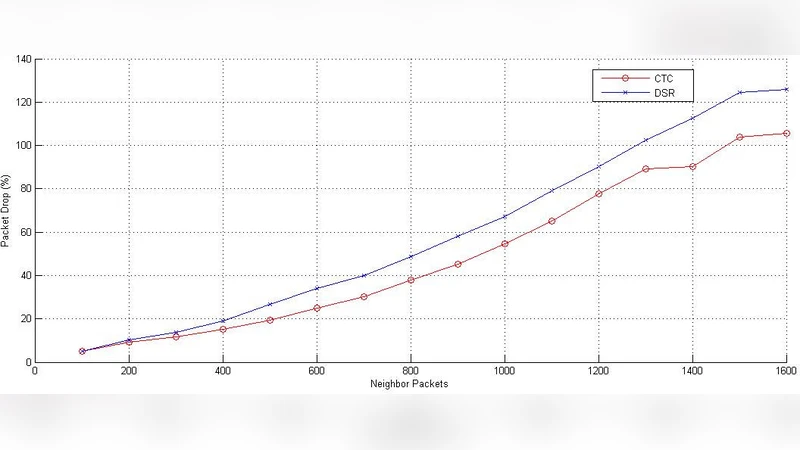
To evaluate the approach, the authors integrate the scheme into two widely used MANET routing protocols—AODV and DSR—and run extensive simulations with network sizes ranging from 50 to 200 nodes and malicious‑node ratios from 0 % up to 30 %. Performance metrics include average throughput, packet delivery ratio, total energy consumption, and average node lifetime. The results show that, compared with conventional removal‑based schemes, the time‑division model improves average throughput by roughly 20‑30 %, maintains a packet delivery ratio above 95 % even under high selfish‑node prevalence, reduces overall energy consumption by about 12 %, and extends the average node lifetime by more than 15 %.
The paper highlights several key contributions: (1) a shift from punitive node elimination to adaptive cooperation scaling, (2) a simple yet effective time‑division mechanism that aligns forwarding effort with each node’s current resource state, (3) a global CTC maintenance algorithm that balances individual autonomy with network‑wide trust, and (4) empirical evidence that the method scales well and enhances both performance and sustainability.
In conclusion, the authors demonstrate that minimizing malicious behavior in MANETs does not require aggressive exclusion; instead, a mathematically grounded, time‑division based cooperation framework can substantially improve throughput, energy efficiency, and network longevity. Future work is outlined to include real‑world test‑bed implementation, exploration of diverse mobility models, and robustness testing against sophisticated attacks such as Sybil and Blackhole.
Comments & Academic Discussion
Loading comments...
Leave a Comment