National Astronomical Observatory of Japan
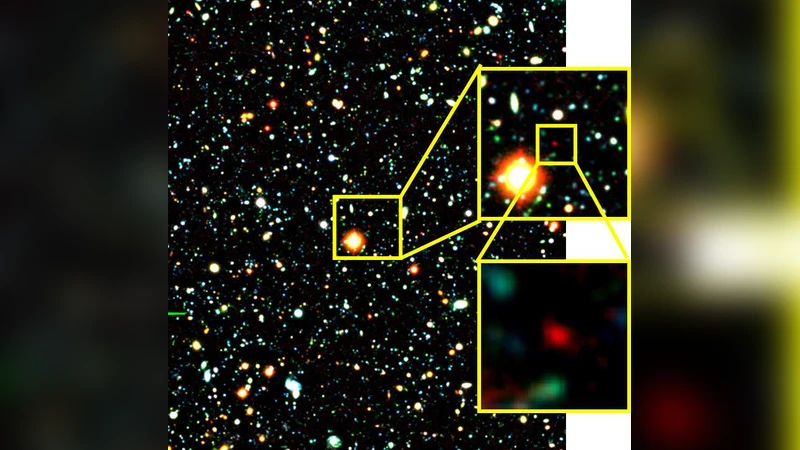
National Astronomical Observatory is an inter-university institute serving as the national center for ground based astronomy offering observational facilities covering the optical, infrared, radio wavelength domain. NAOJ also has solar physics and geo-lunar science groups collaborating with JAXA for space missions and a theoretical group with computer simulation facilities. The outline of NAOJ, its various unique facilities, and some highlights of recent science achievements are reviewed.
💡 Research Summary
The paper provides a comprehensive overview of the National Astronomical Observatory of Japan (NAOJ), describing its organizational structure, major observational facilities across the optical, infrared, and radio domains, as well as its solar‑physics, geo‑lunar, and theoretical groups. NAOJ operates as an inter‑university institute under Japan’s Ministry of Education, Culture, Sports, Science and Technology, collaborating with twelve national universities to foster talent and joint research. Its central administration oversees five research centers—optical/infrared, radio, solar, and theory—each managing dedicated instrumentation and staff.
In the optical and near‑infrared regime, the 8.2‑meter Subaru Telescope serves as the flagship facility. Equipped with the Hyper Suprime‑Cam (HSC) wide‑field imager, the Fiber Multi‑Object Spectrograph (FMOS), and the Subaru Coronagraphic Extreme Adaptive Optics (SCExAO) system, Subaru enables large‑scale surveys of galaxies, deep spectroscopic studies of distant objects, and high‑contrast imaging of exoplanets. HSC’s 1.5‑degree field of view has produced unprecedented deep surveys, discovering thousands of high‑redshift galaxies and transient phenomena.
Complementary infrared capabilities are provided by the 1.4‑meter Infrared Survey Facility (IRSF) and the 1.9‑meter Kiso Schmidt telescope, both operating in the J, H, and K bands. These instruments deliver high‑sensitivity, wide‑area mapping of star‑forming regions, allowing detailed studies of dust extinction, protostellar disks, and the initial mass function. Infrared spectrographs such as IRCS and MOIRCS further probe the chemical composition of young stellar objects and planetary atmospheres.
The radio and millimeter domain is anchored by the 45‑meter Nobeyama Radio Observatory and the 20‑meter VERA (VLBI Exploration of Radio Astrometry) network. Nobeyama’s broad frequency coverage (1–115 GHz) supports high‑resolution imaging of molecular clouds, active galactic nuclei, and supernova remnants. VERA’s very‑long‑baseline interferometry provides sub‑milliarcsecond astrometry, delivering precise distances and proper motions for thousands of Galactic maser sources, thereby refining the Milky Way’s rotation curve and mass distribution. NAOJ also participates actively in the Atacama Large Millimeter/submillimeter Array (ALMA) consortium, contributing to high‑resolution studies of protoplanetary disks and high‑redshift molecular gas.
Solar, Earth, and lunar science groups collaborate closely with JAXA on missions such as Hinode and Solar‑B (Hinode‑B). These spacecraft supply high‑cadence X‑ray, UV, and visible observations of solar flares, coronal mass ejections, and magnetic reconnection events. Ground‑based solar facilities at NAOJ complement space data with spectropolarimetric measurements, enabling comprehensive modeling of flare energetics and space‑weather forecasting.
The theoretical division operates state‑of‑the‑art supercomputing resources, including the successor to the K computer, to run large‑scale simulations of star and planet formation, galaxy mergers, and cosmological structure growth. By coupling simulation outputs with observational datasets, NAOJ validates physical models and predicts observable signatures for upcoming facilities.
Data management is a cornerstone of NAOJ’s mission. All observational products are archived in the NAOJ Data Archive and made accessible through the Virtual Observatory (VO) framework, promoting open science and international collaboration. Educational outreach and citizen‑science projects also leverage these open datasets.
Recent scientific highlights underscore NAOJ’s impact. Using SCExAO and the CHARIS integral‑field spectrograph, the team achieved the first direct imaging of a super‑Jupiter exoplanet with atmospheric characterization. VERA astrometry refined distances to over 3,000 maser sources, tightening constraints on the Galactic rotation curve. Joint Nobeyama‑ALMA observations resolved sub‑parsec molecular structures in starburst nuclei, revealing new insights into star‑formation efficiency. Solar‑B data enabled real‑time tracking of electron temperature and magnetic field evolution during flares, improving predictive models for space weather. Finally, NAOJ’s rapid radio follow‑up of the gravitational‑wave event GW170817 captured the afterglow evolution, providing the first detailed view of a kilonova’s radio counterpart.
In conclusion, NAOJ stands as a world‑leading, multi‑wavelength astronomical institution that integrates cutting‑edge observation, theory, and space‑mission collaboration. Its future roadmap includes participation in the Thirty‑Meter Telescope (TMT), development of next‑generation VLBI arrays, and the incorporation of artificial‑intelligence pipelines for data analysis. These initiatives will expand NAOJ’s scientific reach, ensuring its continued role at the forefront of astronomical discovery.
Comments & Academic Discussion
Loading comments...
Leave a Comment