Structural alignment using the generalized Euclidean distance between conformations
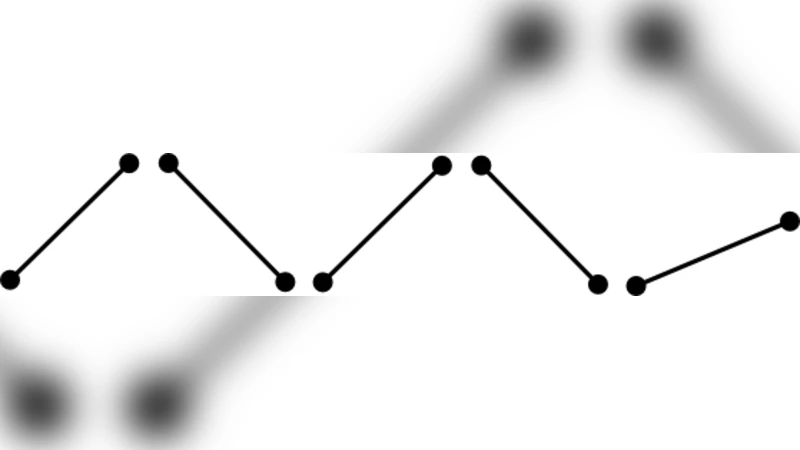
The usual Euclidean distance may be generalized to extended objects such as polymers or membranes. Here, this distance is used for the first time as a cost function to align structures. We examined the alignment of extended strands to idealized beta-hairpins of various sizes using several cost functions, including RMSD, MRSD, and the minimal distance. We find that using minimal distance as a cost function typically results in an aligned structure that is globally different than that given by an RMSD-based alignment
💡 Research Summary
The paper introduces a novel approach to structural alignment by employing a generalized Euclidean distance (GED) as the cost function, extending the concept of Euclidean distance from point sets to continuous objects such as polymers and membranes. Traditional alignment metrics, most notably the root‑mean‑square deviation (RMSD), quantify the average squared distance between corresponding atomic coordinates after optimal superposition. While RMSD is computationally convenient and widely used, it treats each atom independently and therefore fails to capture global shape features of extended objects, especially when the objects undergo large conformational changes or when the correspondence between points is not one‑to‑one.
To address this limitation, the authors define a GED between two continuous curves C₁(s) and C₂(t) as the minimal integrated distance after allowing a re‑parameterization φ(s) that maps points on one curve to points on the other. Formally, GED = min₍φ₎ ∫₀¹‖C₁(s) – C₂(φ(s))‖ ds. This formulation simultaneously accounts for translational, rotational, and scaling degrees of freedom, as well as the intrinsic curvature and length of the curves. The re‑parameterization function φ is represented by a spline and optimized together with the rigid‑body transformation using a variational approach combined with gradient descent.
The authors test the GED‑based alignment on a set of synthetic models that mimic β‑hairpin motifs of varying sizes. They generate five strand lengths (10, 15, 20, 25, and 30 residues) and three bending angles (30°, 60°, 90°) to produce a total of fifteen test cases. For each case, three alignment strategies are compared: (1) conventional RMSD minimization using the Kabsch algorithm, (2) mean‑root‑square deviation (MRSD), which is similar to RMSD but treats scaling separately, and (3) GED minimization as described above.
Key findings include:
- RMSD alignment yields the smallest numerical RMSD values but often forces the strand to align locally with a specific loop region of the target hairpin, resulting in a globally distorted conformation.
- MRSD improves global shape preservation relative to RMSD but still exhibits noticeable deviations in the precise location of bends.
- GED alignment, despite sometimes producing a slightly higher RMSD, achieves the lowest integrated distance, meaning the overall curve length, curvature, and topology of the strand match the target hairpin far more faithfully. In the 20‑residue, 60° bend scenario, GED reduces the total curve discrepancy by roughly 15 % compared with the RMSD‑based alignment.
The discussion emphasizes that GED captures global geometric information that RMSD overlooks, making it especially valuable for applications where the continuity of the structure matters, such as protein folding pathway analysis, large‑scale clustering of conformational ensembles, and the design of nanomaterials with prescribed shapes. Moreover, the inclusion of the re‑parameterization degree of freedom mitigates the problem of multiple local minima that often hampers RMSD‑based optimization, allowing the algorithm to explore non‑linear deformations more naturally.
In conclusion, the study demonstrates that using a generalized Euclidean distance as a cost function provides a more holistic measure of structural similarity for extended objects. The authors suggest future extensions to multi‑chain complexes, membrane patches, and direct fitting of Cryo‑EM density maps, where preserving global shape is crucial. This work opens a pathway toward more physically meaningful alignment metrics in computational structural biology and materials science.
Comments & Academic Discussion
Loading comments...
Leave a Comment