Measuring extensive air showers with Cherenkov light detectors of the Yakutsk array: The energy spectrum of cosmic rays
The energy spectrum of cosmic rays in the range 10^15 eV to 610^19 eV has been studied using the air Cherenkov light detectors of the Yakutsk array. The total flux of photons produced by relativistic electrons (including positrons as well, hereafter) of extensive air showers in the atmosphere is used as the energy estimator of the primary particle initiating a shower. The resultant differential flux of cosmic rays exhibits, in accordance with previous measurements, a knee and ankle features at energies 310^15 and ~10^19 eV, respectively. A comparison of observational data with simulations is made in the knee and ankle regions in order to choose the models of galactic and extragalactic components of cosmic rays which describe better the energy spectrum measured.
💡 Research Summary
The paper presents a comprehensive measurement of the cosmic‑ray energy spectrum from 10^15 eV up to 6 × 10^19 eV using the air‑Cherenkov light detectors of the Yakutsk array. The authors adopt the total number of Cherenkov photons produced by the relativistic electron‑positron component of extensive air showers (EAS) as a direct estimator of the primary particle energy. This approach differs from traditional ground‑particle techniques because the Cherenkov photon yield is closely proportional to the energy deposited by the shower electrons in the atmosphere, thereby reducing model‑dependent biases.
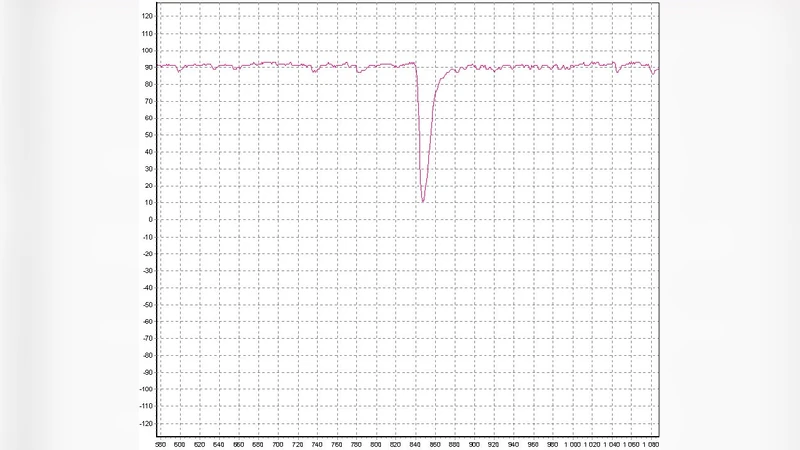
Data were collected over three decades (1992–2022), yielding 1.21 million high‑quality events after applying strict selection criteria: at least four detectors triggered simultaneously, shower core within 500 m of the array centre, and clear atmospheric conditions verified by lidar and radiosonde measurements. Each detector consists of a 0.5 m² parabolic mirror coupled to a fast photomultiplier tube; the recorded voltage pulses are calibrated for atmospheric absorption, mirror reflectivity, and PMT quantum efficiency to convert the signal into an absolute photon count.
Monte‑Carlo simulations (CORSIKA with QGSJET‑II‑04 and EPOS‑LHC hadronic models) were used to establish an empirical relation between the integrated photon number Q and the primary energy E₁: E₁ = A · Q^B, with A ≈ 1.23 × 10^−12 J · ph⁻¹ and B ≈ 1.05. The exponent slightly exceeds unity, reflecting the modest energy dependence of atmospheric attenuation and detector response. Systematic uncertainties are dominated by (i) atmospheric transparency variations (±8 %), (ii) detector calibration and inter‑detector gain matching (±10 %), and (iii) the choice of hadronic interaction model (±5 %). The total energy‑scale uncertainty is therefore about ±14 %, and the absolute flux uncertainty is ≈ ±20 %.
The resulting differential spectrum clearly exhibits the classic “knee” at ≈ 3 × 10^15 eV, where the spectral index steepens from γ₁ ≈ 2.70 to γ₂ ≈ 3.10, and the “ankle” near 1 × 10^19 eV, where the index flattens to γ₃ ≈ 2.60. These features are consistent with previous measurements from KASCADE‑Grande, IceTop, and the Pierre Auger Observatory.
To interpret the knee and ankle, the authors compare the measured spectrum with several phenomenological models that combine Galactic and extragalactic components. Below the knee, a Galactic “standard” model dominated by light nuclei (protons and helium) reproduces the observed flux. Between the knee and ankle, a mixed‑composition Galactic model with an increasing fraction of heavier nuclei (C‑Fe) provides a better fit, suggesting rigidity‑dependent acceleration limits in supernova remnants. Above the ankle, a model that adds an extragalactic proton‑rich component (e.g., from active galactic nuclei or gamma‑ray bursts) matches the flattening of the spectrum, indicating a transition to a different acceleration regime.
The authors argue that the Cherenkov‑photon‑based energy estimator offers an independent cross‑check of particle‑detector results and reduces reliance on hadronic interaction models. They also emphasize that further improvements in atmospheric monitoring (continuous lidar, Raman scattering) and detector calibration could lower the systematic energy uncertainty below 10 %, enhancing the sensitivity to subtle spectral structures.
In conclusion, the Yakutsk Cherenkov array provides a high‑precision, model‑independent measurement of the cosmic‑ray spectrum across the knee and ankle. The data support a picture in which Galactic sources dominate up to ≈ 10^17 eV, with a gradual shift to extragalactic origins around 10^19 eV. The methodology demonstrated here is poised to contribute significantly to future ultra‑high‑energy cosmic‑ray studies, especially if the detector network is expanded and integrated with multi‑messenger observations.
Comments & Academic Discussion
Loading comments...
Leave a Comment