The Synoptic All-Sky Infrared (SASIR) Survey
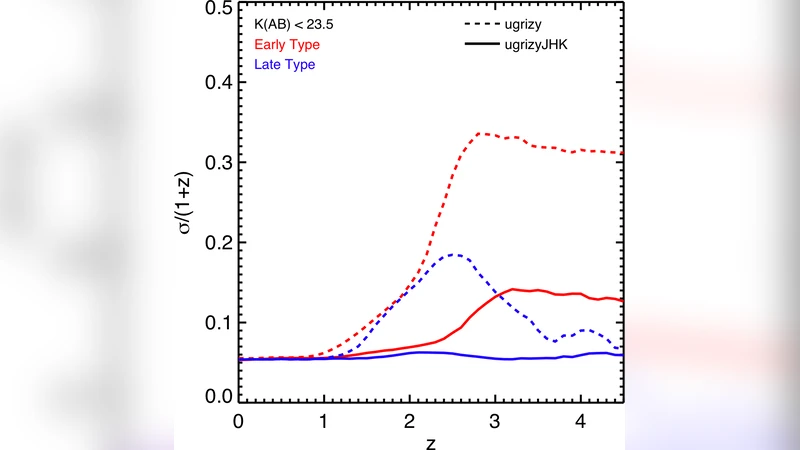
We are proposing to conduct a multicolor, synoptic infrared (IR) imaging survey of the Northern sky with a new, dedicated 6.5-meter telescope at San Pedro M'artir (SPM) Observatory. This initiative is being developed in partnership with astronomy institutions in Mexico and the University of California. The 4-year, dedicated survey, planned to begin in 2017, will reach more than 100 times deeper than 2MASS. The Synoptic All-Sky Infrared (SASIR) Survey will reveal the missing sample of faint red dwarf stars in the local solar neighborhood, and the unprecedented sensitivity over such a wide field will result in the discovery of thousands of z ~ 7 quasars (and reaching to z > 10), allowing detailed study (in concert with JWST and Giant Segmented Mirror Telescopes) of the timing and the origin(s) of reionization. As a time-domain survey, SASIR will reveal the dynamic infrared universe, opening new phase space for discovery. Synoptic observations of over 10^6 supernovae and variable stars will provide better distance measures than optical studies alone. SASIR also provides significant synergy with other major Astro2010 facilities, improving the overall scientific return of community investments. Compared to optical-only measurements, IR colors vastly improve photometric redshifts to z ~ 4, enhancing dark energy and dark matter surveys based on weak lensing and baryon oscillations. The wide field and ToO capabilities will enable a connection of the gravitational wave and neutrino universe - with events otherwise poorly localized on the sky - to transient electromagnetic phenomena.
💡 Research Summary
The Synoptic All‑Sky Infrared (SASIR) Survey is a four‑year, dedicated, multi‑color infrared imaging program that will map the entire northern sky using a new 6.5‑meter telescope at the San Pedro Mártir (SPM) Observatory in Mexico. By employing a large‑format, simultaneous‑filter infrared camera (Y, J, H, K bands) with a field of view of roughly 1.5 deg², SASIR will repeatedly scan about 2,000 deg² per night on a three‑day cadence, ultimately delivering more than 30 epochs over ~30,000 deg². The survey depth will be ~5 magnitudes (≈100×) deeper than the all‑sky 2MASS catalogue, reaching well into the regime of faint red dwarfs, brown dwarfs, and the most distant quasars (z ≈ 7–10).
Technical Design
The telescope is optimized for the dry, stable atmosphere of SPM (≈2,800 m altitude) with active optics to control thermal deformation and a cryogenic system that keeps the HgCdTe detector arrays at ≤77 K. The four‑band camera records all bands simultaneously, maximizing observing efficiency and providing intrinsic color information for every source. Data rates are expected to exceed 30 TB per night, requiring a real‑time difference‑image pipeline, machine‑learning classifiers for variable and transient detection, and a distributed storage architecture capable of handling >10 PB over the survey lifetime.
Core Science Drivers
-
Local Stellar Census – By reaching well below the 2MASS limit, SASIR will produce a complete inventory of M‑ and L‑type dwarfs within a few hundred parsecs, enabling precise measurements of the low‑mass end of the stellar mass function and improving dynamical models of the Milky Way.
-
Reionization‑Era Quasars and Galaxies – The unprecedented depth over a wide area will uncover thousands of quasars at z > 7 and potentially dozens at z > 10. These objects will be prime targets for JWST and next‑generation 30‑meter class telescopes, allowing detailed spectroscopy of the first massive black holes and their host galaxies, and constraining the timing and sources of cosmic reionization.
-
Time‑Domain Infrared Astronomy – With a cadence of a few days and multi‑year coverage, SASIR will detect ~10⁶ supernovae and a comparable number of variable stars in the infrared. Infrared light curves provide more reliable extinction corrections and, when combined with optical data, yield superior distance indicators for cosmology.
-
Multi‑Messenger Follow‑up – The wide field and rapid Target‑of‑Opportunity (ToO) response enable SASIR to localize electromagnetic counterparts of gravitational‑wave events (e.g., binary neutron‑star mergers) and high‑energy neutrino detections, which often have error regions of tens to hundreds of square degrees. Infrared signatures, especially in the K‑band, are expected to be prominent for kilonovae and dust‑obscured transients.
-
Dark Energy and Dark Matter Probes – Inclusion of infrared photometry dramatically improves photometric redshift accuracy to z ≈ 4, reducing systematic biases in weak‑lensing shear catalogs and baryon acoustic oscillation (BAO) measurements. SASIR’s data will thus augment optical surveys such as LSST, Euclid, and the Roman Space Telescope, enhancing constraints on the equation of state of dark energy and the growth of structure.
Synergies and Collaboration
The project is a partnership between Mexican institutions (INAOE, UNAM) and the University of California system, leveraging shared funding, engineering expertise, and data‑analysis pipelines. SASIR data will be released through Virtual Observatory standards, allowing immediate cross‑matching with JWST, LSST, Euclid, and ground‑based 30‑meter class facilities. The ToO infrastructure will be coordinated with LIGO‑Virgo‑KAGRA and IceCube alert streams, ensuring sub‑hour response times for high‑impact transient follow‑up.
Challenges and Mitigations
Key technical hurdles include the fabrication and cryogenic operation of large HgCdTe arrays, thermal control of the primary optics, and the management of petabyte‑scale data streams. SASIR addresses these with state‑of‑the‑art closed‑cycle coolers, low‑expansion composite mirror substrates, and a tiered data‑center model that processes images on site while archiving raw frames in a geographically distributed cloud.
Timeline
Design and prototyping (2015‑2016), telescope construction and camera integration (2017‑2020), commissioning and first light (early 2021), followed by full science operations from 2021 through 2025.
In summary, SASIR will be the first synoptic, all‑sky infrared survey, delivering depth, cadence, and sky coverage unmatched by any existing facility. Its scientific return spans stellar astrophysics, high‑redshift cosmology, transient and multi‑messenger astronomy, and precision cosmology, making it a cornerstone infrastructure that amplifies the scientific impact of contemporaneous and future observatories.
Comments & Academic Discussion
Loading comments...
Leave a Comment