MIMO-Assisted Channel-Based Authentication in Wireless Networks
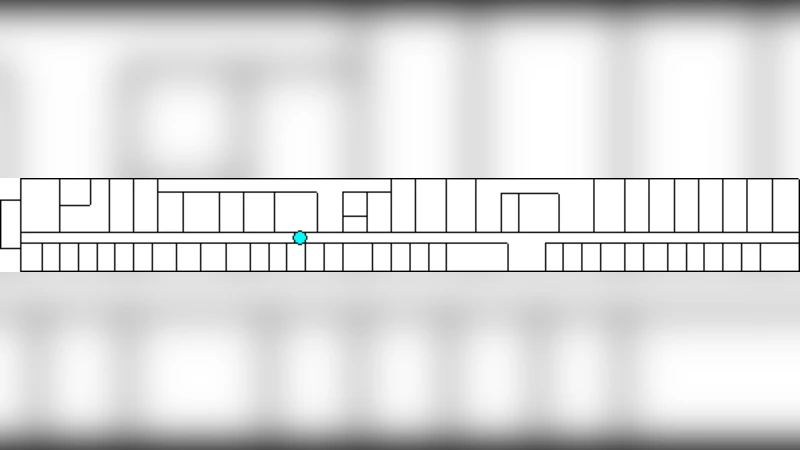
Multiple-input multiple-output (MIMO) techniques allow for multiplexing and/or diversity gain, and will be widely deployed in future wireless systems. In this paper, we propose a MIMO-assisted channel-based authentication scheme, exploiting current channel estimation mechanisms in MIMO systems to detect spoofing attacks with very low overhead. In this scheme, the use of multiple antennas provides extra dimensions of channel estimation data, and thus leads to a “security gain” over single-input single-output (SISO) systems. We investigate the security gain of MIMO systems in several system configurations via simulations for a specific real indoor environment using ray-tracing software. We also discuss the effect of increasing the number of transmit and receive antennas on the security gain and contrast that to the diversity/multiplexing gain.
💡 Research Summary
The paper introduces a novel physical‑layer authentication scheme that leverages the channel estimation data already generated in multiple‑input multiple‑output (MIMO) wireless systems to detect spoofing attacks with negligible additional overhead. Traditional channel‑based authentication methods have been confined to single‑input single‑output (SISO) scenarios, where only a scalar channel estimate is available for comparison across successive frames. In contrast, modern MIMO standards (e.g., MIMO‑OFDM in LTE/5G, MIMO‑SC‑FDMA in Wi‑Fi) require each receiver to estimate a complex channel matrix H ∈ ℂ^{N_r×N_t} for every transmission, where N_t and N_r denote the numbers of transmit and receive antennas, respectively. The authors propose to treat this matrix as a “security token”: because the physical propagation environment uniquely determines the spatial fading pattern, an adversary who attempts to impersonate a legitimate transmitter cannot reproduce the exact matrix unless it occupies the same physical location and experiences identical multipath conditions.
The authors define a security gain metric that captures the benefit of the extra spatial dimensions: G_sec = f(N_t,N_r)·Var(H), where Var(H) reflects the natural temporal variability of the channel and f(N_t,N_r) grows with the number of independent entries in the matrix. Through extensive ray‑tracing simulations of a realistic indoor office corridor, they evaluate G_sec for several antenna configurations (2×2, 4×4, 8×8). Results show an almost linear increase of G_sec with the total number of antennas, and a particularly strong contribution from the number of receive antennas because each additional receive element provides an independent row that can be statistically tested. The detection algorithm computes a distance metric (e.g., Frobenius norm, row‑wise correlation) between the current estimate and a short history of previously authenticated matrices; if the distance exceeds a threshold derived from the estimated variance, the frame is flagged as spoofed.
A central contribution of the work is the systematic analysis of the trade‑off between security gain, multiplexing gain, and diversity gain. Increasing N_t boosts the spatial multiplexing capacity, allowing higher data rates, but it also reduces the number of independent channel samples per frame that can be used for authentication, slightly diminishing G_sec. Conversely, increasing N_r enhances spatial diversity, improves the robustness of the channel estimate, and directly raises G_sec, at the cost of higher hardware complexity and power consumption. By plotting a “security‑throughput trade‑off curve,” the authors demonstrate that a 4×4 MIMO configuration can achieve roughly three times the security gain of a 2×2 system while incurring less than a 10 % throughput penalty in the simulated indoor environment.
The simulation methodology deserves special mention. The authors employ a commercial ray‑tracing engine to generate deterministic multipath components for a realistic floor plan, including walls, furniture, and human bodies. This approach captures the rich scattering typical of indoor settings, leading to channel matrices with widely spread singular values. In such environments, the statistical distance between legitimate and forged matrices is large, making false‑acceptance probabilities extremely low. In contrast, in open‑space scenarios with fewer dominant paths, the security gain diminishes, suggesting that antenna placement and beamforming strategies must be optimized for security in those cases.
From an implementation perspective, the scheme requires no extra signaling or cryptographic processing. The channel estimation routine already present in any MIMO PHY layer supplies the necessary data; the authentication logic merely adds a lightweight statistical test on the estimated matrix. Consequently, the computational load is minimal, and the latency introduced is negligible compared to conventional key‑exchange protocols. This makes the approach directly applicable to current and upcoming standards such as 5G New Radio, Wi‑Fi 7, and massive MIMO deployments, where the number of antennas per device is expected to continue growing.
In conclusion, the paper convincingly shows that exploiting the high‑dimensional channel information inherent in MIMO systems yields a substantial “security gain” over SISO‑based authentication, while preserving the multiplexing and diversity benefits that motivate MIMO in the first place. The authors also outline future research directions, including robustness to high mobility, adaptive threshold selection using machine‑learning classifiers, and joint antenna‑array design that simultaneously optimizes data rate, reliability, and security.
Comments & Academic Discussion
Loading comments...
Leave a Comment