Modeling and Simulation of Scalable Cloud Computing Environments and the CloudSim Toolkit: Challenges and Opportunities
Cloud computing aims to power the next generation data centers and enables application service providers to lease data center capabilities for deploying applications depending on user QoS (Quality of Service) requirements. Cloud applications have different composition, configuration, and deployment requirements. Quantifying the performance of resource allocation policies and application scheduling algorithms at finer details in Cloud computing environments for different application and service models under varying load, energy performance (power consumption, heat dissipation), and system size is a challenging problem to tackle. To simplify this process, in this paper we propose CloudSim: an extensible simulation toolkit that enables modelling and simulation of Cloud computing environments. The CloudSim toolkit supports modelling and creation of one or more virtual machines (VMs) on a simulated node of a Data Center, jobs, and their mapping to suitable VMs. It also allows simulation of multiple Data Centers to enable a study on federation and associated policies for migration of VMs for reliability and automatic scaling of applications.
💡 Research Summary
The paper presents CloudSim, an extensible, open‑source simulation toolkit designed to model and evaluate cloud computing environments at scale. Recognizing that modern data centers host thousands of physical machines, each running multiple virtual machines (VMs) that execute diverse workloads, the authors argue that empirical testing of resource allocation, scheduling, energy consumption, and scaling policies on real infrastructure is prohibitively expensive and time‑consuming. CloudSim addresses this gap by providing a lightweight, event‑driven simulation framework that abstracts the essential components of a cloud—data centers, hosts, VMs, and user‑submitted tasks (called cloudlets)—while allowing researchers to plug in custom policies and models.
The toolkit is built on top of SimJava, a discrete‑event simulation library, and introduces a layered architecture. The core layer defines the fundamental objects (Datacenter, Host, VM, Cloudlet, Broker) and their interactions. Above this, the policy layer supplies abstract interfaces for VM allocation (VMAllocationPolicy), VM scheduling (VmScheduler), and power modeling (PowerModel). By implementing these interfaces, users can experiment with a wide range of strategies, from simple First‑Fit placement to sophisticated energy‑aware or load‑balancing algorithms. The network layer currently offers a bandwidth‑sharing model but is designed to be replaceable with more detailed topologies via the NetworkTopology class. Likewise, the federation layer enables the simulation of multiple data centers that cooperate through VM migration and workload redistribution, supporting studies on reliability, geographic load balancing, and auto‑scaling across administrative domains.
Key contributions of the paper include:
- Comprehensive Modeling – CloudSim captures multi‑resource constraints (CPU cores, memory, storage, network bandwidth) for each host and allows the creation of heterogeneous VM configurations.
- Energy Awareness – The PowerModel interface lets researchers define power‑consumption functions that map CPU utilization to wattage, facilitating the evaluation of green‑cloud policies.
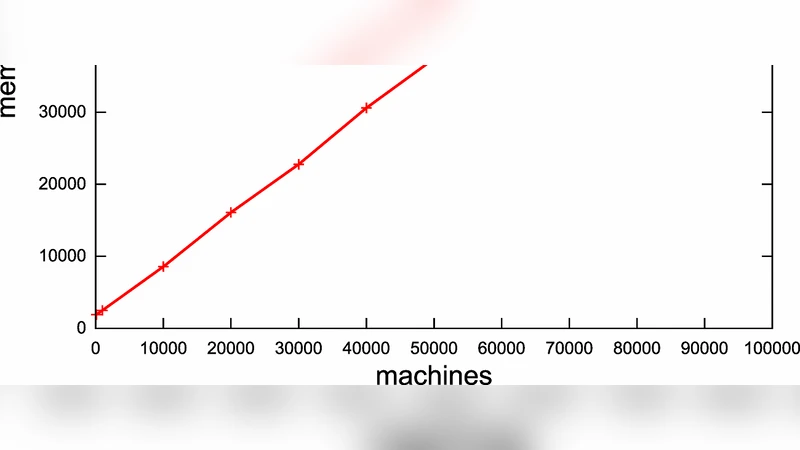
- Scalability Demonstration – Experiments with up to 10,000 hosts and hundreds of thousands of VMs/cloudlets show near‑linear growth in simulation time and memory usage, proving that the toolkit can handle large‑scale scenarios typical of modern public clouds.
- Extensibility – All major components are abstracted, encouraging community contributions such as storage models, packet‑level network simulators, or container‑based virtualization extensions.
The authors also discuss limitations. The current network model abstracts away latency, packet loss, and routing complexities, which may be critical for latency‑sensitive applications. Storage is represented only as a capacity figure, lacking I/O contention modeling. Moreover, dynamic workload changes (e.g., bursty traffic) require additional mechanisms for on‑the‑fly policy adaptation. The paper suggests future work to integrate more detailed storage subsystems, packet‑level network simulators, and machine‑learning‑driven auto‑scaling controllers.
In conclusion, CloudSim provides a practical, reproducible environment for the systematic study of cloud resource management. By allowing rapid prototyping and quantitative analysis of allocation, scheduling, and energy policies—both within a single data center and across federated clouds—it fills a critical methodological gap between theoretical algorithm design and costly real‑world deployment. Researchers and practitioners can leverage CloudSim to explore “what‑if” scenarios, benchmark novel algorithms, and ultimately guide the design of more efficient, reliable, and sustainable cloud infrastructures.
Comments & Academic Discussion
Loading comments...
Leave a Comment