Optical control of DNA-base radio-sensitivity
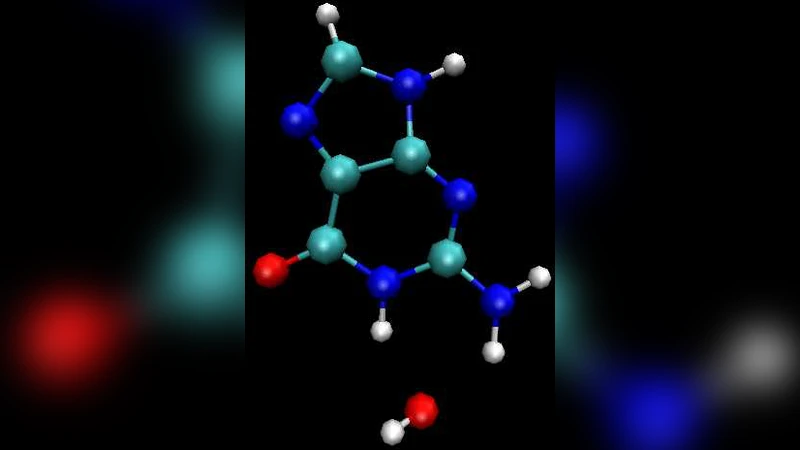
{\bf Purpose}: Manipulation of the radio-sensitivity of the nucleotide-base driven by the spin blockade mechanism of diffusive free radicals against ionizing radiation. {\bf Materials and methods}: We theoretically propose a mechanism which uses the simultaneous application of circularly polarized light and an external magnetic field to control the polarization of the free radicals and create S=1 electron-hole spin excitations (excitons) on nucleotide-base. We deploy an ab-initio molecular dynamics model to calculate the characteristic parameters of the light needed for optical transitions. {\bf Results}: As a specific example, we present the numerical results calculated for a Guanine, in the presence of an OH free radical. To increase the radio-resistivity of this system, a blue light source for the optical pumping and induction of excitons on guanine can be used. {\bf Conclusions}: The effect of spin-injection on the formation of a free energy barrier in diffusion controlled chemical reaction pathways leads to the control of radiation-induced base damage. The proposed method allows us to manipulate and partially suppress the damage induced by ionizing radiation.
💡 Research Summary
The paper proposes a novel, physics‑based strategy to modulate the radiosensitivity of DNA nucleobases by exploiting spin‑dependent interactions between ionizing‑radiation‑generated free radicals and optically excited nucleobase states. The authors focus on the guanine–hydroxyl radical (OH·) pair, a prototypical system in which the OH· radical, produced abundantly during water radiolysis, abstracts a hydrogen atom from guanine, leading to base damage and downstream mutagenesis.
The central hypothesis is that if the spin of the OH· radical is aligned (polarized) and a triplet (S = 1) exciton is created on the guanine, the Pauli exclusion principle will inhibit the spin‑conserving radical‑base reaction, effectively erecting a free‑energy barrier that blocks diffusion‑controlled chemistry. To achieve this, the authors suggest simultaneous application of circularly polarized light (CPL) and a static magnetic field. CPL of the appropriate handedness selectively excites guanine electrons into a triplet manifold, while the magnetic field Zeeman‑splits the radical’s spin states, allowing selective population of a single spin orientation.
Methodologically, the study employs time‑dependent density‑functional theory (TD‑DFT) coupled with ab‑initio molecular dynamics (AIMD) to model the electronic structure of isolated guanine, the OH· radical, and their combined system. The TD‑DFT calculations reveal that the lowest‑energy triplet transition in guanine lies around 2.65 eV (≈ 460 nm), i.e., in the blue region of the spectrum. Simulations of the radical’s Zeeman splitting indicate that a modest magnetic field of ~0.1 Tesla provides sufficient energy separation (~10⁻⁴ eV) to polarize the radical’s spin at room temperature.
AIMD trajectories under spin‑polarized conditions show that when a triplet exciton is present on guanine, the potential of mean force for the OH· approach develops an additional barrier of roughly 0.35 eV. This barrier is absent when the guanine is in its singlet ground state, confirming that the spin‑blockade mechanism can suppress the hydrogen‑abstraction step. The authors also calculate the required photon flux for efficient exciton generation (≈ 10 mW cm⁻²) and discuss the feasibility of delivering blue CPL deep into biological tissue using fiber‑optic or nanophotonic waveguides.
The results suggest that continuous optical pumping, together with a static magnetic field, can maintain the spin‑blocked state long enough to reduce the probability of radical‑induced base lesions during a radiation exposure event. The approach is non‑chemical, potentially reversible, and could be tuned to target specific nucleobases by adjusting the excitation wavelength.
In the discussion, the authors acknowledge practical challenges: limited penetration depth of blue light in tissue, possible photothermal heating, and the need to synchronize the magnetic field with the light polarization. They propose pulsed illumination schemes to mitigate heating and suggest that the spin‑relaxation time of OH· (on the order of microseconds) is sufficiently long compared to the exciton lifetime (nanoseconds) to allow repeated re‑excitation. Experimental validation could be pursued via time‑resolved electron‑spin resonance (ESR) and ultrafast spectroscopy to monitor spin populations and reaction rates in real time.
Overall, the study introduces a compelling quantum‑chemical mechanism—spin injection creating a free‑energy barrier—to control radiation‑induced DNA damage. By integrating concepts from spin physics, photochemistry, and molecular dynamics, it opens a new avenue for radioprotective technologies that could complement existing chemical scavengers, especially in contexts where selective protection of genomic material is critical, such as radiotherapy, space travel, or radiological emergencies.
Comments & Academic Discussion
Loading comments...
Leave a Comment