X-ray Spectroscopy of Galaxy Clusters
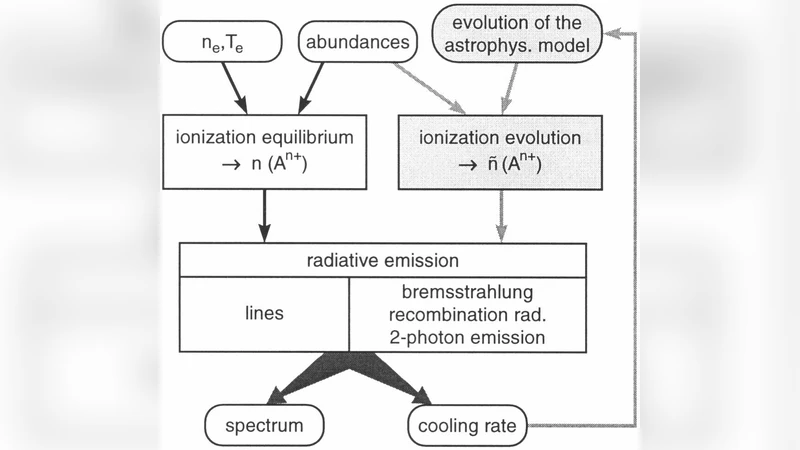
Galaxy clusters, the largest clearly defined objects in our Universe, are ideal laboratories to study in detail the cosmic evolution of the intergalactic intracluster medium (ICM) and the cluster galaxy population. For the ICM, which is heated to X-ray radiating temperatures, X-ray spectroscopy is the most important tool to obtain insight into the structure and astrophysics of galaxy clusters. In this review we recall the basic principles of the interpretation of X-ray spectra from a hot, tenuous plasma and we illustrate the wide range of scientific applications of X-ray spectroscopy. The determination of galaxy cluster masses, important for cosmology, rest crucially on a precise spectroscopic ICM temperature determination. The study of the thermal structure of the ICM provides a very interesting fossil record of the energy release during galaxy formation and evolution. The temperature and pressure distribution of the ICM gives us important insight into the process of galaxy cluster merging and the dissipation of the merger energy in form of turbulent motion. Cooling cores in the centers are interesting laboratories to investigate the interplay between gas cooling, star- and black hole formation and energy feedback, which is diagnosed by means of X-ray spectroscopy. The element abundances deduced from X-ray spectra of the ICM provide a cosmic history record of the contribution of different supernovae to the nucleosynthesis of heavy elements and their spatial distribution partly reflects important transport processes in the ICM. Some discussion of plasma diagnostics for conditions out of thermal equilibrium and an outlook on the future prospects of X-ray spectroscopic cluster studies complete our review.
💡 Research Summary
The review “X‑ray Spectroscopy of Galaxy Clusters” provides a comprehensive synthesis of how modern X‑ray spectroscopic techniques are applied to the hot, diffuse intracluster medium (ICM) that fills galaxy clusters, the largest gravitationally bound structures in the Universe. It begins by outlining the fundamental physics of a thin, optically‑thin plasma at temperatures of 10⁷–10⁸ K. In such a plasma, the X‑ray emission is dominated by thermal bremsstrahlung (free‑free) continuum and a forest of atomic lines from highly ionised species, principally Fe XXV, Fe XXVI, Si, S, O, and Ni. The authors discuss the state‑of‑the‑art spectral models (APEC, SPEX, and related collisional‑ionisation equilibrium codes) that incorporate up‑to‑date atomic data, ionisation balance calculations, and the effects of line broadening and resonant scattering.
A central theme of the paper is the critical role of precise temperature measurements. By fitting both the shape of the bremsstrahlung continuum and the ratios of Fe XXV/Fe XXVI lines, temperatures can be determined to better than 1 % accuracy. These temperatures feed directly into hydrostatic equilibrium calculations, allowing the derivation of total cluster masses. The mass‑temperature (M–T) relation is highlighted as a cornerstone for cosmological applications, linking cluster abundance to fundamental parameters such as Ω_m and σ₈.
The review then moves to the thermal structure of the ICM. It distinguishes between cool‑core clusters, where radiative cooling times are short, and non‑cool‑core systems. In cool cores, observed X‑ray luminosities are far lower than expected from pure cooling flows, implying a heating mechanism—most plausibly feedback from central active galactic nuclei (AGN). Spectroscopic diagnostics of line widths, high‑temperature tails, and deviations from ionisation equilibrium provide evidence for gentle, distributed heating that balances cooling. In the outer regions, entropy profiles rise smoothly, reflecting the history of gravitational collapse and shock heating.
Cluster mergers are examined through the lens of X‑ray spectroscopy. Shock fronts generate abrupt temperature jumps and pressure enhancements, while turbulence and bulk motions broaden emission lines. The authors describe how measurements of line broadening (e.g., with the Hitomi Soft X‑ray Spectrometer) can quantify turbulent velocities, offering insight into the fraction of merger energy that is dissipated as heat versus kinetic motions.
Elemental abundances derived from X‑ray spectra are another major focus. The spatial distribution of Fe, Si, S, O, and Ni traces the integrated contributions of Type Ia and core‑collapse supernovae over cosmic time. Central Fe peaks point to prolonged enrichment by Type Ia supernovae in the brightest cluster galaxies, whereas flatter α‑element profiles suggest early enrichment by core‑collapse events and subsequent mixing processes such as sloshing, buoyant bubbles, and turbulent diffusion.
The authors also discuss non‑equilibrium plasma conditions that arise in rapidly evolving environments, such as post‑shock regions or AGN outbursts. Over‑ionised or under‑ionised states manifest as anomalous line ratios and altered continuum shapes. Detecting these signatures requires high‑resolution spectroscopy and careful modeling of time‑dependent ionisation.
Finally, the review looks ahead to upcoming missions. XRISM’s Resolve instrument and Athena’s X‑IFU will deliver unprecedented energy resolution (≈5 eV) and collecting area, enabling routine measurements of line widths down to a few tens of km s⁻¹, precise mapping of metal distribution on kiloparsec scales, and systematic studies of non‑equilibrium ionisation. These capabilities promise to transform our understanding of ICM physics, from the microphysics of turbulence and magnetic fields to the macro‑scale evolution of galaxy clusters as cosmological probes.