High-precision C17O, C18O and C16O measurements in young stellar objects: analogues for CO self-shielding in the early solar system
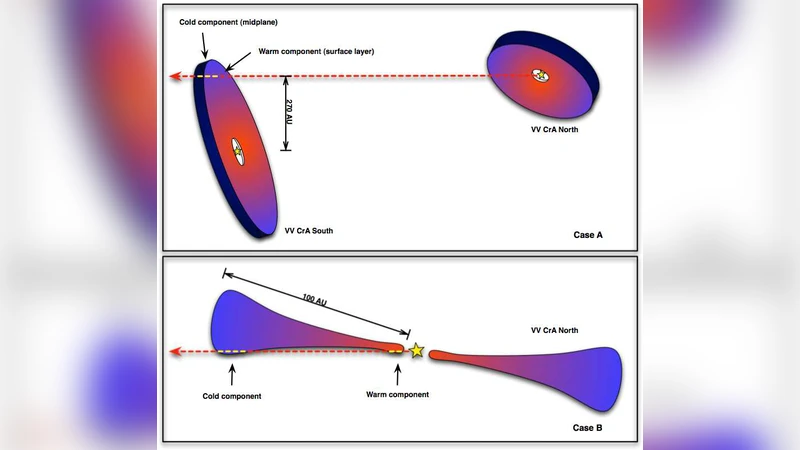
Using very high resolution (lambda / Dlambda ~ 95000) 4.7 micron fundamental and 2.3 micron overtone ro-vibrational CO absorption spectra obtained with the CRIRES infrared spectrometer on the Very Large Telescope (VLT), we report detections of four CO isotopologues – C16O, 13CO, C18O and the rare species, C17O – in the circumstellar environment of two young protostars, VV CrA and Reipurth 50. We argue that the observed CO absorption lines probe a protoplanetary disk in VV CrA, and a protostellar envelope in Reipurth 50. All CO line profiles are spectrally resolved, permitting direct calculation of CO oxygen isotopologue ratios with 5-10% accuracy. The ro-vibrational level populations for all species can be reproduced by assuming that CO absorption arises in two temperature regimes. For both objects, 12C/13C are on the order of 100, nearly twice the expected interstellar medium (ISM) ratio. The derived oxygen abundance ratios for the VV CrA disk show a significant mass-independent deficit of C17O and C18O relative to C16O compared to ISM baseline abundances. The Reipurth 50 envelope shows no clear differences in oxygen CO isotopologue ratios compared with the local ISM. A mass-independent fractionation can be interpreted as being due to selective photodissociation of CO in the disk surface due to self-shielding. The deficits in C17O$ and C18O$ in the VV CrA protoplanetary disk are consistent with an analogous origin of the 16O variability in the solar system by isotope selective photodissociation, confirmation of which may be obtained via study of additional sources. The higher fractionation observed for the VV CrA disk compared with the Reipurth 50 envelope is likely due to a combination of disk geometry, grain growth, and vertical mixing processes. [Abstract abridged]
💡 Research Summary
In this study the authors used the CRIRES infrared spectrograph on the Very Large Telescope to obtain ultra‑high‑resolution (λ/Δλ≈95 000) spectra of the fundamental 4.7 µm and overtone 2.3 µm ro‑vibrational CO bands toward two young stellar objects: the binary system VV CrA and the protostar Reipurth 50. Four isotopologues—C¹⁶O, ¹³CO, C¹⁸O and the rare C¹⁷O—were detected in absorption, and the line profiles were fully resolved, allowing direct determination of isotopic ratios with 5‑10 % uncertainties.
The authors argue that the absorption in VV CrA originates in a protoplanetary disk seen at a relatively high inclination, whereas the absorption toward Reipurth 50 probes a more extended protostellar envelope. Both sources require a two‑temperature model to reproduce the observed rotational level populations: a warm component (≈300–500 K) associated with the disk surface or inner envelope, and a cold component (≈30–50 K) representing more distant, shielded material.
Carbon isotopic ratios are strikingly high in both objects, with ¹²C/¹³C ≈ 100, roughly twice the canonical interstellar medium (ISM) value of ≈68. This suggests either selective chemical processing in the disk/envelope or an intrinsic enrichment of ¹³C‑poor material in the natal cloud.
The most significant result concerns oxygen isotopes. In the VV CrA disk, C¹⁷O and C¹⁸O are depleted relative to C¹⁶O by a factor that cannot be explained by mass‑dependent fractionation; instead the pattern is mass‑independent, matching the signature expected from CO self‑shielding. In this process, the most abundant isotopologue (C¹⁶O) becomes optically thick at shallow depths, protecting itself from photodissociation, while the rarer isotopologues remain exposed to UV photons and are preferentially destroyed. The resulting isotopic composition of the remaining CO gas is enriched in ¹⁶O.
By contrast, the Reipurth 50 envelope shows oxygen isotopic ratios consistent with the local ISM, indicating that self‑shielding is either ineffective (due to lower UV flux, larger column densities, or efficient mixing) or that any fractionation has been erased by turbulent mixing.
The authors interpret the stronger fractionation in the VV CrA disk as a consequence of several factors: (1) a flared, inclined geometry that exposes a large surface area to stellar UV radiation; (2) grain growth that reduces the overall UV opacity, allowing deeper penetration of dissociating photons; and (3) limited vertical mixing that preserves the isotopic gradient established at the disk surface.
These observations provide the first direct, high‑precision measurement of C¹⁷O in a protoplanetary disk and demonstrate that CO self‑shielding can produce a mass‑independent oxygen isotopic signature in a young planetary system. The result is consistent with the hypothesis that the anomalous ¹⁶O enrichment observed in primitive solar system materials (e.g., CAIs) originated from the same photochemical process operating in the solar nebula.
The paper concludes that expanding this approach to a larger sample of disks and envelopes will allow the community to assess how common CO self‑shielding is, how it depends on disk evolution (e.g., grain growth, turbulence), and ultimately how it may have shaped the isotopic composition of the early Earth and other planetary bodies.
Comments & Academic Discussion
Loading comments...
Leave a Comment