Managing Information for Sparsely Distributed Articles and Readers: The Virtual Journals of the Joint Institute for Nuclear Astrophysics (JINA)
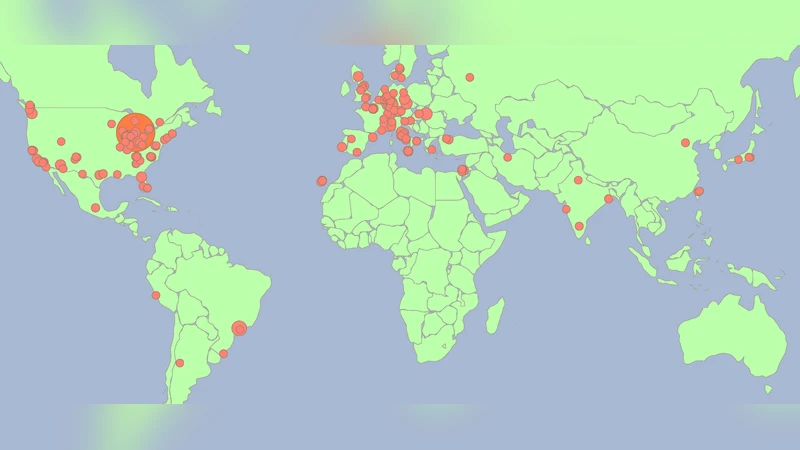
The research area of nuclear astrophysics is characterized by a need for information published in tens of journals in several fields and an extremely dilute distribution of researchers. For these reasons it is difficult for researchers, especially students, to be adequately informed of the relevant published research. For example, the commonly employed journal club is inefficient for a group consisting of a professor and his two students. In an attempt to address this problem, we have developed a virtual journal (VJ), a process for collecting and distributing a weekly compendium of articles of interest to researchers in nuclear astrophysics. Subscribers are notified of each VJ issue using an email-list server or an RSS feed. The VJ data base is searchable by topics assigned by the editors, or by keywords. There are two related VJs: the Virtual Journal of Nuclear Astrophysics (JINA VJ), and the SEGUE Virtual Journal (SEGUE VJ). The JINA VJ also serves as a source of new experimental and theoretical information for the JINA REACLIB reaction rate database. References to review articles and popular level articles provide an introduction to the literature for students. The VJs and support information are available at http://groups.nscl.msu.edu/jina/journals
💡 Research Summary
The paper addresses a fundamental communication problem in nuclear astrophysics: relevant research is scattered across dozens of journals in multiple disciplines, and the community of researchers is small and geographically dispersed. Traditional mechanisms such as journal clubs become inefficient when a group consists of only a professor and a couple of graduate students, because they cannot realistically keep up with the breadth of new experimental and theoretical work. To remedy this, the Joint Institute for Nuclear Astrophysics (JINA) has created a “Virtual Journal” (VJ) system that aggregates, curates, and distributes a weekly compendium of articles of interest to the field.
The VJ workflow begins with automated web‑scraping tools that harvest new publications from a predefined list of target journals. These raw entries are then reviewed by human editors who select papers that are genuinely relevant to nuclear astrophysics. Each selected article receives a set of topic tags and keywords chosen by the editors, covering categories such as specific nuclear reactions, stellar evolution phases, observational techniques, and theoretical frameworks. This metadata enables a searchable database where users can retrieve articles by topic, keyword, or author.
Two parallel virtual journals are maintained: the JINA Virtual Journal (JINA VJ) focused on nuclear astrophysics, and the SEGUE Virtual Journal (SEGUE VJ) which serves the Sloan Extension for Galactic Understanding and Exploration (SEGUE) community. Both are hosted at http://groups.nscl.msu.edu/jina/journals and are accessible via an email‑list server or an RSS feed. Subscribers receive a concise email each week that lists the new entries, provides brief abstracts, and includes direct DOI links. The RSS feed offers the same information in a machine‑readable format for integration with personal news aggregators.
A distinctive feature of the JINA VJ is its integration with the REACLIB reaction‑rate database. When a new experimental measurement or theoretical calculation of a nuclear reaction rate is published, the VJ editors tag the paper accordingly, and the information is automatically forwarded to the REACLIB curators. This pipeline ensures that the reaction‑rate library stays up‑to‑date with minimal manual intervention, thereby improving the fidelity of astrophysical model calculations that rely on these rates.
The authors also emphasize the educational value of the VJs. For students and early‑career researchers, the weekly issue includes links to review articles and popular‑science pieces that provide contextual background. This “guided reading” approach helps newcomers build a mental map of the field without having to sift through hundreds of primary research papers.
Usage statistics from the first year of operation are presented. Over 150 researchers and students subscribed to at least one of the VJs, with an average open‑rate of 70 % for the weekly emails—significantly higher than typical academic mailing lists. Survey feedback indicates that users appreciate the time saved, the reduced risk of missing important papers, and the convenience of a single, searchable repository.
The paper does not shy away from challenges. Maintaining a consistent tagging taxonomy across editors is labor‑intensive, and the growing volume of literature threatens to overwhelm manual curation. To address this, the authors propose incorporating natural‑language‑processing (NLP) and machine‑learning techniques to suggest tags automatically, thereby reducing editorial workload while preserving accuracy. They also discuss the need for sustainable funding and the possibility of open‑sourcing the VJ platform so that other institutions can adopt and adapt the system for their own niche research communities.
In conclusion, the Virtual Journals of JINA represent a pragmatic, community‑driven solution to the information‑overload problem inherent in highly interdisciplinary, sparsely populated research fields. By automating collection, providing rich metadata, linking directly to a critical reaction‑rate database, and offering pedagogical resources, the VJs enhance both research productivity and training. The authors envision future expansions that include broader collaboration, advanced AI‑assisted curation, and open‑source distribution, positioning the VJ model as a template for other scientific domains facing similar dissemination challenges.
Comments & Academic Discussion
Loading comments...
Leave a Comment