High energy cosmic rays
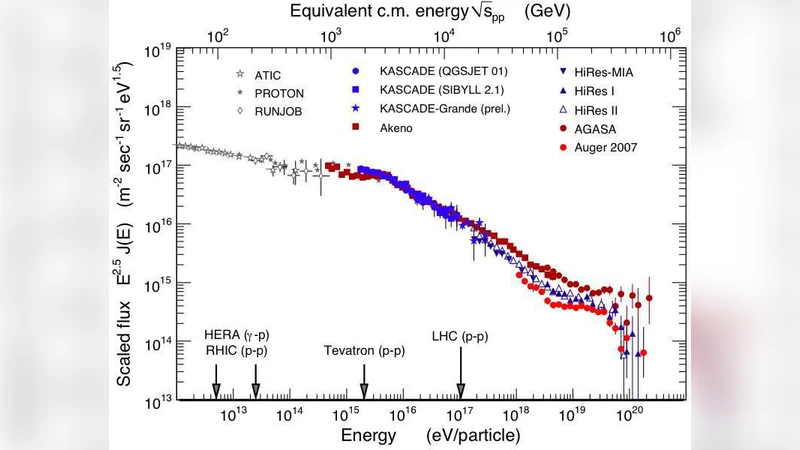
I review here some of the physics we are learning and expect to learn in the near future through the observation of cosmic rays. The study of cosmic rays involves a combination of data from accelerators, ground arrays, atmospheric fluorescence detectors and balloon and satellite experiments. I will discuss the data of the Pierre Auger Observatory, PAMELA, ATIC and FST among other experiments.
💡 Research Summary
This review paper provides a comprehensive synthesis of the current state of high‑energy cosmic‑ray research and outlines the prospects for future discoveries. It begins by emphasizing that cosmic rays occupy a unique intersection between astrophysics and particle physics, and that advances in detection technologies have opened new windows onto fundamental processes in the universe. The author then surveys the principal experimental platforms that supply the data discussed throughout the manuscript.
The Pierre Auger Observatory, located on the high plateau of Argentina, combines a vast surface array of over 1,600 water‑Cherenkov detectors with fluorescence telescopes that monitor atmospheric nitrogen emission. This hybrid approach yields simultaneous measurements of arrival direction, energy, and the depth of shower maximum (Xmax) for events above 10¹⁸ eV. The Auger data reveal a pronounced anisotropy at energies exceeding 10¹⁹ eV, suggesting a possible connection to nearby active galactic nuclei or other extragalactic accelerators. Moreover, Xmax analyses indicate a gradual shift from light (proton‑dominated) to heavier nuclei (e.g., iron) at the highest energies, although the interpretation depends sensitively on the hadronic interaction models (QGSJet, EPOS, etc.) used in air‑shower simulations.
Space‑borne and balloon‑borne instruments complement the ground‑based measurements. PAMELA (Payload for Antimatter Matter Exploration and Light‑Nuclei Astrophysics) and ATIC (Advanced Thin Ionization Calorimeter) have delivered high‑precision spectra of electrons, positrons, protons, and antiprotons in the sub‑PeV regime. Notably, ATIC reported an unexpected excess in the electron spectrum above ~300 GeV, a feature that cannot be accommodated by conventional diffusion models and has sparked a wide range of interpretations, from dark‑matter annihilation or decay to nearby pulsar wind nebulae. The FST (Feasibility Satellite Telescope) and similar small‑satellite missions have measured particle fluxes directly in the upper atmosphere, reducing uncertainties in atmospheric density models and providing a crucial cross‑check for ground‑array results.
A central theme of the paper is the necessity of integrating these heterogeneous data sets while confronting systematic uncertainties. Collider experiments at the LHC furnish forward‑physics measurements that are indispensable for refining the hadronic interaction models employed in air‑shower simulations, thereby tightening the link between accelerator physics and cosmic‑ray phenomenology. In parallel, the author highlights the growing role of machine‑learning techniques for multi‑dimensional pattern recognition in the massive data streams generated by modern observatories.
Looking ahead, the author outlines a roadmap for the next decade of research. The AugerPrime upgrade will enhance the surface detectors with scintillator panels, improving the discrimination between electromagnetic and muonic shower components and thereby sharpening composition measurements. Planned space missions such as ISS‑CREAM (Cosmic‑Ray Energetics And Mass) will extend precise elemental spectra from a few GeV up to the PeV range, bridging the gap between low‑energy satellite data and ultra‑high‑energy ground observations. By combining these complementary approaches, the community aims to pinpoint the acceleration mechanisms responsible for the most energetic particles, map their propagation through intergalactic magnetic fields, and ultimately identify their astrophysical sources.
In summary, the review underscores that high‑energy cosmic‑ray science is entering a mature, data‑rich era where synergistic use of accelerator results, ground‑based arrays, fluorescence telescopes, and space‑borne detectors will enable decisive tests of long‑standing hypotheses about particle acceleration, composition transitions, and the role of exotic physics such as dark matter. The convergence of improved instrumentation, sophisticated analysis methods, and cross‑disciplinary collaboration promises to transform our understanding of the most energetic phenomena in the cosmos.
Comments & Academic Discussion
Loading comments...
Leave a Comment