Simulations of Baryon Acoustic Oscillations II: Covariance matrix of the matter power spectrum
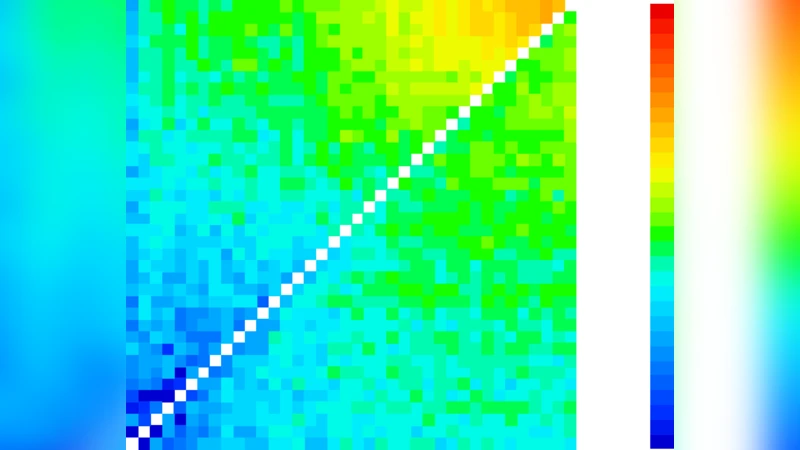
We use 5000 cosmological N-body simulations of 1(Gpc/h)^3 box for the concordance LCDM model in order to study the sampling variances of nonlinear matter power spectrum. We show that the non-Gaussian errors can be important even on large length scales relevant for baryon acoustic oscillations (BAO). Our findings are (1) the non-Gaussian errors degrade the cumulative signal-to-noise ratios (S/N) for the power spectrum amplitude by up to a factor of 2 and 4 for redshifts z=1 and 0, respectively. (2) There is little information on the power spectrum amplitudes in the quasi-nonlinear regime, confirming the previous results. (3) The distribution of power spectrum estimators at BAO scales, among the realizations, is well approximated by a Gaussian distribution with variance that is given by the diagonal covariance component. (4) For the redshift-space power spectrum, the degradation in S/N by non-Gaussian errors is mitigated due to nonlinear redshift distortions. (5) For an actual galaxy survey, the additional shot noise contamination compromises the cosmological information inherent in the galaxy power spectrum, but also mitigates the impact of non-Gaussian errors. The S/N is degraded by up to 30% for a WFMOS-type survey. (6) The finite survey volume causes additional non-Gaussian errors via the correlations of long-wavelength fluctuations with the fluctuations we want to measure, further degrading the S/N values by about 30% even at high redshift z=3.
💡 Research Summary
This paper presents a comprehensive investigation of the covariance matrix of the nonlinear matter power spectrum using an unprecedented suite of 5,000 cosmological N‑body simulations, each covering a volume of (1 Gpc/h)³ within the concordance ΛCDM framework. The authors aim to quantify how non‑Gaussian statistical errors affect the information content of the power spectrum, especially on scales relevant to Baryon Acoustic Oscillations (BAO).
The key findings are as follows. First, non‑Gaussian contributions to the covariance—originating from the trispectrum and higher‑order mode coupling—are significant even at the relatively large scales (k≈0.05–0.2 h Mpc⁻¹) that host the BAO peaks. As a result, the cumulative signal‑to‑noise ratio (S/N) for measuring the overall amplitude of the power spectrum is degraded by up to a factor of two at redshift z=1 and by a factor of four at z=0, compared with the Gaussian‑only prediction. This demonstrates that the usual Gaussian assumption substantially over‑estimates the statistical power of BAO analyses.
Second, the quasi‑nonlinear regime (0.2 ≲ k ≲ 0.4 h Mpc⁻¹) carries very little independent information about the power‑spectrum amplitude. The strong off‑diagonal correlations induced by non‑Gaussianity essentially erase any additional constraints that could be extracted from these modes, confirming earlier theoretical expectations.
Third, despite the presence of strong mode coupling, the distribution of power‑spectrum estimators at BAO scales across the simulation ensemble is well described by a Gaussian. The variance of this distribution is accurately captured by the diagonal elements of the covariance matrix, indicating that the primary effect of non‑Gaussianity is to introduce correlations between different k‑bins rather than to alter the one‑point statistics of each bin.
Fourth, when the analysis is performed in redshift space, the degradation of S/N caused by non‑Gaussian errors is partially mitigated. Nonlinear redshift‑space distortions, particularly the Finger‑of‑God effect, suppress small‑scale power and reduce the amplitude of the trispectrum, thereby lessening the impact of mode coupling on the overall information content.
Fifth, the authors incorporate realistic shot‑noise contributions expected for a future wide‑field spectroscopic survey (e.g., WFMOS). Shot noise adds a white‑noise term to the power spectrum, which both reduces the total S/N (by roughly 30%) and dilutes the non‑Gaussian correlations. Consequently, the net loss of cosmological information due to non‑Gaussianity is less severe in a galaxy survey than in a pure matter field, but the overall precision is still limited by shot noise.
Finally, the study addresses the effect of a finite survey volume through the super‑sample covariance (SSC) term. Fluctuations on scales larger than the survey couple to the measured modes, introducing an additional source of non‑Gaussian error. The authors find that SSC further degrades the S/N by about 30% even at high redshift (z≈3), underscoring the importance of accounting for large‑scale density variations when interpreting BAO measurements.
Overall, this work provides a robust, simulation‑based quantification of non‑Gaussian errors in the matter power spectrum and demonstrates their relevance for current and upcoming BAO surveys. The results highlight the necessity of incorporating the full covariance matrix—including off‑diagonal elements, redshift‑space effects, shot noise, and super‑sample contributions—into the data analysis pipelines to avoid biased parameter estimates and to fully exploit the cosmological information encoded in BAO features.
Comments & Academic Discussion
Loading comments...
Leave a Comment