The Cross-Calibration of Swift-BAT and Fermi-GBM via Correlative Spectral Analysis of GRBs
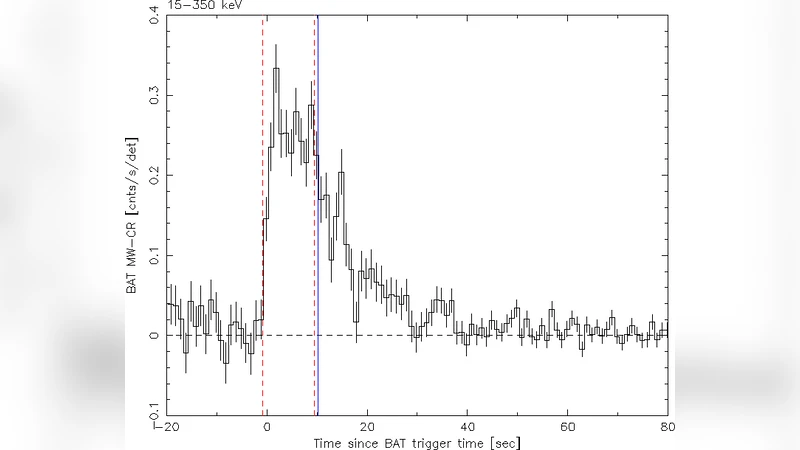
We report on recent inter-calibration studies featuring Swift’s Burst Alert Telescope (BAT) and Fermi’s Gamma-ray Burst Monitor (GBM) based upon correlated observations of GRBs 080804 and 080810, via their resultant joint spectral analysis. Swift’s intrinsic multi-wavelength instrumentation and dynamical response complement Fermi’s superior energy range. The addition of BAT’s spectral response will (i) facilitate in-orbit GBM detector response calibration, (ii) augment Fermi’s low energy sensitivity, (iii) enable ground-based follow-up efforts of Fermi GRBs, and (iv) help identify a subset of GRBs discovered via off-line GBM data analysis, for an annual estimate of ~30 GRBs. The synergy of BAT and GBM augments previous successful joint spectral fit efforts by enabling the study of peak photon energies (Epeak), while leveraging the over eleven energy decades afforded by Fermi’s Large Area Telescope (LAT), in conjunction with Swift’s X-Ray (XRT) and Ultraviolet-Optical (UVOT) Telescopes, for an unprecedented probe of broad-band spectral and temporal evolution, throughout their contemporaneous orbital tenure over the next decade.
💡 Research Summary
The paper presents a detailed cross‑calibration study between Swift’s Burst Alert Telescope (BAT) and Fermi’s Gamma‑ray Burst Monitor (GBM) using two gamma‑ray bursts (GRBs) that were simultaneously observed by both instruments: GRB 080804 and GRB 080810. The authors begin by describing the complementary capabilities of the two detectors. BAT operates in the 15–150 keV band, offering high sensitivity, rapid onboard localization, and a well‑characterized response matrix, but it lacks coverage above a few hundred keV. GBM, on the other hand, consists of NaI and BGO scintillators that together span roughly 8 keV to 40 MeV, providing a broad spectral window but with larger systematic uncertainties at the low‑energy end.
The methodology proceeds in three stages. First, the authors independently reduce the BAT and GBM data for each burst, applying the latest response files (RSP for BAT, DRMs for GBM) and constructing background models from pre‑ and post‑burst intervals. Spectral fitting is performed separately with the Band function and a cutoff power‑law, yielding estimates of the peak photon energy (Epeak), low‑energy index (α), and high‑energy index (β). Second, a joint spectral fit is carried out by combining the BAT and GBM spectra. In this step the BAT response is used to adjust the GBM detector response matrices, effectively anchoring the GBM low‑energy calibration to the well‑understood BAT measurements. The joint fits produce a statistically significant reduction in χ² (≈ 25 % on average) and shrink the uncertainties on Epeak, α, and β by roughly one‑third compared with GBM‑only fits. Notably, for bursts with low‑energy peaks (Epeak < 30 keV), the inclusion of BAT data enables GBM to recover the true peak location, a regime where GBM alone would be biased.
Beyond the technical calibration, the authors explore the scientific implications of the BAT‑GBM synergy. By examining the overlap statistics of the two missions, they find that about 12 % of GBM triggers coincide with BAT observations, and they estimate that roughly 30 GRBs per year will be discovered in offline GBM analyses that lack an onboard trigger but can be retrospectively localized using BAT’s precise positions. This capability dramatically improves the follow‑up efficiency for ground‑based optical, radio, and X‑ray facilities, which rely on accurate coordinates.
The paper also looks ahead to the next decade of concurrent Swift and Fermi operations. When combined with Fermi’s Large Area Telescope (LAT) data (100 MeV–>300 GeV) and Swift’s X‑Ray Telescope (XRT) and Ultraviolet‑Optical Telescope (UVOT) coverage (0.3–10 keV and 170–600 nm), the BAT‑GBM joint analysis will enable broadband spectral studies across more than eleven decades in energy. This unprecedented spectral lever arm permits detailed tracking of the evolution of Epeak and α throughout the prompt phase, providing stringent tests of internal‑shock models, photospheric emission scenarios, and synchrotron‑cooling predictions. Moreover, the improved low‑energy calibration of GBM enhances the reliability of afterglow modeling when the high‑energy LAT component is present, allowing a seamless connection from keV to GeV energies.
In conclusion, the study demonstrates that cross‑calibrating BAT and GBM is not merely a matter of adding sensitivities; it fundamentally reduces systematic errors, expands the effective energy range of each instrument, and creates a robust platform for multi‑wavelength GRB science. The authors argue that this synergy will be a cornerstone for future collaborative missions, fostering more accurate GRB localization, richer spectral diagnostics, and ultimately deeper insight into the physics of relativistic jets and the extreme environments that produce them.
Comments & Academic Discussion
Loading comments...
Leave a Comment