Autonomous tools for Grid management, monitoring and optimization
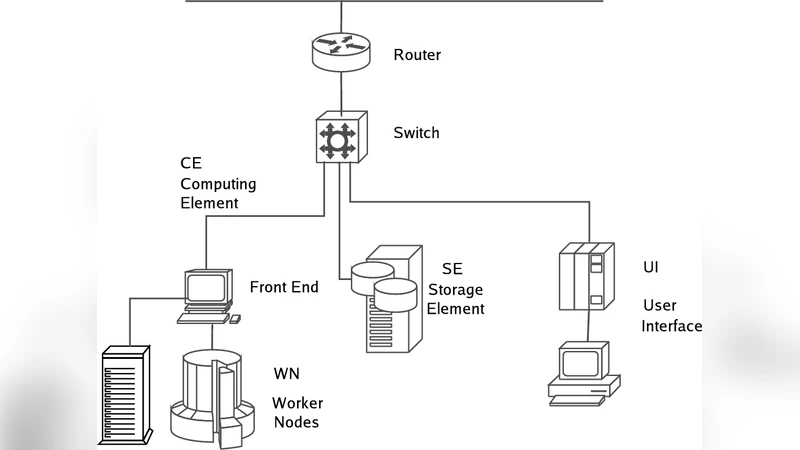
We outline design and lines of development of autonomous tools for the computing Grid management, monitoring and optimization. The management is proposed to be based on the notion of utility. Grid optimization is considered to be application-oriented. A generic Grid simulator is proposed as an optimization tool for Grid structure and functionality.
💡 Research Summary
The paper presents a comprehensive vision for autonomous tools that manage, monitor, and optimize large‑scale computing Grids. It begins by diagnosing the shortcomings of traditional, centrally‑controlled Grid management—namely, limited scalability, high operational overhead, and insufficient responsiveness to dynamic workloads. To address these issues, the authors introduce a utility‑based management framework. In this model, every resource allocation decision is driven by a utility function that quantifies the value of a resource from the user’s perspective. The utility function aggregates multiple factors such as job priority, Service Level Agreement (SLA) requirements, energy consumption, network bandwidth, and user cost sensitivity. By maximizing the aggregate utility, the system can make economically rational scheduling and load‑balancing choices without requiring explicit human intervention.
A distinctive aspect of the proposed approach is its application‑oriented optimization strategy. Rather than optimizing global metrics like average throughput or overall resource utilization, the system tailors resource assignments to the specific performance characteristics of each application. The authors advocate a two‑phase workflow: first, a detailed profiling stage extracts workload signatures (CPU intensity, data‑movement patterns, communication topology, etc.) for each application; second, a matching engine maps these signatures to “resource profiles” that specify the optimal mix of compute nodes, storage systems, and network paths. This matching is dynamic: as a job progresses, real‑time monitoring data feed back into the utility function, prompting on‑the‑fly adjustments that can migrate tasks, re‑allocate bandwidth, or switch power states to maintain optimal performance and cost efficiency.
To enable systematic evaluation and continuous improvement, the paper proposes a generic Grid simulator that serves as an optimization sandbox. The simulator is highly parameterizable: it can model arbitrary node configurations, network topologies, failure modes, and workload mixes. By running simulated experiments, researchers can compute utility scores, resource utilization percentages, job completion times, and energy footprints for any candidate policy. These results feed into meta‑heuristic optimization algorithms—such as genetic algorithms, particle swarm optimization, or reinforcement‑learning agents—that search the policy space for configurations that maximize utility under given constraints. Crucially, the simulator is not isolated; it exposes an API that allows policies discovered in silico to be deployed directly onto a live Grid. A closed‑loop feedback mechanism then measures actual performance, updates the simulation model, and iterates the optimization cycle, ensuring that the system continually adapts to evolving workloads and infrastructure changes.
Implementation considerations are addressed in depth. The authors advocate a modular architecture where each component (monitoring agents, utility evaluator, scheduler, optimizer, and simulator) communicates via standard Grid service protocols (OGSA, WS‑RF). Security is enforced through X.509 certificates and role‑based access control, protecting both data integrity and policy execution. Data collection pipelines aggregate logs, real‑time metrics, and historical records into a scalable storage backend, supporting dashboards, alerts, and predictive analytics. The simulator’s integration layer translates policy decisions into actionable commands for the underlying resource manager (e.g., SLURM, HTCondor), enabling seamless automation.
In the concluding section, a phased deployment roadmap is outlined. Early adoption can begin with a utility‑aware scheduler and enhanced monitoring dashboards, providing immediate gains in resource efficiency. Subsequent phases introduce the simulation‑driven optimizer and automated policy enforcement, moving the Grid toward full autonomy. The long‑term vision is a self‑optimizing Grid that minimizes human oversight while simultaneously maximizing cost‑effectiveness, energy efficiency, and application performance—essentially a “utility‑first” Grid that aligns infrastructure behavior with the economic and scientific goals of its users.
Comments & Academic Discussion
Loading comments...
Leave a Comment