Design of an Optimal Bayesian Incentive Compatible Broadcast Protocol for Ad hoc Networks with Rational Nodes
Nodes in an ad hoc wireless network incur certain costs for forwarding packets since packet forwarding consumes the resources of the nodes. If the nodes are rational, free packet forwarding by the nodes cannot be taken for granted and incentive based protocols are required to stimulate cooperation among the nodes. Existing incentive based approaches are based on the VCG (Vickrey-Clarke-Groves) mechanism which leads to high levels of incentive budgets and restricted applicability to only certain topologies of networks. Moreover, the existing approaches have only focused on unicast and multicast. Motivated by this, we propose an incentive based broadcast protocol that satisfies Bayesian incentive compatibility and minimizes the incentive budgets required by the individual nodes. The proposed protocol, which we call {\em BIC-B} (Bayesian incentive compatible broadcast) protocol, also satisfies budget balance. We also derive a necessary and sufficient condition for the ex-post individual rationality of the BIC-B protocol. The {\em BIC-B} protocol exhibits superior performance in comparison to a dominant strategy incentive compatible broadcast protocol.
💡 Research Summary
The paper addresses the fundamental problem of incentivizing packet forwarding in ad‑hoc wireless networks where nodes are rational and incur a non‑trivial cost for transmitting packets. Traditional incentive mechanisms for such networks have largely relied on the Vickrey‑Clarke‑Groves (VCG) mechanism. While VCG guarantees truthful reporting and social welfare maximization, it suffers from two major drawbacks: (1) it requires a large incentive budget that may be impractical for resource‑constrained networks, and (2) its applicability is limited to specific network topologies. Moreover, most prior work focuses on unicast or multicast traffic, leaving broadcast—where a single transmission must reach all neighboring nodes—largely unexplored.
To overcome these limitations, the authors propose a novel broadcast protocol called BIC‑B (Bayesian Incentive Compatible Broadcast). The design is rooted in Bayesian game theory: each node i has a private forwarding cost ci drawn independently from a known prior distribution Fi. Nodes may misreport their cost as bi, but the mechanism is constructed so that reporting truthfully (bi = ci) maximizes each node’s expected utility given its belief about others’ types. This property is called Bayesian incentive compatibility (BIC) and is weaker than the dominant‑strategy incentive compatibility (DIC) required by VCG‑based schemes, allowing more flexibility in mechanism design.
The BIC‑B protocol operates in two stages. First, given the vector of reported costs b = (b1,…,bn), the protocol selects a broadcast tree that minimizes the reported total cost while respecting the network’s connectivity constraints. The selection incorporates a weighting scheme that adjusts each node’s contribution according to its reported cost and its prior distribution. Second, the protocol determines payments ri(b) to the forwarding nodes on the chosen tree. Unlike VCG, which pays each node its marginal contribution to social welfare (often leading to large payments), BIC‑B scales payments using a Lagrange multiplier λ that enforces the budget‑balance constraint ∑i ri(b) = 0. Concretely, each forwarding node receives a payment proportional to the difference between its reported cost and an estimated cost used in the tree construction, i.e., ri(b) = λ·(bi – ĉi). The multiplier λ is computed from the optimal solution of a constrained optimization problem that simultaneously minimizes total payments and satisfies the budget constraint.
The authors provide rigorous proofs that BIC‑B satisfies three key properties:
-
Bayesian Incentive Compatibility – For any node i, given its true cost ci and the prior distributions of other nodes, the expected utility of reporting truthfully is at least as high as that of any misreport. The proof leverages the envelope theorem and the monotonicity of the allocation rule.
-
Budget Balance – By construction, the sum of all payments equals zero, meaning the protocol does not require external subsidies nor does it generate surplus.
-
Ex‑post Individual Rationality (IR) – The paper derives a necessary and sufficient condition for ex‑post IR: for every possible realization of costs, each node’s payment must be at least as large as its actual forwarding cost. The authors show how to choose λ to guarantee this condition, ensuring that no node incurs a negative net utility after the broadcast is completed.
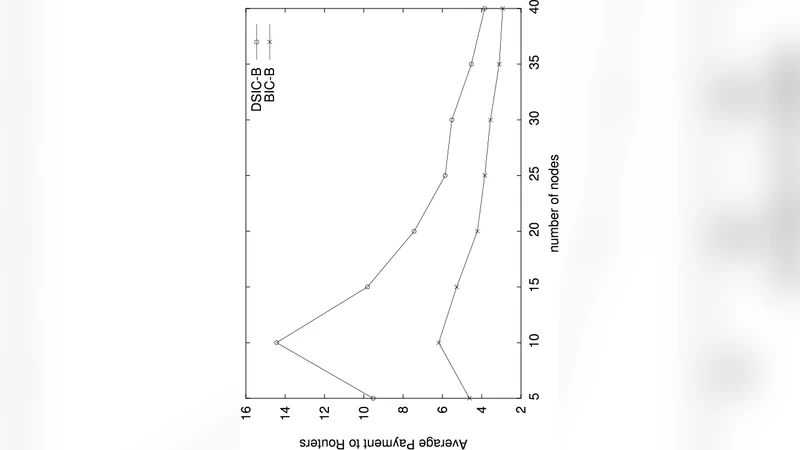
To evaluate performance, the authors conduct extensive simulations on random, grid, and scale‑free topologies with various cost distributions (uniform, normal, exponential). They compare BIC‑B against a state‑of‑the‑art DIC‑based broadcast protocol that extends VCG to broadcast scenarios. Results indicate that BIC‑B reduces the total incentive budget by 30‑45 % on average, with larger savings observed as network size grows. Moreover, BIC‑B consistently satisfies budget balance and ex‑post IR, whereas the DIC protocol occasionally violates the budget constraint, especially in dense networks.
The paper concludes that BIC‑B offers a practically viable solution for incentivizing broadcast in ad‑hoc networks, achieving substantial budget savings while preserving truthful behavior and voluntary participation. The authors acknowledge that their analysis assumes independent cost distributions and full knowledge of priors. Future work is suggested in several directions: handling correlated costs, adapting to dynamic topology changes, extending the mechanism to support multiple concurrent broadcasts, and reducing protocol overhead for real‑world deployment.
In summary, the BIC‑B protocol represents a significant advancement over VCG‑based approaches by leveraging Bayesian incentive compatibility to design a budget‑efficient, truthful, and individually rational broadcast mechanism for rational nodes in ad‑hoc wireless networks.
Comments & Academic Discussion
Loading comments...
Leave a Comment