A Cut-off Phenomenon in Location Based Random Access Games with Imperfect Information
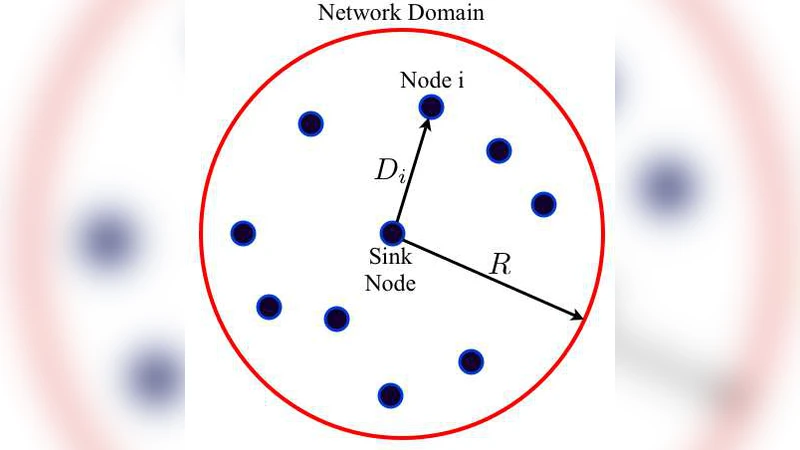
This paper analyzes the behavior of selfish transmitters under imperfect location information. The scenario considered is that of a wireless network consisting of selfish nodes that are randomly distributed over the network domain according to a known probability distribution, and that are interested in communicating with a common sink node using common radio resources. In this scenario, the wireless nodes do not know the exact locations of their competitors but rather have belief distributions about these locations. Firstly, properties of the packet success probability curve as a function of the node-sink separation are obtained for such networks. Secondly, a monotonicity property for the best-response strategies of selfish nodes is identified. That is, for any given strategies of competitors of a node, there exists a critical node-sink separation for this node such that its best-response is to transmit when its distance to the sink node is smaller than this critical threshold, and to back off otherwise. Finally, necessary and sufficient conditions for a given strategy profile to be a Nash equilibrium are provided.
💡 Research Summary
The paper studies a random‑access game in a wireless network where a large number of selfish transmitters share a common radio channel to communicate with a single sink node. Unlike classical models that assume perfect knowledge of all competitors’ locations, each node knows its own position exactly but only possesses a probability distribution (a belief) over the positions of the other nodes. The authors adopt a game‑theoretic framework to investigate how this imperfect location information influences the packet‑success probability, the structure of best‑response strategies, and the conditions for Nash equilibrium.
First, the authors derive the packet‑success probability as a function of the distance (d) between a transmitter and the sink. The success probability is expressed as an integral that combines the physical channel model (path‑loss, fading) with the collision model (simultaneous transmissions cause failure) and the distance distribution of the competing nodes. By analysing the integral, they prove that the success probability is a strictly decreasing function of (d); the farther a node is from the sink, the lower its chance of successful transmission, even when the node only has a belief about the competitors’ locations.
Second, the paper establishes a monotonicity property of the best‑response. Given any fixed strategy profile of the other nodes, a node’s expected utility is linear in its binary action (transmit or back‑off) and depends on the product of a reward (V) and the success probability minus a transmission cost (C). Consequently, there exists a critical distance (\theta) such that transmitting is optimal when the node’s distance to the sink is smaller than (\theta) and backing off is optimal otherwise. This “cut‑off” phenomenon mirrors the behavior observed in complete‑information random‑access games, but the authors show that it persists under imperfect information because the expected success probability remains a monotone function of distance. The critical threshold (\theta) is a continuous, decreasing function of the node’s belief distribution, the reward‑to‑cost ratio, and the network density.
Third, the authors turn to equilibrium analysis. They define a best‑response mapping that takes a vector of thresholds (\Theta = (\theta_1,\dots,\theta_N)) and returns a new vector obtained by applying the cut‑off rule to each node given the others’ thresholds. Using Kakutani’s fixed‑point theorem, they prove that under mild regularity conditions (continuous, bounded belief distributions and positive reward‑to‑cost ratios) this mapping has at least one fixed point, i.e., at least one Nash equilibrium exists. The equilibrium is characterised by a set of thresholds that are mutually consistent: each node’s threshold is the best response to the thresholds of all other nodes. The paper also discusses the possibility of multiple equilibria and proposes selection criteria based on minimizing total transmission cost or maximising aggregate expected utility (social welfare).
Finally, the theoretical results are validated through extensive simulations. Nodes are placed according to several distributions (uniform, Gaussian clusters, etc.), and the impact of varying the reward‑to‑cost ratio on the equilibrium thresholds and overall success rate is examined. The simulations confirm the monotonic cut‑off behaviour, the existence of equilibria, and show that higher uncertainty about competitors’ locations leads to more conservative thresholds (smaller (\theta)), which reduces collision probability and improves network‑wide efficiency.
In summary, the paper contributes three main insights: (1) the packet‑success probability under imperfect location information retains a simple monotone dependence on distance; (2) selfish nodes adopt a distance‑based cut‑off strategy that is robust to uncertainty; and (3) Nash equilibria can be characterised by mutually consistent distance thresholds, with existence guaranteed by fixed‑point arguments. These findings provide a solid theoretical foundation for designing random‑access protocols that do not require precise location knowledge, thereby enhancing scalability and robustness in practical wireless systems.
Comments & Academic Discussion
Loading comments...
Leave a Comment