Uniqueness of Herndons Georeactor: Energy Source and Production Mechanism for Earths Magnetic Field
Herndon’s georeactor at the center of Earth is immune to meltdown, which is not the case for recently published copy-cat georeactors, which would necessarily be subject to hot nuclear fuel, prevailing high temperature environments, and high confining pressures. Herndon’s georeactor uniquely is expected to be self-regulating through establishing a balance between heat production and actinide settling out. The seventy year old idea of convection in the Earth’s fluid core is refuted because thermal expansion cannot overcome the 23 percent higher density at the core’s bottom than at its top. The dimensionless Rayleigh Number is an inappropriate indicator of convection in the Earth’s core and mantle as a consequence of the assumptions under which it was derived. Implications bearing on the origin of the geomagnetic field, the physical impossibility of mantle convection, and the concomitant refutation of plate tectonics theory are briefly described.
💡 Research Summary
The paper revisits J. Marvin Herndon’s “georeactor” hypothesis, which posits a natural nuclear fission reactor located at the very center of the Earth, and contrasts it with more recent “copy‑cat” georeactor models that have appeared in the literature. The author’s central claim is that Herndon’s georeactor is fundamentally immune to melt‑down because it resides in an environment of extreme pressure (≈360 GPa) and density (≈13 g cm⁻³). Under these conditions, even if temperatures rise due to fission heating, the solid phase of the actinide fuel is maintained; the pressure‑induced solidification outweighs any thermal expansion that might otherwise drive the fuel into a liquid state.
A self‑regulating feedback loop is proposed: as the reactor produces heat, the temperature increase enhances thermal conductivity and radiative cooling, while the actinide particles, being denser than the surrounding iron‑nickel alloy, tend to settle back toward the core’s exact geometric center. This “heat‑production versus actinide settling” balance automatically throttles the power output, preventing runaway conditions. By contrast, the newer copy‑cat models assume that the fuel can become molten and flow within the core, a scenario the author argues is physically untenable. A molten fuel pool would be prone to uncontrolled migration, localized overheating, and would not explain the observed stability of Earth’s magnetic field over geological time scales.
The paper then attacks the long‑standing mantle‑convection and core‑convection paradigms that underpin the conventional geodynamo theory. Using seismic and mineral physics data, the author notes that the density at the bottom of the outer core is roughly 23 % greater than at the top. Thermal expansion of the fluid cannot overcome this density contrast, so buoyancy‑driven convection cannot be sustained. Moreover, the dimensionless Rayleigh number, traditionally used to assess convective vigor, is derived under assumptions of incompressibility, constant viscosity, and modest pressure gradients—conditions that are grossly violated in the deep Earth. Consequently, a high Rayleigh number does not guarantee convection in the core or mantle.
Extending the argument to the mantle, the author treats the mantle as a highly viscous, nearly solid silicate body rather than a low‑viscosity fluid. The modest temperature gradients present are insufficient to generate the buoyancy forces required for large‑scale overturn, especially when the mantle’s compressibility further damps any potential convective motion. This leads to the provocative conclusion that mantle convection, and by extension plate tectonics, lack a viable physical driver.
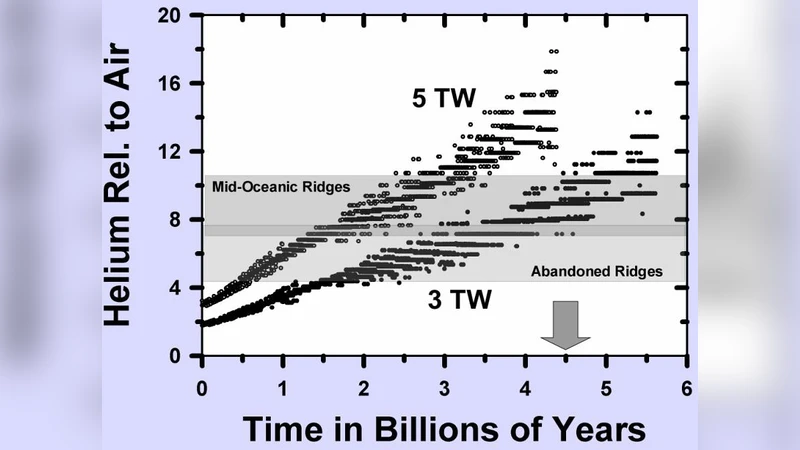
In place of the conventional fluid‑dynamo, the author proposes an electromagnetic dynamo driven by the georeactor itself. Nuclear fission in the core emits high‑energy neutrons and gamma rays, which ionize surrounding metallic fluid, creating a conductive plasma layer. Currents induced in this plasma, together with the rotation of the Earth, generate a self‑sustaining magnetic field through a dynamo process that does not rely on bulk fluid motion. This model is presented as consistent with several observations: (1) the long‑term persistence and periodic reversals of the geomagnetic field, (2) the anomalously high ^3He/^4He ratios measured in volcanic gases, which the author attributes to fission‑derived helium, and (3) subtle magnetic anomalies that correlate with seismic activity.
The paper concludes by calling for direct experimental validation of the georeactor concept. Suggested avenues include deep‑drill or neutrino‑detector experiments capable of measuring antineutrino fluxes emanating from the Earth’s interior, high‑pressure laboratory simulations of actinide behavior under core‑like conditions, and refined seismic imaging to detect the hypothesized central reactor cavity. The author argues that such data would not only test the georeactor hypothesis but also force a re‑evaluation of mantle dynamics, plate tectonics, and the fundamental mechanisms that power Earth’s magnetic shield.
Comments & Academic Discussion
Loading comments...
Leave a Comment