AstroTwitter
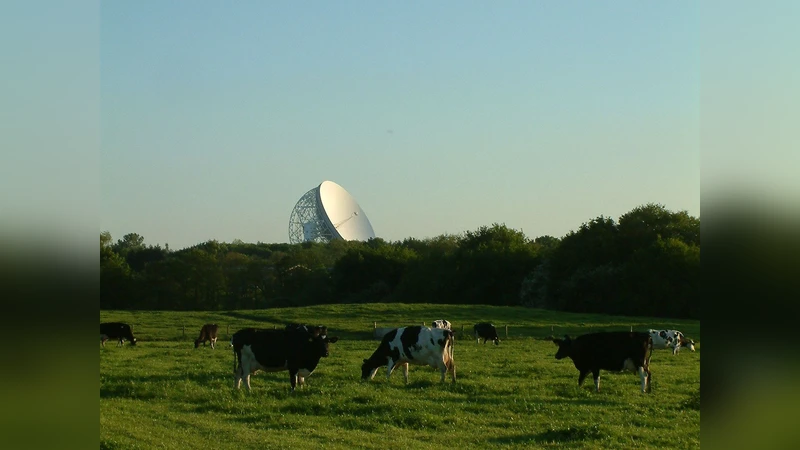
AstroTwitter aims to make it easy for both professional and amateur telescopes to let the world know what they are observing in real-time.
💡 Research Summary
The paper introduces AstroTwitter, a dedicated service designed to broadcast real‑time observing information from both professional and amateur telescopes in a format that is more useful than the limited display previously used at Jodrell Bank’s Visitor Centre. The author begins by describing the public’s recurring question, “What is it looking at?” and explains how the existing system—showing coordinates on a screen—fails to serve visually impaired users, limits data reuse, and offers no easy way to integrate with modern outreach tools.
Inspired by the emergence of Twitter in 2006, the author proposes leveraging its micro‑blogging model and open APIs to create a telescope‑specific platform. Each observatory would create an AstroTwitter account, supplying metadata such as name, location, description, and an image. Observing instruments would automatically publish their current right‑ascension and declination (and optionally target identifiers) in a standardized XML or JSON feed. AstroTwitter would ingest these streams and generate a wide variety of output formats: web pages, RSS feeds, simple XML, Google Sky overlays, traditional Twitter updates, embeddable website widgets, VOEvents, links to nearby objects via Aladin, references to scientific papers via ADS, and press‑release images via VAMP. The service could also aggregate feeds for user‑defined groups of telescopes, enabling coordinated displays of multiple facilities.
The paper discusses technical challenges such as the need for internet connectivity at remote sites, the possibility of keeping certain observations private (e.g., during discovery of a minor body), and the handling of service outages (the “fail whale”). Solutions include local buffering with batch uploads, optional manual submission, and a backup server with caching. Privacy is maintained by allowing each observatory to decide when to publish or suppress its data.
Social impact is illustrated through the successful use of Twitter by NASA’s Mars Phoenix lander, which employed first‑person narration and rapid response to public questions, growing its follower base from a few thousand to over thirty‑five thousand. Similar practices have been adopted by ESA’s Planck, NASA’s LRO/LCROSS, and the Solar Dynamics Observatory, demonstrating that real‑time, personable communication can significantly increase public engagement and provide a rapid channel for disseminating scientific results that might otherwise be delayed in mainstream media.
In the conclusions, the author argues that AstroTwitter will lower the barrier for observatories to share live sky positions, requiring only modest initial effort to automate data pipelines. By handling format conversion centrally, the service frees individual facilities from the need to keep up with evolving web standards. The resulting feeds can be visualized in tools such as Google Sky, Microsoft’s WorldWide Telescope, or Stellarium, giving the public a “snapshot” of what the world’s telescopes are observing at any moment. This transparency not only answers the original “What is it looking at?” question but also encourages amateur astronomers to observe the same targets, facilitates coordination of gamma‑ray burst alerts, VLBI campaigns, and provides an archival record useful for mapping observational coverage and identifying under‑studied regions of the sky. The paper envisions that easy access to this data will spur further innovative applications and foster a more connected astronomical community.
Comments & Academic Discussion
Loading comments...
Leave a Comment