High Dimensional Nonlinear Learning using Local Coordinate Coding
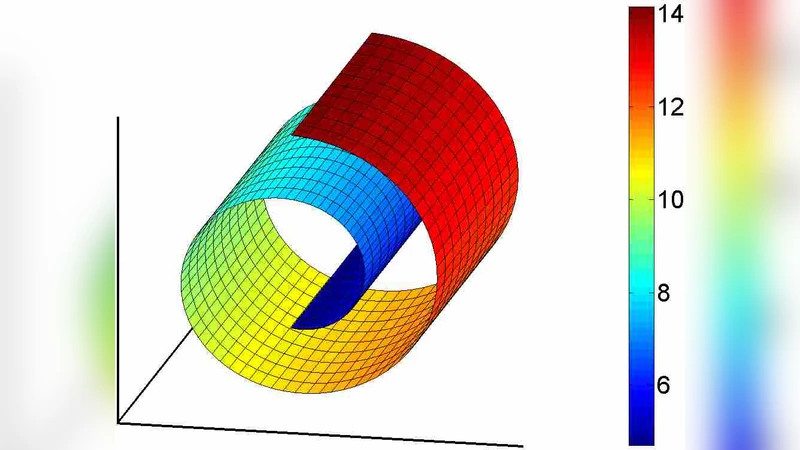
This paper introduces a new method for semi-supervised learning on high dimensional nonlinear manifolds, which includes a phase of unsupervised basis learning and a phase of supervised function learning. The learned bases provide a set of anchor points to form a local coordinate system, such that each data point $x$ on the manifold can be locally approximated by a linear combination of its nearby anchor points, with the linear weights offering a local-coordinate coding of $x$. We show that a high dimensional nonlinear function can be approximated by a global linear function with respect to this coding scheme, and the approximation quality is ensured by the locality of such coding. The method turns a difficult nonlinear learning problem into a simple global linear learning problem, which overcomes some drawbacks of traditional local learning methods. The work also gives a theoretical justification to the empirical success of some biologically-inspired models using sparse coding of sensory data, since a local coding scheme must be sufficiently sparse. However, sparsity does not always satisfy locality conditions, and can thus possibly lead to suboptimal results. The properties and performances of the method are empirically verified on synthetic data, handwritten digit classification, and object recognition tasks.
💡 Research Summary
The paper proposes a novel semi‑supervised learning framework for data that lie on high‑dimensional nonlinear manifolds. The method consists of two distinct phases. In the first, unsupervised “basis learning” extracts a relatively small set of anchor points (or bases) from a large pool of unlabeled samples. These anchors are intended to capture the global geometry of the underlying manifold and can be obtained by clustering, graph‑based methods, or other manifold‑learning techniques.
In the second phase, each data point (x) is expressed as a linear combination of its nearby anchors:
\
Comments & Academic Discussion
Loading comments...
Leave a Comment