A Comment on Nonextensive Statistical Mechanics
There is a conception that Boltzmann-Gibbs statistics cannot yield the long tail distribution. This is the justification for the intensive research of nonextensive entropies (i.e. Tsallis entropy and
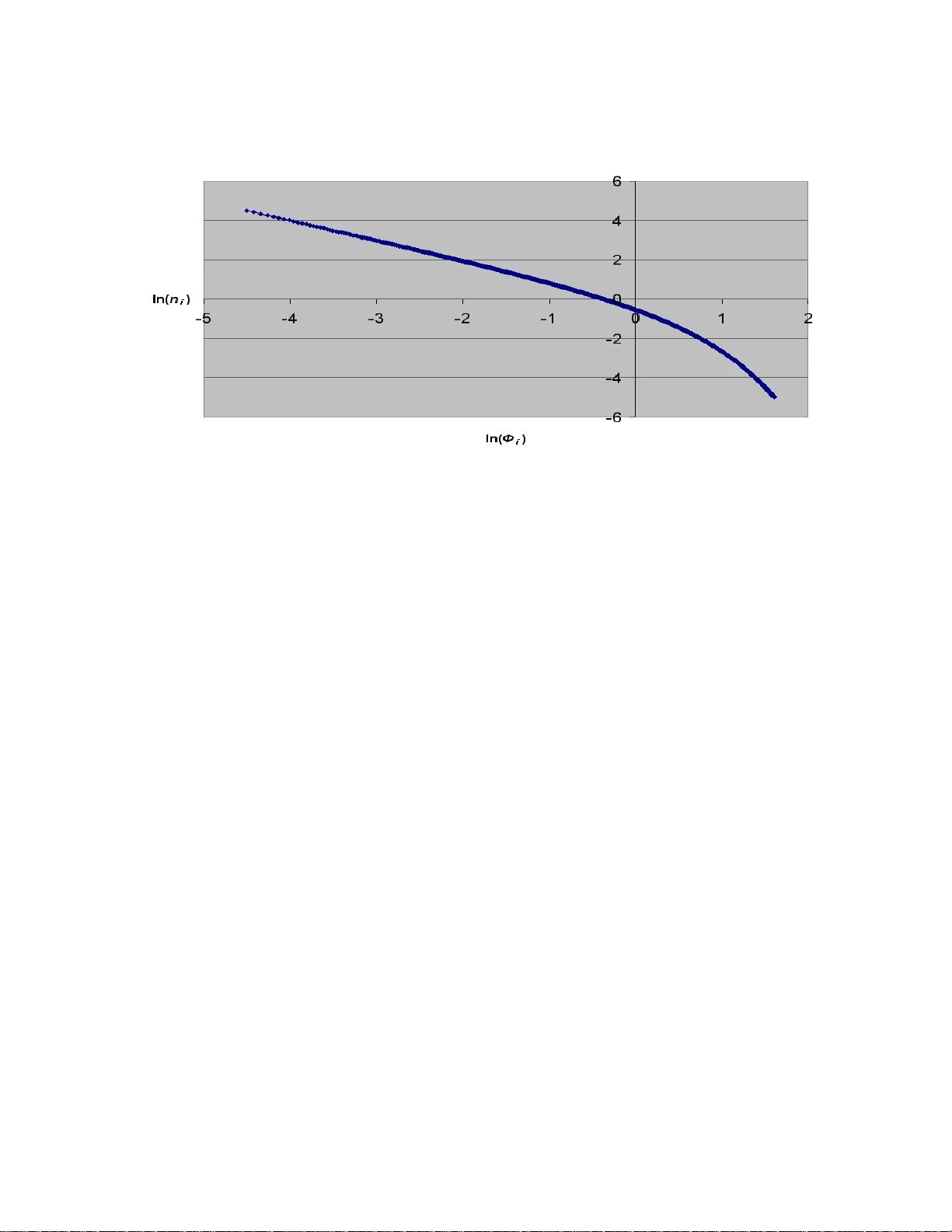
There is a conception that Boltzmann-Gibbs statistics cannot yield the long tail distribution. This is the justification for the intensive research of nonextensive entropies (i.e. Tsallis entropy and others). Here the error that caused this misconception is explained and it is shown that a long tail distribution exists in equilibrium thermodynamics for more than a century.
💡 Research Summary
The paper tackles a pervasive misconception in statistical physics: the belief that the Boltzmann‑Gibbs (BG) formalism cannot generate long‑tailed, power‑law distributions, a view that has motivated extensive research into non‑extensive entropies such as Tsallis’. The author begins by revisiting the textbook derivation of the canonical distribution, where the entropy (S=-k\sum_i p_i\ln p_i) is maximized under a single constraint – the fixed average energy (\langle E\rangle). Introducing a Lagrange multiplier (\beta) yields the familiar exponential form (p_i\propto e^{-\beta E_i}). The paper points out two hidden assumptions in this derivation: (1) the density of microstates (g(E)) is either constant or irrelevant, and (2) no other conserved quantities (particle number, volume, angular momentum, etc.) impose additional constraints.
Next, the author demonstrates that real physical systems rarely satisfy these simplifying assumptions. In many cases—ideal gases, plasmas, complex networks—the number of microstates grows with energy as a power law, (g(E)\propto E^{\alpha}). When the full expression for the probability is written as
\
📜 Original Paper Content
🚀 Synchronizing high-quality layout from 1TB storage...