On the appearance of compact objects at radio and optical frequencies
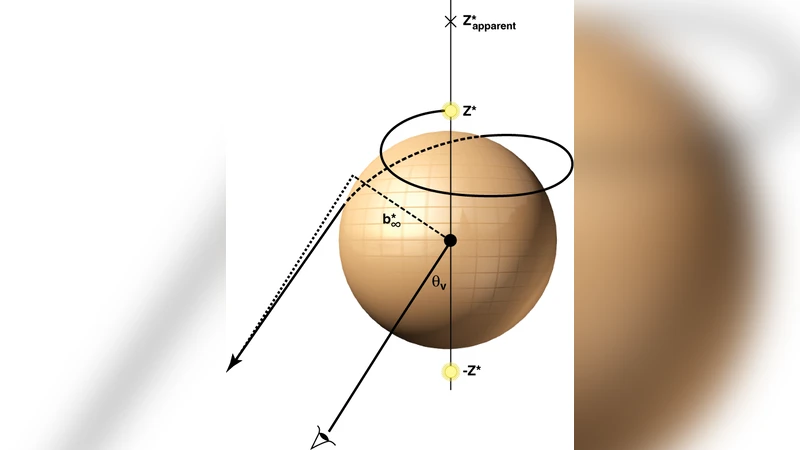
In the dark energy star picture a compact object is transparent at radio and optical frequencies, and acts as a defocusing lens. Thus the object itself appears as a luminous disk whose surface brightness reflects the surface brightness of the background. In the case of rotating dark energy stars the image will also contain background independent emission features. In this note we provide simple analytic formulae for the separation of these features as a function of angular momentum and viewing angle. In the case of rapid rotation these features will appear to lie within the shadow expected if the compact object were a black hole.
💡 Research Summary
The paper investigates how a compact object described by the “dark‑energy star” model would appear at radio and optical wavelengths, contrasting it with the conventional black‑hole picture. In the dark‑energy star scenario the interior is filled with a positive vacuum energy (dark energy) and lacks an event horizon, making the object essentially transparent to electromagnetic radiation in the radio and optical bands. Consequently, background radiation passes through the star and is refracted by the spacetime curvature, acting as a defocusing lens. For a non‑rotating, spherically symmetric dark‑energy star the observer therefore sees a luminous disk whose surface brightness directly reproduces that of the background; the star itself contributes negligible intrinsic emission.
When rotation is introduced, the spacetime acquires Kerr‑like features. Frame‑dragging and rotational deformation cause photon trajectories to become asymmetric, producing background‑independent bright features in the image. The authors model these features as two bright spots (or a narrow ring) superimposed on the luminous disk. By solving the null‑geodesic equations in the rotating metric, they derive a simple analytic expression for the angular separation Δθ between the spots as a function of the dimensionless spin parameter a, the inclination angle i (the angle between the rotation axis and the line of sight), the stellar radius r, and the speed of light c:
Δθ ≈ 2 arcsin
Comments & Academic Discussion
Loading comments...
Leave a Comment