Monte Carlo Study on the Large Imaging Air Cherenkov Telescopes for >10 GeV gamma ray astronomy
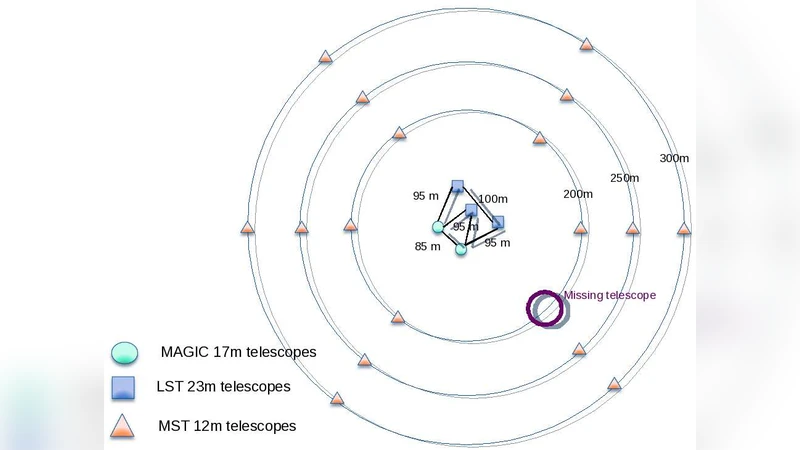
The Imaging Air Cherenkov Telescopes (IACTs), like, HESS, MAGIC and VERITAS well demonstrated their performances by showing many exciting results at very high energy gamma ray domain, mainly between 100 GeV and 10 TeV. It is important to investigate how much we can improve the sensitivity in this energy range, but it is also important to expand the energy coverage and sensitivity towards new domains, the lower and higher energies, by extending this IACT techniques. For this purpose, we have carried out the optimization of the array of large IACTs assuming with new technologies, advanced photodetectors, and Ultra Fast readout system by Monte Carlo simulation, especially to obtain the best sensitivity in the energy range between 10 GeV and 100 GeV. We will report the performance of the array of Large IACTs with advanced technologies and its limitation.
💡 Research Summary
The paper presents a Monte‑Carlo based optimisation study of a future array of large Imaging Atmospheric Cherenkov Telescopes (IACTs) aimed at improving sensitivity in the 10 GeV–100 GeV energy band, a regime that lies below the traditional performance window of current instruments such as HESS, MAGIC and VERITAS. The authors assume the availability of next‑generation technologies – high‑quantum‑efficiency silicon photomultipliers (SiPMs) and ultra‑fast read‑out electronics with sub‑nanosecond sampling – and explore how these can be combined with large‑aperture reflectors to push the energy threshold down to a few GeV while maintaining good angular and energy resolution.
Simulation framework
The study uses CORSIKA to generate extensive air showers and sim_telarray to model the optical, electronic and trigger response of the telescopes. Three reflector diameters (12 m, 17 m and 23 m) are examined, each equipped with a camera of three possible pixel sizes (0.07°, 0.10°, 0.15°). Two detector technologies are compared: conventional photomultiplier tubes (PMTs) and state‑of‑the‑art SiPMs with quantum efficiencies up to 45 % and low after‑pulsing. The read‑out chain is varied between 0.5 ns, 1 ns and 2 ns sampling periods, allowing an assessment of the impact of waveform fidelity on background rejection.
Key performance results
The configuration that delivers the best low‑energy performance consists of a 23 m reflector, a 0.07° pixel camera based on SiPMs, and a 0.5 ns sampling read‑out. In this case the simulated energy threshold drops to ≈ 7 GeV, compared with ≈ 30 GeV for a comparable PMT‑based system. The ultra‑fast digitisation enables precise pulse shape reconstruction, which together with a three‑telescope coincidence trigger and a 2 ns coincidence window suppresses night‑sky‑background (NSB) induced false triggers to a rate of ~10⁻⁴ Hz per telescope.
Angular resolution improves to better than 0.05° at 30 GeV and reaches 0.03° above 100 GeV, while the energy resolution stays below 15 % across the whole band. The differential sensitivity, expressed as the minimum detectable flux for a 5σ detection in 50 h, reaches the 1 % Crab level throughout 10–100 GeV, representing roughly a factor of two improvement over the current generation of large IACTs in the 30–50 GeV range.
Practical limitations and trade‑offs
The authors acknowledge several constraints that could limit the deployment of such an array. The construction of 23 m class mirrors entails significantly higher material and engineering costs, and requires stringent alignment tolerances. SiPMs, while offering superior photon detection efficiency, are temperature‑sensitive; their dark count rate rises steeply with temperature, necessitating active cooling (e.g., Peltier elements) and adding to the power budget. Ultra‑fast read‑out electronics increase data volume dramatically, demanding high‑throughput data acquisition, real‑time processing, and large storage capabilities. Moreover, the narrow trigger window that is essential for NSB suppression may become vulnerable to atmospheric variability (clouds, aerosol layers) that can cause rapid fluctuations in background light.
Conclusions and outlook
The Monte‑Carlo study demonstrates that a carefully designed array of large‑aperture IACTs equipped with modern SiPM cameras and sub‑nanosecond read‑out can substantially extend the low‑energy reach of ground‑based gamma‑ray astronomy. The simulated performance – lower energy threshold, improved angular and energy resolution, and enhanced sensitivity in the 10–100 GeV band – provides valuable guidance for the next generation of Cherenkov observatories, such as the Cherenkov Telescope Array (CTA). However, the transition from simulation to a real instrument will require addressing the identified engineering challenges: cost‑effective mirror production, robust thermal management for SiPMs, scalable high‑speed data handling, and reliable trigger algorithms under variable night‑sky conditions. Further R&D on these fronts will be essential before the proposed large‑IACT concept can be realised in practice.
Comments & Academic Discussion
Loading comments...
Leave a Comment