Young stellar objects from soft to hard X-rays
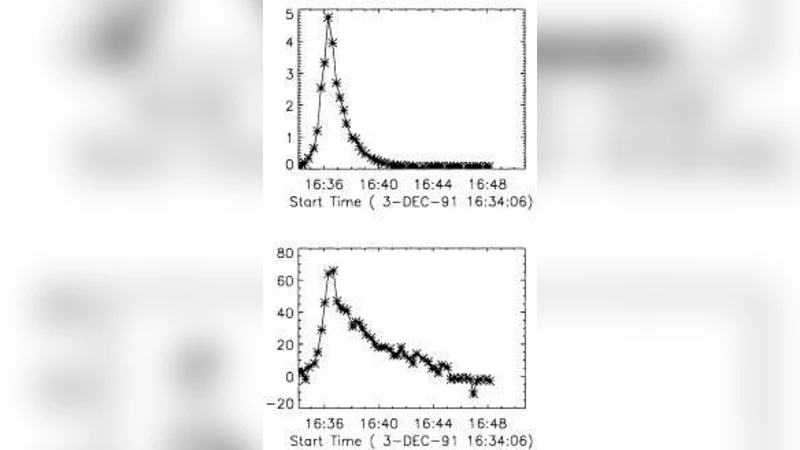
Magnetically active stars are the sites of efficient particle acceleration and plasma heating, processes that have been studied in detail in the solar corona. Investigation of such processes in young stellar objects is much more challenging due to various absorption processes. There is, however, evidence for violent magnetic energy release in very young stellar objects. The impact on young stellar environments (e.g., circumstellar disk heating and ionization, operation of chemical networks, photoevaporation) may be substantial. Hard X-ray devices like those carried on Simbol-X will establish a basis for detailed studies of these processes.
💡 Research Summary
The paper provides a comprehensive overview of X‑ray emission from young stellar objects (YSOs), spanning the soft X‑ray band (approximately 0.5–2 keV) to the hard X‑ray regime (>10 keV). It begins by drawing an analogy to the solar corona, where magnetic reconnection accelerates particles and heats plasma, producing both thermal and non‑thermal radiation. The authors argue that similar processes must operate in YSOs, but observationally they are far more challenging because the nascent stellar environment is embedded in dense gas and dust that heavily absorb soft X‑rays.
Observational evidence for violent magnetic energy release in YSOs is summarized. Soft‑X‑ray observations with Chandra and XMM‑Newton have revealed extremely hot plasma (tens of megakelvin) and flares whose peak luminosities exceed quiescent levels by factors of 10–100, with durations ranging from hours to days. In several cases, an Fe Kα line at 6.4 keV has been detected, indicating a non‑thermal component generated when high‑energy electrons bombard the circumstellar disk material. These “super‑flares” imply that a substantial fraction of the magnetic energy is converted into accelerated particles, not just thermal plasma.
The authors emphasize that hard X‑rays are crucial for probing the deepest, most energetic aspects of YSO activity. Because the photo‑electric cross‑section drops sharply above ~10 keV, hard photons can escape even from heavily obscured regions, carrying direct information about the high‑energy electron distribution, the presence of non‑thermal bremsstrahlung, and the geometry of the reconnection sites. Current hard‑X‑ray instruments lack sufficient sensitivity and spectral resolution, leaving the non‑thermal component largely unconstrained.
Simbol‑X, a proposed hard X‑ray mission with imaging capabilities from 0.5 to 80 keV, is presented as a game‑changing tool. Its high effective area and moderate angular resolution will enable the detection of faint hard X‑ray continua and Fe Kα fluorescence in YSOs, allowing time‑resolved spectroscopy across flare rise, peak, and decay phases. By measuring the evolution of the hard‑X‑ray spectral slope and line equivalent widths, researchers can quantify particle acceleration efficiencies, test magnetic reconnection models, and infer the magnetic field strengths in the inner disk region.
The paper then explores the astrophysical consequences of hard X‑ray and particle irradiation on the circumstellar disk. First, hard X‑rays and energetic electrons can transiently heat the disk surface by several hundred kelvin, altering the thermal structure and potentially influencing dust grain growth. Second, ionization rates increase dramatically, raising the free electron fraction and thereby enhancing magnetic coupling of the disk material—a key factor for magnetorotational instability (MRI) and angular momentum transport. Third, elevated ionization drives rich ion‑molecule chemistry, leading to the formation of complex organic molecules that may later be incorporated into forming planets. Fourth, the combined effect of X‑ray heating and ionization can accelerate photoevaporative winds, shortening disk lifetimes and shaping the final architecture of planetary systems.
In summary, the authors argue that a systematic hard‑X‑ray survey of YSOs, complemented by existing soft‑X‑ray data, will provide a unified picture of magnetic energy release, particle acceleration, and their feedback on the star‑disk system. Simbol‑X’s capabilities are highlighted as essential for detecting the elusive non‑thermal hard X‑ray component, measuring its variability, and linking it to theoretical models of stellar magnetic activity. Such observations will not only deepen our understanding of early stellar evolution but also clarify how high‑energy processes influence the conditions for planet formation.
Comments & Academic Discussion
Loading comments...
Leave a Comment