The Next Generation of Cherenkov Telescopes. A White Paper for the Italian National Institute for Astrophysics (INAF)
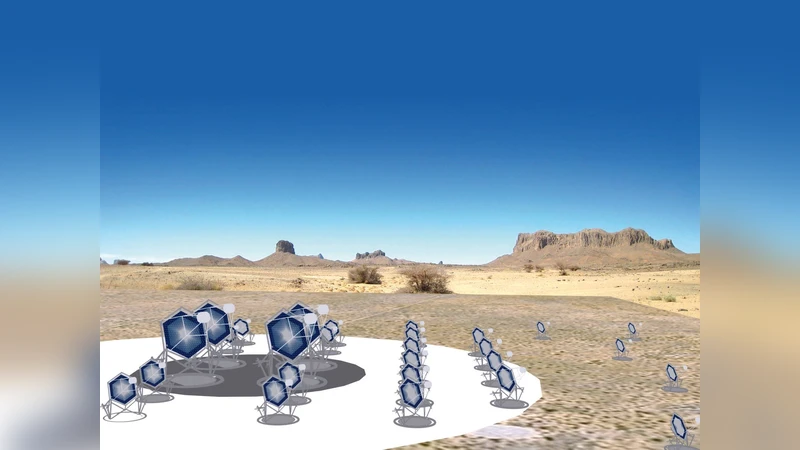
Motivated by the recent challenging results from TeV astronomy, the VHE INAF community asked a group of them to write this White Paper to summarize the status and future of Cherenkov telescopes for gamma-ray astronomy and the INAF perspectives in this field. This document wants to review both the scientific topics and potential developments of the field as well as to point out both the interests and the capacities (scientific and technical) of the VHE astrophysics community in INAF. It is aimed at identifying the scientific and technological areas where INAF should focus its efforts and resources so that Italian researchers can achieve (or maintain) a leading position in this field.
💡 Research Summary
The white paper “The Next Generation of Cherenkov Telescopes – A White Paper for the Italian National Institute for Astrophysics (INAF)” provides a comprehensive assessment of the current status, scientific drivers, and technological pathways for very‑high‑energy (VHE) gamma‑ray astronomy, with a particular focus on how INAF can secure and expand its leadership role. The authors begin by reviewing the breakthroughs of the past decade achieved with first‑generation imaging atmospheric Cherenkov telescopes (IACTs) such as H.E.S.S., MAGIC, and VERITAS, noting that while these instruments have opened the TeV sky, they are now limited by sensitivity, energy coverage, and field‑of‑view constraints. The paper then outlines the scientific case for the Cherenkov Telescope Array (CTA), the flagship international project that will deploy three classes of telescopes—Large‑Size Telescopes (LSTs, ~23 m), Medium‑Size Telescopes (MSTs, ~12 m), and Small‑Size Telescopes (SSTs, ~4 m)—to achieve unprecedented performance from 10 GeV to >300 TeV.
INAF’s involvement in CTA is described in detail. The institute contributes to optical design, mirror technology, camera electronics, and data‑processing pipelines. A flagship achievement is the development of silicon‑photomultiplier (SiPM) based fast cameras, which deliver higher photon detection efficiency, lower operating voltage, and robust performance under moonlight, thereby extending the duty cycle and enabling observations during twilight. The paper also highlights INAF’s pioneering work on artificial‑intelligence (AI) driven real‑time event classification, which can separate gamma‑ray showers from the overwhelming hadronic background within milliseconds, crucial for rapid follow‑up of transients such as blazar flares and gamma‑ray bursts.
From a scientific perspective, the authors identify four primary goals for the next generation of Cherenkov telescopes: (1) elucidating particle‑acceleration mechanisms in Galactic sources (e.g., pulsar wind nebulae, supernova remnants); (2) probing extragalactic environments and searching for signatures of dark‑matter annihilation or decay in galaxy clusters and dwarf spheroidals; (3) integrating VHE observations with multi‑messenger data (neutrinos, gravitational waves) to build a coherent picture of extreme astrophysical events; and (4) conducting wide‑field sky surveys while retaining deep, pointed observations to discover new classes of VHE emitters.
The paper proposes a strategic roadmap for INAF to maximize its impact. Key recommendations include: (i) advancing lightweight composite structures for LSTs to reduce construction and maintenance costs; (ii) optimizing large‑area SiPM arrays for low‑temperature operation and radiation hardness; (iii) standardizing a cloud‑based, AI‑enhanced data‑streaming and analysis framework that can be shared across the CTA consortium; (iv) strengthening project‑management capabilities and training programs to nurture the next generation of engineers and scientists; and (v) developing a dedicated SST‑2G (second‑generation small‑size telescope) prototype tailored to the Southern Hemisphere high‑latitude sites, thereby filling coverage gaps and fostering regional collaborations.
In conclusion, the white paper argues that INAF’s continued leadership in VHE gamma‑ray astronomy hinges on a balanced investment in hardware innovation, software and data science, and international partnership. By following the outlined roadmap, INAF can not only fulfill its commitments to CTA but also launch independent instrumentation projects, secure a prominent role in the global VHE community, and drive forward the fundamental astrophysical questions that motivate the next generation of Cherenkov telescopes.
Comments & Academic Discussion
Loading comments...
Leave a Comment