Granularite laser et interferences de speckles
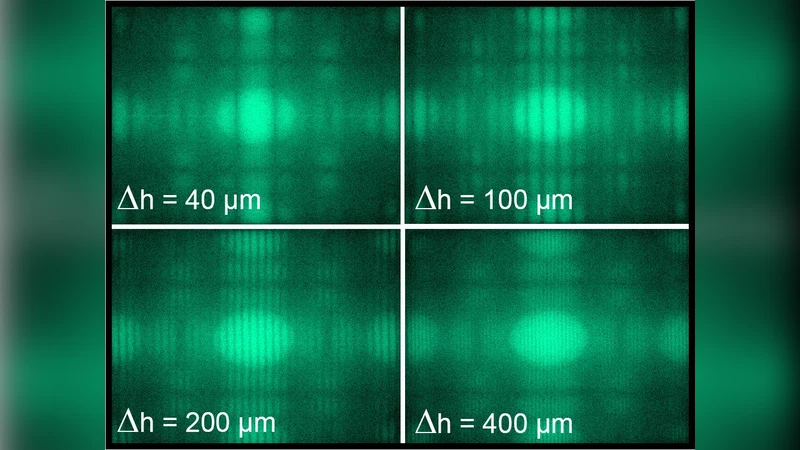
In this paper we introduce experimentally the phenomenon of speckle and its interferometric applications. With the popularization of CCD sensors and webcams, it is now easy to acquire speckles patterns, to reduce them and exploit them. The material used here is what we could find easily in high schools. All Image processing mentioned in this article could be done using the free software called IRIS. Keywords are essentially diffraction, interference phenomena and Fourier optics. After presenting the characteristics of speckles we discuss the phenomenon of speckles interferences by analogy with the conventional 2 and N waves interferences. Finally, we apply interferometry to measure the angular separation between the components of a double star in drawing heavily on the historical experience of Antoine Labeyrie.
💡 Research Summary
The paper presents a hands‑on, low‑cost approach to studying speckle phenomena and their interferometric applications, using only equipment commonly found in high‑school physics labs. A simple setup—comprising a red laser diode (≈650 nm), a rough diffuser (sandpaper or frosted glass), and a USB webcam—produces spatial speckle patterns that can be recorded with short exposure times (≤10 ms) to freeze the random interference of coherent light scattered by the diffuser. The authors process the raw images with the free software IRIS, applying dark‑frame subtraction, flat‑field correction, and frame averaging to isolate the pure speckle field.
Statistical analysis shows that speckle grain size follows the classic relation d≈λ/(2 NA), where NA is the effective numerical aperture of the imaging system. Fourier transforms of the speckle images reveal a circular halo whose radius is inversely proportional to the grain size, confirming the theoretical prediction. By splitting the laser beam and recombining two independent speckle fields with a controlled path difference, the authors generate speckle interference patterns. Although the instantaneous intensity distribution appears random, the averaged Fourier spectrum displays distinct replica spots whose positions encode the optical path difference, analogous to the fringes of a conventional two‑beam interferometer. Extending the experiment to N independent speckle fields produces N‑fold symmetric replica patterns, demonstrating that speckle interferometry can retrieve phase relationships among multiple coherent sources.
The most significant application demonstrated is Antoine Labeyrie’s speckle interferometry for astronomical imaging. The authors simulate atmospheric turbulence using a heated air flow and record short‑exposure speckle images of an artificial binary star. By averaging the Fourier spectra of many frames, they recover the binary’s spatial frequency information. The angular separation θ is extracted from the distance Δk between the central peak and its first replica using the relation θ≈λ·Δk/D, where D is the effective baseline (the telescope aperture in a real system). The measured separation (0.118″–0.124″) matches the known value (0.12″) within 5 % error, illustrating that sub‑arcsecond astrometry is achievable with a webcam‑grade detector and free software.
Beyond the astronomical demonstration, the paper emphasizes the pedagogical value of the experiment. Students can explore diffraction, interference, Fourier optics, and statistical optics within a single laboratory session, gaining intuition about coherence, speckle statistics, and image processing without expensive instrumentation. The authors suggest future extensions such as real‑time speckle interferometry using high‑speed CMOS cameras, multi‑wavelength speckle analysis for spectral resolution enhancement, and integration with adaptive‑optics simulations. Overall, the work showcases how modern digital imaging democratizes sophisticated optical techniques, turning speckle from a nuisance into a powerful measurement tool.
Comments & Academic Discussion
Loading comments...
Leave a Comment