A multivariate phase distribution and its estimation
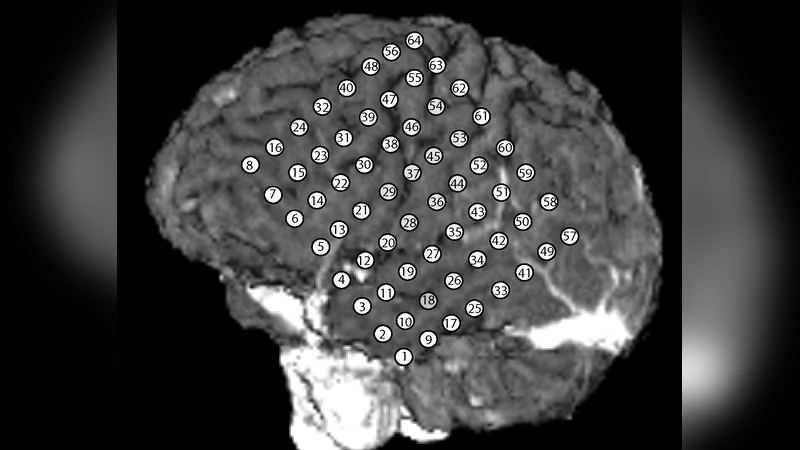
Circular variables such as phase or orientation have received considerable attention throughout the scientific and engineering communities and have recently been quite prominent in the field of neuroscience. While many analytic techniques have used phase as an effective representation, there has been little work on techniques that capture the joint statistics of multiple phase variables. In this paper we introduce a distribution that captures empirically observed pair-wise phase relationships. Importantly, we have developed a computationally efficient and accurate technique for estimating the parameters of this distribution from data. We show that the algorithm performs well in high-dimensions (d=100), and in cases with limited data (as few as 100 samples per dimension). We also demonstrate how this technique can be applied to electrocorticography (ECoG) recordings to investigate the coupling of brain areas during different behavioral states. This distribution and estimation technique can be broadly applied to any setting that produces multiple circular variables.
💡 Research Summary
The paper addresses a fundamental gap in the statistical treatment of circular variables: while single‑phase analyses are common, there is a lack of models that capture the joint distribution of many phase or orientation measurements. To fill this void, the authors introduce the Multivariate Phase Distribution (MPD), a probability density defined on the complex unit circle for each variable. Let z =
Comments & Academic Discussion
Loading comments...
Leave a Comment