Semiparametric modeling of autonomous nonlinear dynamical systems with applications
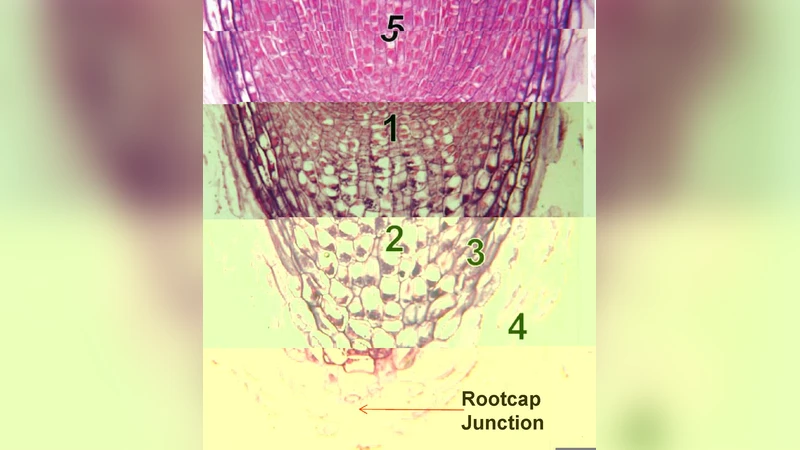
In this paper, we propose a semi-parametric model for autonomous nonlinear dynamical systems and devise an estimation procedure for model fitting. This model incorporates subject-specific effects and can be viewed as a nonlinear semi-parametric mixed effects model. We also propose a computationally efficient model selection procedure. We prove consistency of the proposed estimator under suitable regularity conditions. We show by simulation studies that the proposed estimation as well as model selection procedures can efficiently handle sparse and noisy measurements. Finally, we apply the proposed method to a plant growth data used to study growth displacement rates within meristems of maize roots under two different experimental conditions.
💡 Research Summary
The paper introduces a novel statistical framework for modeling autonomous nonlinear dynamical systems, addressing two major shortcomings of traditional approaches: the rigidity of fully parametric specifications and the inability to capture subject‑specific heterogeneity. The authors decompose the system’s vector field g(x,θ_i) into a nonparametric component, represented by a spline‑based basis expansion in the state variable x, and a subject‑specific parametric component θ_i. The latter is further split into fixed effects common to all subjects and random effects that account for individual variability, yielding a nonlinear semiparametric mixed‑effects model.
Estimation proceeds by minimizing a penalized least‑squares criterion built from noisy observations y_{ij}=x_i(t_{ij})+ε_{ij}. An EM‑type algorithm alternates between (E‑step) computing the conditional distribution of the random effects given current parameter estimates, and (M‑step) updating the fixed‑effect coefficients and spline basis weights. To keep computation tractable despite the nonlinear ODE constraints, the authors embed a high‑order Runge‑Kutta solver together with automatic differentiation, which supplies accurate gradients and Hessians without symbolic derivations.
Theoretical contributions include consistency and asymptotic normality of the estimator under standard regularity conditions: independent Gaussian measurement errors, identifiability of the spline basis, and boundedness of the random‑effects covariance. A penalized likelihood criterion, analogous to AIC/BIC but incorporating a penalty on the number of spline knots and the dimension of the random‑effects space, guides simultaneous selection of the nonparametric complexity and the mixed‑effects structure.
Simulation experiments mimic sparse, irregular sampling and high noise levels. Compared with conventional nonlinear least squares (NLS) and pure spline regression, the proposed method achieves markedly lower mean‑squared error in both trajectory reconstruction and parameter recovery. The advantage stems from borrowing strength across subjects via the random‑effects hierarchy while retaining flexibility through the spline representation.
The methodology is applied to a plant‑growth study of maize root meristems. Two experimental conditions (control vs. treatment) generate longitudinal measurements of displacement rates at uneven time points. The semiparametric mixed‑effects model uncovers distinct average growth curves for the two groups and quantifies inter‑plant variability through the random‑effects estimates. The results confirm that the treatment accelerates growth, providing biologically interpretable insights that would be obscured by either a purely parametric ODE model or a non‑hierarchical spline fit.
In the discussion, the authors outline extensions to non‑autonomous systems with external inputs, to non‑Gaussian error structures, and to data‑driven basis selection (e.g., adaptive knot placement). By integrating flexible functional approximation with hierarchical random‑effects modeling, the paper offers a powerful, computationally efficient tool for researchers confronting complex, noisy dynamical data across disciplines such as biology, engineering, and environmental science.
Comments & Academic Discussion
Loading comments...
Leave a Comment