Yang-Baxter maps associated to elliptic curves
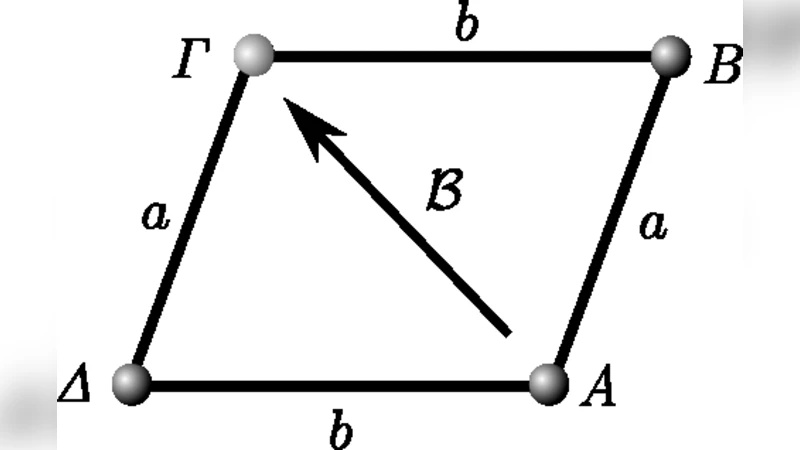
We present Yang-Baxter maps associated to elliptic curves. They are related to discrete versions of the Krichever-Novikov and the Landau-Lifshits equations. A lifting of scalar integrable quad-graph equations to two-field equations is also shown.
💡 Research Summary
The paper introduces a new class of Yang‑Baxter maps that are defined on elliptic curves and demonstrates how these maps provide a unifying algebraic framework for two important discrete integrable systems: the lattice versions of the Krichever‑Novikov (KN) equation and the Landau‑Lifshits (LL) equation. The authors begin by parametrising an elliptic curve (E: y^{2}=x^{3}+ax+b) with a complex spectral parameter (\zeta). Using this parametrisation they construct a (2\times2) Lax matrix (L(\zeta;x)) whose determinant reproduces the curve equation. By imposing the standard Yang‑Baxter relation on two copies of this Lax matrix, they derive an (R)-matrix (R_{12}(\zeta_{1},\zeta_{2})) that simultaneously satisfies the Yang‑Baxter equation and defines a birational map ((x_{1},x_{2})\mapsto(u,v)). This birational map is the elliptic‑curve Yang‑Baxter map.
The second part of the work applies the map to a discrete version of the KN equation. In the continuous KN equation the dependent variable lives on an elliptic curve and its evolution couples the curve’s modulus with space‑time variables. The authors discretise the independent variables on a two‑dimensional lattice, assigning an elliptic parameter (\zeta_{n,m}) to each site. The compatibility condition on elementary squares of the lattice is exactly the Yang‑Baxter equation for the constructed (R)-matrix, guaranteeing multidimensional consistency. Consequently the lattice KN system inherits a Lax pair, an infinite hierarchy of conserved quantities, and the same elliptic spectral curve as its continuous counterpart.
The third section treats the Landau‑Lifshits equation, originally a nonlinear PDE describing spin‑wave dynamics in ferromagnets. Its lattice analogue is obtained by placing spin variables on the vertices of a square lattice and coupling neighboring spins through the same elliptic‑curve Yang‑Baxter map. The resulting discrete LL system again possesses a Lax representation built from the same (L(\zeta;x)) and satisfies the Yang‑Baxter relation, confirming its integrability.
A major original contribution is the “lifting” procedure. Starting from scalar integrable quad‑graph equations (for instance the ABS Q4 equation), the authors introduce a second field variable and rewrite the scalar relation as a pair of coupled equations. The coupling is engineered so that the two‑field system is equivalent to the action of the elliptic Yang‑Baxter map on the pair ((u,v)). This lifting produces new conserved quantities that are naturally interpreted as the addition law on the underlying elliptic curve. The lifted equations retain the multidimensional consistency of the original scalar models while exhibiting richer symmetry structures.
In the concluding discussion the authors emphasize that elliptic‑curve Yang‑Baxter maps extend the known class of rational and trigonometric maps, offering a genuinely algebraic‑geometric perspective on discrete integrability. They suggest that the framework can be adapted to construct quantum‑group‑type solutions, to study higher‑genus spectral curves, and to model physical phenomena where elliptic functions naturally appear (e.g., nonlinear optics, superconductivity). The paper thus opens a promising avenue for both the theory of Yang‑Baxter maps and the broader field of discrete integrable systems.
Comments & Academic Discussion
Loading comments...
Leave a Comment