Radio quiet, please! - protecting radio astronomy from interference
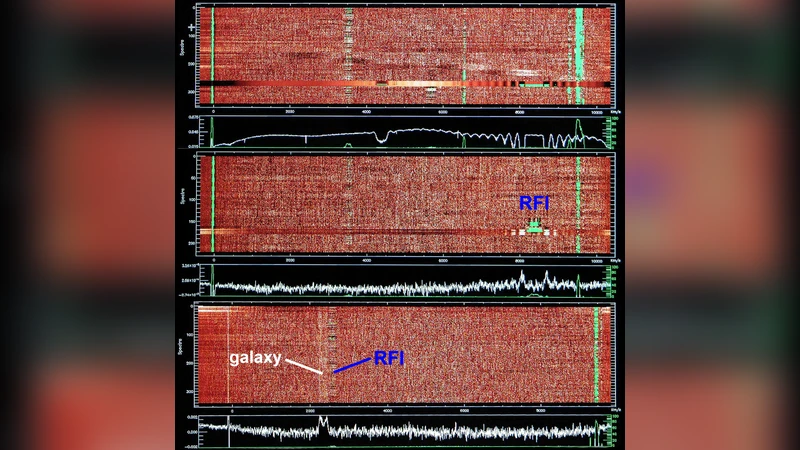
The radio spectrum is a finite and increasingly precious resource for astronomical research, as well as for other spectrum users. Keeping the frequency bands used for radio astronomy as free as possible of unwanted Radio Frequency Interference (RFI) is crucial. The aim of spectrum management, one of the tools used towards achieving this goal, includes setting regulatory limits on RFI levels emitted by other spectrum users into the radio astronomy frequency bands. This involves discussions with regulatory bodies and other spectrum users at several levels - national, regional and worldwide. The global framework for spectrum management is set by the Radio Regulations of the International Telecommunication Union, which has defined that interference is detrimental to radio astronomy if it increases the uncertainty of a measurement by 10%. The Radio Regulations are revised every three to four years, a process in which four organisations representing the interests of the radio astronomical community in matters of spectrum management (IUCAF, CORF, CRAF and RAFCAP) participate actively. The current interests and activities of these four organisations range from preserving what has been achieved through regulatory measures, to looking far into the future of high frequency use and giant radio telescope use.
💡 Research Summary
The paper “Radio quiet, please! – protecting radio astronomy from interference” provides a comprehensive overview of the challenges and solutions associated with safeguarding the radio spectrum for astronomical research. It begins by emphasizing that the radio window (approximately 10 MHz–1 THz) is a unique and irreplaceable portion of the electromagnetic spectrum that allows ground‑based observations of the Universe, complementing the optical/infrared window. Because the spectrum is finite and increasingly valuable for commercial and governmental services, radio astronomers must contend with unwanted Radio Frequency Interference (RFI) that can degrade or even invalidate scientific measurements.
A central concept is the definition of “detrimental interference” adopted by the International Telecommunication Union (ITU) in its Radio Regulations: any emission that increases the uncertainty of a measurement by 10 % (equivalent to a 1 dB increase in system noise). This definition is operationalized in ITU‑R Recommendation RA.769, which sets quantitative power thresholds for both continuum and spectral‑line observations across all major observing modes (single‑dish total power, interferometers, VLBI). The authors argue that these thresholds are non‑negotiable for astronomers; exceeding them by even 10 dB would render a band effectively unusable.
The regulatory landscape is described as a three‑dimensional “problem space” with axes representing passive services (radio astronomy), active services (all transmitters), and administrations (national regulators). Interactions occur at three scales: national, regional, and global. At the global level, the ITU’s World Radiocommunication Conferences (WRC) convene every three to four years, involving roughly 3 000 participants, including about 15 astronomers, to revise the Radio Regulations and the International Frequency Allocation Table. Regional coordination is handled by bodies such as APT (Asia‑Pacific), CEPT (Europe), and CITEL (the Americas). National administrations implement the ITU framework through domestic frequency allocation tables and licensing regimes.
Four organizations represent the astronomical community in this process: the International Union of Radio Science Committee on Frequency Allocations for Radio Astronomy and Space Science (IUCAF) and its three regional counterparts—CORF (USA), CRAF (Europe), and RAFCAP (Asia‑Pacific). IUCAF, sponsored by IAU, URSI, and COSPAR, provides scientific justification for frequency needs, organizes training (summer schools, workshops), and participates directly in ITU working groups. CORF liaises with the US National Science Foundation’s Spectrum Manager and contributes to the Handbook of Frequency Allocations and Spectrum Protection for Scientific Uses. CRAF aggregates the interests of 19 CEPT member states, the European VLBI Network, JIVE, and other multinational facilities, while RAFCAP focuses on the rapidly expanding satellite constellations in the Asia‑Pacific region.
Beyond regulation, the paper discusses technical mitigation strategies. RFI can enter observations via multiple pathways: direct line‑of‑sight, side‑lobe pickup, ground reflections, and out‑of‑band emissions that intermodulate within receivers. Consequently, a layered defense is required: legal limits (RA.769), site selection in remote locations, establishment of Radio Quiet Zones (RQZ), and engineering solutions such as Faraday cages, high‑order filters, real‑time flagging, and post‑processing algorithms. The authors illustrate the RQZ concept with two concentric zones: an inner exclusion zone where any radio emission is prohibited, and an outer coordination zone (often extending >100 km) where transmission power is limited based on compatibility studies. These zones are enforced through national legislation and are essential for upcoming facilities like the Square Kilometre Array (SKA).
Historical anecdotes (Karl Jansky’s discovery of cosmic hiss, Grote Reber’s car‑ignition spikes) demonstrate that RFI has been present since the birth of radio astronomy, yet the community has successfully managed it through a combination of technical ingenuity and regulatory advocacy. However, the paper warns that the exponential growth of satellite constellations (over 100 new satellites per year) and the increasing density of terrestrial transmitters pose unprecedented challenges. It calls for proactive measures: updating RA.769 thresholds to reflect modern receiver sensitivities, negotiating “spectrum masks” with satellite operators, and fostering public awareness of the scientific value of a quiet radio environment.
In conclusion, the authors reaffirm the principle “prevention is better than cure.” They argue that protecting the radio spectrum requires a coordinated strategy that combines stringent regulatory limits, legally backed Radio Quiet Zones, continuous dialogue between astronomers and industry, and sustained investment in RFI mitigation technologies. Only through such an integrated approach can the astronomical community ensure the long‑term viability of radio observations, especially for next‑generation instruments that will probe the Universe with unprecedented sensitivity.
Comments & Academic Discussion
Loading comments...
Leave a Comment