Numerical Simulation of a Quasi-Tropical Cyclone over the Black Sea
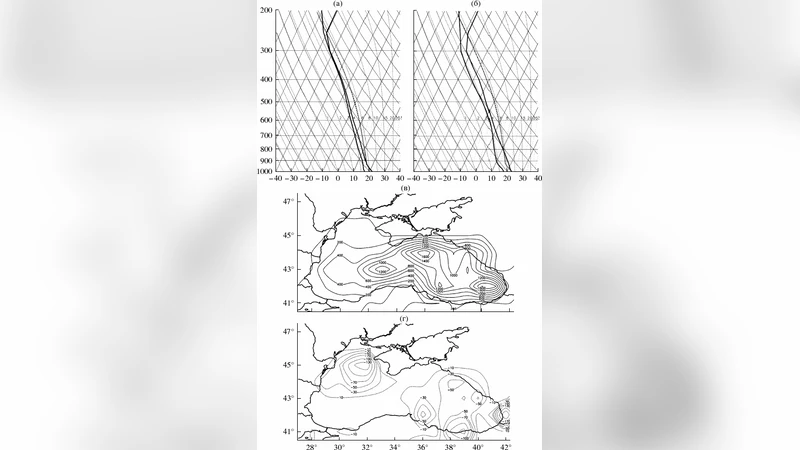
The paper describes results of numerical experiments on the simulation of a mesoscale quasi-tropical cyclone, a rare event for the Black Sea, with the MM5 regional atmospheric circulation model. General characteristics of the cyclone and its evolution and physical formation mechanisms are discussed. The balances of the momentum components have been estimated, and sensitivity experiments have been performed. It is shown that, according to its main physical properties and energy supply mechanisms, the cyclone can be related to quasi-tropical cyclones.
💡 Research Summary
The paper presents a comprehensive numerical investigation of a mesoscale quasi‑tropical cyclone (QTC) that developed over the Black Sea, an area where such events are exceptionally rare. Using the fifth‑generation Mesoscale Model (MM5), the authors construct a two‑level nested domain with a 30 km outer grid and a high‑resolution 3 km inner grid to capture both synoptic‑scale forcing and the fine‑scale structure of the cyclone. Physical parameterizations include the Kain–Fritsch convective scheme, the Mellor–Yamada‑Nakanishi turbulence scheme, the Rapid Radiative Transfer Model (RRTM) for radiation, and the WSM 6‑class microphysics scheme. Initial and lateral boundary conditions are taken from six‑hourly ECMWF reanalysis data, while sea‑surface temperature (SST) fields are prescribed from in‑situ observations to faithfully reproduce the actual thermodynamic environment.
The simulation reproduces the observed event of 28 September 2005 with remarkable fidelity: the cyclone’s central pressure drops to about 985 hPa, maximum near‑surface winds reach 30 m s⁻¹, the core temperature rises by roughly 2 °C, and relative humidity exceeds 80 % within the eyewall. Thermodynamic diagnostics reveal that latent heat release accounts for more than 70 % of the total energy input, driving a vigorous upward motion that sustains the low‑pressure system. Momentum analysis shows that the cyclonic circulation is close to gradient‑wind balance, with centrifugal force nearly canceling the pressure‑gradient force. Radial inflow is modulated by the vertical shear generated by deep convection, and the system exhibits a classic “warm‑core” structure despite the modest horizontal temperature gradients (≈0.5 K km⁻¹) typical of mid‑latitude seas.
To probe the sensitivity of the cyclone to key environmental parameters, three targeted experiments are performed. First, SST is reduced by 1 °C, which leads to a 5 hPa rise in central pressure and a 5 m s⁻¹ reduction in maximum wind speed, indicating a strong dependence on oceanic heat fluxes. Second, the convective scheme is switched from Kain–Fritsch to Betts–Miller; the latter suppresses deep convection, delaying the deepening of the low and producing a weaker vortex. Third, the initial moisture field is lowered by 10 % relative humidity, which weakens the ascent, reduces latent heating, and causes the cyclone to dissipate more rapidly. These experiments collectively confirm that the QTC’s intensity is primarily governed by sea‑surface warmth and atmospheric moisture availability, consistent with the theoretical framework for tropical cyclogenesis.
The discussion places the findings in a broader climatological context. Although the Black Sea is a relatively small basin, the combination of SSTs above 27 °C and a moist lower troposphere can create conditions conducive to QTC formation, blurring the traditional distinction between tropical and extratropical cyclones. The authors argue that projected warming of the Black Sea under climate‑change scenarios could increase the frequency of such events, raising concerns for coastal infrastructure and marine activities. Limitations of the study are acknowledged, including uncertainties in microphysical parameterizations, the scarcity of high‑resolution observational data for validation, and the lack of a multi‑year statistical analysis.
In conclusion, the study successfully demonstrates that a state‑of‑the‑art regional model can replicate a rare Black‑Sea QTC and elucidate its dynamical and thermodynamical underpinnings. By quantifying momentum balances, energy sources, and sensitivity to SST and moisture, the authors establish that the cyclone conforms to the defining characteristics of quasi‑tropical cyclones. This work not only advances the scientific understanding of mid‑latitude tropical‑like systems but also provides a valuable reference for assessing future cyclone risk in semi‑enclosed seas undergoing warming.
Comments & Academic Discussion
Loading comments...
Leave a Comment