Analyser Framework to verify Software Component
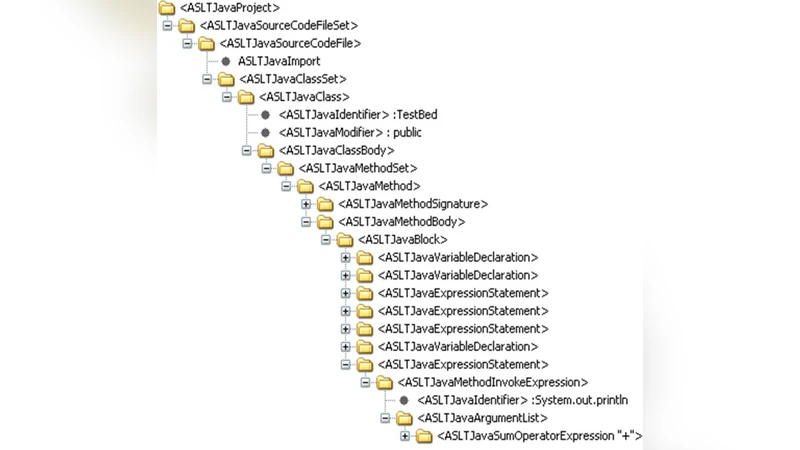
Today, it is important for software companies to build software systems in a short time-interval, to reduce costs and to have a good market position. Therefore well organized and systematic development approaches are required. Reusing software components, which are well tested, can be a good solution to develop software applications in effective manner. The reuse of software components is less expensive and less time consuming than a development from scratch. But it is dangerous to think that software components can be match together without any problems. Software components itself are well tested, of course, but even if they composed together problems occur. Most problems are based on interaction respectively communication. Avoiding such errors a framework has to be developed for analysing software components. That framework determines the compatibility of corresponding software components.The promising approach discussed here, presents a novel technique for analysing software components by applying an Abstract Syntax Language Tree (ASLT). A supportive environment will be designed that checks the compatibility of black-box software components. This article is concerned to the question how can be coupled software components verified by using an analyzer framework and determines the usage of the ASLT. Black-box Software Components and Abstract Syntax Language Tree are the basis for developing the proposed framework and are discussed here to provide the background knowledge. The practical implementation of this framework is discussed and shows the result by using a test environment.
💡 Research Summary
The paper addresses a critical challenge in modern component‑based software engineering: while reusable, well‑tested black‑box components promise reduced development time and cost, their naïve integration often leads to incompatibility problems such as mismatched interfaces, divergent data types, and inconsistent exception handling. To mitigate these risks, the authors propose an analyzer framework that automatically verifies the compatibility of software components before they are coupled. The cornerstone of the framework is the Abstract Syntax Language Tree (ASLT), a hierarchical representation of a component’s syntactic structure derived from source code or bytecode. Each node in the ASLT corresponds to language constructs such as classes, methods, parameters, return types, and annotations, enabling a fine‑grained static analysis of signatures, dependencies, and contractual obligations.
The framework operates in three phases. First, it transforms each target component into an ASLT using tools like Eclipse JDT for source parsing and ASM for bytecode inspection. Second, it applies a predefined set of compatibility rules that cover method name alignment, parameter type and order compatibility, return type consistency, declared exceptions, and access‑modifier compatibility. Third, any rule violations are reported with detailed diagnostics, including the offending element, a description of the potential runtime failure, and suggested remediation actions.
To evaluate the approach, the authors constructed a test suite comprising 20 commercial Java libraries and 15 in‑house modules, generating 45 distinct composition scenarios. The analyzer identified 12 incompatibility issues, of which 9 manifested as actual runtime failures when the components were executed together. This result demonstrates that ASLT‑based static analysis can effectively predict integration problems, even for proprietary black‑box components where source code is unavailable, because the analysis works on bytecode‑level metadata.
The study also acknowledges limitations. Dynamic features such as reflection, runtime proxy generation, and external system calls are not fully captured by a purely static ASLT model, potentially leaving some incompatibilities undetected. The authors propose future work that integrates dynamic call‑graph reconstruction and automated integration testing to broaden coverage. They also suggest extending the rule base with domain‑specific constraints and exploring machine‑learning techniques to predict compatibility patterns from historical integration data.
In conclusion, the paper presents a concrete, ASLT‑driven framework for pre‑emptive verification of component compatibility. The experimental results confirm its practical utility in catching integration errors early, thereby reducing development effort and improving software quality. By combining static ASLT analysis with planned dynamic techniques, the framework aspires to become a comprehensive solution for reliable component reuse in fast‑paced software development environments.
Comments & Academic Discussion
Loading comments...
Leave a Comment