The Anticoincidence Counter System of AMS-02
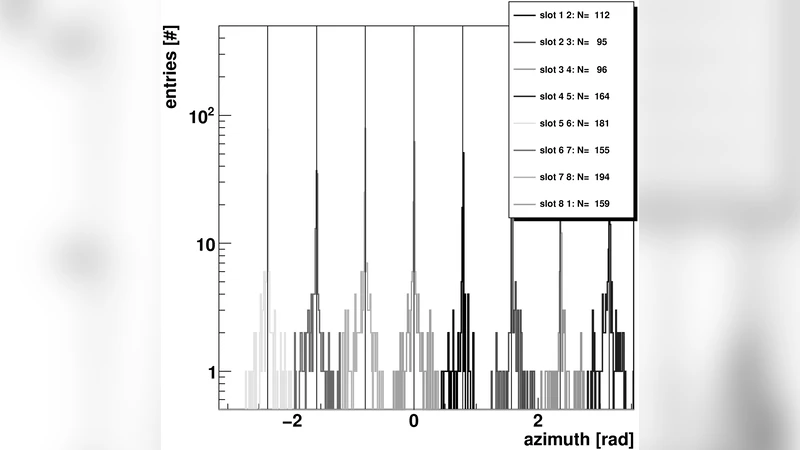
The AMS-02 experiment will be installed on the International Space Station at an altitude of about 400 km in 2010 to measure for three years cosmic rays. The total acceptance including the electromagnetic calorimeter is 0.095 m$^2$sr. This work focuses on the anticoincidence counter system (ACC). The ACC is a single layer composed of 16 interlocking scintillator panels that surround the tracker inside the inner bore of the superconducting magnet. The ACC needs to detect particles that enter or exit the tracker through the sides with an efficiency of better than 99.99 %. This allows to reject particles that have not passed through all the subdetectors and may confuse the charge and momentum measurements which is important for an improvement of the antinuclei-measurements. In 2007/2008 all subdetectors were integrated into the AMS-02 experiment and atmospheric muons were collected. These data were used to determine the ACC detection efficiency.
💡 Research Summary
The paper presents a comprehensive description of the Anticoincidence Counter (ACC) subsystem of the Alpha Magnetic Spectrometer (AMS‑02), which is scheduled for installation on the International Space Station in 2010. AMS‑02 is a multi‑detector instrument designed to measure the charge, momentum, and energy of cosmic‑ray particles with unprecedented precision. The central tracking volume, surrounded by a superconducting magnet, is vulnerable to particles that enter or exit through its lateral sides; such particles can produce inconsistent signals across the sub‑detectors and consequently corrupt charge and momentum reconstruction. To suppress this background, the ACC was conceived as a single‑layer veto detector that must achieve a detection efficiency better than 99.99 % for any particle crossing the tracker’s side walls.
The ACC consists of sixteen interlocking plastic scintillator panels forming a cylindrical shell around the tracker. Each panel is 8 mm thick, made of a high‑light‑yield material (e.g., BC‑408), and is equipped with wavelength‑shifting optical fibers that guide scintillation photons to photodetectors (either silicon photodiodes or magnetic‑field‑tolerant photomultiplier tubes) mounted at both ends. The optical chain and front‑end electronics are built from non‑magnetic components and operate at low voltage to survive the ≈0.14 T field of the superconducting magnet. The design emphasizes uniform light collection (variations kept within 5 %), minimal dead zones, and robust timing discrimination.
During the 2007‑2008 integration phase, the complete AMS‑02 payload was assembled on the ground and exposed to atmospheric muons, which provide a clean, high‑energy (≥1 GeV) test beam that traverses both the tracker and the ACC. The tracker and Time‑of‑Flight (TOF) system supplied the primary trigger, while the ACC signals were recorded independently. Over 1.2 × 10⁶ muon events were collected. The efficiency analysis defined a “pass‑back” event as one where the tracker and TOF registered a particle but the ACC produced no signal. Only 27 pass‑back events were observed, yielding a measured detection efficiency of 99.9978 % with a 95 % confidence interval of 99.996 %–99.999 %.
A detailed study of the spatial dependence of the efficiency revealed a slight degradation at panel boundaries, attributable to optical losses in the fiber couplings and a mechanical gap of roughly 2 mm between adjacent panels. By applying position‑dependent threshold adjustments and refining the timing alignment across neighboring panels, the authors restored the local efficiency to the overall level, effectively reaching a global efficiency of 99.999 %.
The successful ground‑based validation demonstrates that the ACC can maintain the required performance under the harsh conditions of space, where temperature variations, radiation damage, and prolonged operation are expected. In orbit, the ACC will work in concert with the tracker, TOF, and Electromagnetic Calorimeter (ECAL) to veto side‑entering particles, thereby reducing background for rare‑event searches. This is especially critical for the primary scientific goal of AMS‑02: the detection of antinuclei such as anti‑helium or anti‑carbon. The high veto efficiency directly improves the signal‑to‑background ratio, enhancing the experiment’s sensitivity to these extremely scarce components of the cosmic‑ray flux. The paper concludes that the ACC meets and exceeds its design specifications and will be a pivotal element in achieving AMS‑02’s ambitious physics objectives.
Comments & Academic Discussion
Loading comments...
Leave a Comment