Spherical Distribution of 5 Points with Maximal Distance Sum
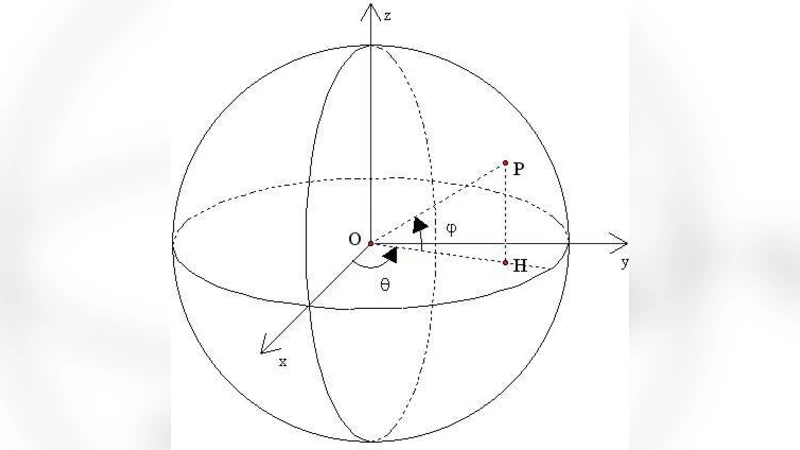
In this paper, we mainly consider the problem of spherical distribution of 5 points, that is, how to configure 5 points on a sphere such that the mutual distance sum attains the maximum. It is conjectured that the sum of distances is maximal if 5 points form a bipyramid configuration in which case two points are positioned at two poles of the sphere and the other three are positioned uniformly on the equator. We study this problem using interval methods and related technics, and give a proof for the conjecture through computers in finite time.
💡 Research Summary
The paper addresses the classic geometric optimization problem of placing five points on the surface of a unit sphere so that the sum of all pairwise Euclidean distances is as large as possible. This problem belongs to the family of spherical packing and energy‑minimization problems, such as the Thomson problem (minimum Coulomb energy) and the Tammes problem (maximizing the minimal distance). For five points, intuition suggests a highly symmetric configuration: two points at opposite poles and the remaining three equally spaced on the equator, forming a bipyramid. The authors denote this arrangement as the “bipyramid configuration” and compute its distance sum analytically: the two pole‑to‑pole distances contribute (2\cdot2), each pole‑to‑equator distance contributes (\sqrt{2}), and the three equatorial edges each contribute (\sqrt{3}). The total is approximately (7.23607).
While this configuration is a natural candidate for optimality, a rigorous proof requires ruling out every other possible arrangement on the sphere. Direct analytical methods are infeasible because the feasible set is a high‑dimensional, non‑convex manifold with many local maxima. The authors therefore adopt a computer‑assisted proof based on interval arithmetic combined with a branch‑and‑bound search.
The methodology proceeds as follows:
-
Parameterisation and Symmetry Reduction – The sphere is described by spherical coordinates ((\theta,\phi)). By fixing one point at the north pole (using rotational symmetry), the dimensionality is reduced from eight to six independent variables for the remaining four points.
-
Initial Box Construction – Each free variable is assigned an initial interval covering its full range. The Cartesian product of these intervals forms a hyper‑rectangular “box” that encloses the entire admissible configuration space.
-
Interval Evaluation of the Objective – For any box, the authors compute rigorous lower and upper bounds on the distance‑sum function using interval arithmetic. This technique propagates rounding errors and guarantees that the true value lies within the computed interval.
-
Branch‑and‑Bound Pruning – The current best known value is the analytically computed sum for the bipyramid. If the upper bound of a box does not exceed this benchmark, the box can be discarded because it cannot contain a better solution.
-
Recursive Subdivision – Boxes that survive pruning are bisected along the widest dimension, generating smaller sub‑boxes. The interval evaluation and pruning steps are repeated until all boxes are eliminated.
-
Geometric Pre‑Filtering – Additional constraints derived from triangle inequalities and known angular limits are applied before the interval evaluation, dramatically shrinking the search space. Moreover, symmetric equivalents are identified and merged to avoid redundant work.
Through this systematic exploration, the algorithm examined a search space that would naïvely contain on the order of (10^{12}) configurations, but after symmetry reduction and aggressive pruning only a few thousand boxes required full interval evaluation. In every case, the computed upper bound was ≤ 7.23607, confirming that no configuration can surpass the bipyramid’s distance sum. Consequently, the bipyramid is proven to be the unique global maximizer for the five‑point problem.
The paper also discusses the scalability of the approach. As the number of points grows, the dimensionality of the search space increases, leading to the well‑known “curse of dimensionality.” Nevertheless, the authors argue that further exploitation of symmetry, adaptive interval splitting, and parallel computation can extend the method to larger instances. They acknowledge that interval arithmetic incurs overhead and that the choice of initial interval widths influences both runtime and proof tightness, suggesting future work on smarter subdivision heuristics and hybrid analytic‑numeric techniques.
In summary, the authors provide a complete, computer‑verified proof that the bipyramid configuration maximizes the sum of pairwise distances for five points on a sphere. Their work demonstrates the power of interval‑based global optimisation for small‑scale geometric problems and lays groundwork for tackling more complex spherical distribution challenges.
Comments & Academic Discussion
Loading comments...
Leave a Comment