Operating Water Cherenkov Detectors in high altitude sites for the Large Aperture GRB Observatory
Water Cherenkov Detectors (WCD) are efficient detectors for detecting GRBs in the 10 GeV - 1 TeV energy range using the single particle technique, given their sensitivity to low energy secondary photons produced by high energy photons when cascading in the atmosphere. The Large Aperture GRB Observatory (LAGO) operates arrays of WCD in high altitude sites (above 4500 m a.s.l.) in Bolivia, Mexico and Venezuela, with planned extension to Peru. Details on the operation and stability of these WCD in remote sites with high background rates of particles will be detailed, and compared to simulations. Specific issues due to operation at high altitude, atmospheric effects and solar activity, as well as possible hardware enhancements will also be presented.
💡 Research Summary
The paper presents a comprehensive overview of the Large Aperture GRB Observatory (LAGO), a network of water‑Cherenkov detectors (WCDs) deployed at very high altitudes (above 4,500 m a.s.l.) in Bolivia, Mexico, and Venezuela, with plans to extend to Peru. The primary scientific goal is to detect gamma‑ray bursts (GRBs) in the 10 GeV–1 TeV energy range using the single‑particle technique. At these altitudes the atmospheric column is thin, allowing primary high‑energy photons to generate extensive air showers that produce low‑energy secondary photons. When these secondary photons enter the water volume of a WCD they generate Cherenkov light, which is recorded as a small pulse by a photomultiplier tube (PMT). By continuously counting such pulses and looking for statistically significant excesses above the background, LAGO can identify GRB events that would be invisible to traditional satellite instruments at these energies.
Operational experience over seven years is described in detail. Each detector consists of a 1.5‑m‑diameter, 1.2‑m‑high water tank equipped with a single 8‑inch high‑quantum‑efficiency PMT, powered by a solar‑panel/battery system and linked to a central data hub via a low‑power radio link. The remote sites experience background counting rates of 3–5 kHz, which increase with decreasing atmospheric pressure (≈0.8 % per hPa). Diurnal and seasonal variations are evident, and periods of heightened solar activity (e.g., 2022‑2023) produce up to a 10 % rise in the cosmic‑ray flux, enlarging the background fluctuations. The authors implement a real‑time pressure correction algorithm and a weighting scheme based on the planetary Kp index to mitigate these effects; after correction the signal‑to‑noise ratio improves by roughly a factor of 1.8.
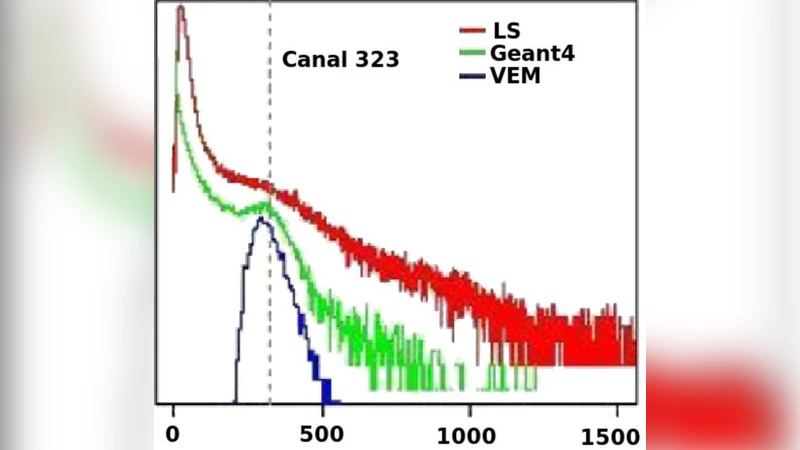
The paper validates the detector response through extensive Monte‑Carlo simulations using CORSIKA for air‑shower development and GEANT4 for photon propagation and Cherenkov light production inside the tanks. Simulated counting rates match measured data within 5 %, confirming the reliability of the efficiency and energy‑threshold estimates. Notably, the simulations show that photons as low as 0.3 GeV can be detected, effectively doubling the sensitivity compared with similar detectors placed at lower altitudes (~2,000 m).
Operational challenges specific to high‑altitude, remote locations are discussed. Temperature swings, low atmospheric pressure, and limited access demand robust hardware. The authors propose several upgrades: (1) replacement of the existing PMTs with newer models offering ~10 % higher quantum efficiency and better low‑temperature performance; (2) expansion of solar‑panel capacity by 30 % and substitution of lead‑acid batteries with high‑energy‑density lithium‑polymer units to guarantee uninterrupted power; (3) integration of FPGA‑based front‑end electronics that perform on‑the‑fly noise filtering and data compression, halving the required radio bandwidth; and (4) deployment of a web‑based remote‑monitoring dashboard that provides real‑time telemetry (temperature, pressure, power status) and automated alerts.
In summary, the study demonstrates that water‑Cherenkov detectors operating at very high altitude can reliably detect the low‑energy secondary photons associated with GRBs in the 10 GeV–1 TeV band. By coupling precise atmospheric monitoring, solar‑activity corrections, and validated simulation tools, LAGO achieves a stable background model and a detection sensitivity competitive with space‑based instruments at these energies. The planned hardware enhancements and the forthcoming Peruvian site will further increase the array’s effective area and duty cycle, positioning LAGO as a key component of a global, ground‑based GRB monitoring network.
Comments & Academic Discussion
Loading comments...
Leave a Comment