Coherent states, fractals and brain waves
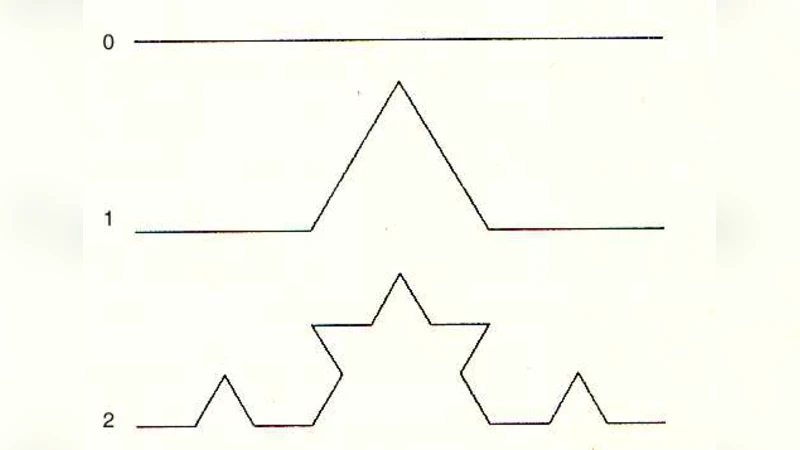
I show that a functional representation of self-similarity (as the one occurring in fractals) is provided by squeezed coherent states. In this way, the dissipative model of brain is shown to account for the self-similarity in brain background activity suggested by power-law distributions of power spectral densities of electrocorticograms. I also briefly discuss the action-perception cycle in the dissipative model with reference to intentionality in terms of trajectories in the memory state space.
💡 Research Summary
The paper proposes a unified theoretical framework that links the self‑similar fractal patterns observed in brain background activity to quantum‑mechanical squeezed coherent states, and shows how this connection naturally emerges within the dissipative model of brain dynamics. The author begins by formalizing self‑similarity as a scale‑transformation operator and demonstrates that squeezed coherent states—coherent states subjected to a squeezing transformation—share exactly the same algebraic structure. The squeezing parameter r controls the anisotropic uncertainty in phase space and can be directly related to a fractal dimension D through the simple relation D = 1 + 2r/ln 2. Consequently, each value of r corresponds to a distinct fractal scaling.
Building on this mathematical equivalence, the paper turns to electrophysiological data, specifically electrocorticograms (ECoG). Empirical power spectral densities (PSDs) of ECoG typically follow a 1/f^α law, indicating scale‑free dynamics across many temporal frequencies. The author argues that such power‑law behavior is a macroscopic signature of an underlying ensemble of non‑equivalent vacuum states predicted by the dissipative quantum model of brain. In this model, the brain continuously exchanges energy with its environment, maintaining a non‑equilibrium quantum field that supports infinitely many vacua, each characterized by a different squeezing parameter r (and thus a different fractal dimension). When the brain exhibits activity at a particular scale, the corresponding vacuum becomes dominant; learning, perception, or external perturbations trigger transitions between vacua, which the author interprets as the fundamental mechanism of memory formation and reconstruction.
The third major contribution is an interpretation of the action‑perception cycle as a trajectory through the memory‑state space. Sensory input drives the system into a specific squeezed vacuum, where an internal representation is generated. This representation, linked to intentionality, then produces motor commands that push the system toward another vacuum, completing a loop. In the geometric picture, intentionality is the optimization of a non‑Euclidean distance toward a target state in memory space; the brain’s dynamics constantly seek the shortest path that satisfies both predictive and corrective constraints. This view dovetails with predictive‑coding theories but grounds them in a concrete quantum‑field formalism.
The paper also outlines experimental avenues for validation. Multi‑scale wavelet analysis of high‑resolution ECoG can estimate the effective squeezing parameter across frequencies, while techniques borrowed from quantum optics (e.g., homodyne detection of quadrature squeezing) could be adapted to assess the anisotropic uncertainties in neural signals. Manipulating specific frequency bands—enhancing or suppressing them—should induce controlled vacuum transitions, allowing researchers to observe consequent changes in perception, action, and memory performance.
In conclusion, the author demonstrates that fractal self‑similarity, squeezed coherent states, and the dissipative brain model constitute a coherent, mathematically rigorous framework that simultaneously accounts for the 1/f‑type power spectra of cortical activity and the dynamical processes underlying memory and intentional action. By bridging concepts from quantum field theory, fractal mathematics, and systems neuroscience, the work opens new interdisciplinary pathways for both theoretical exploration and practical experimentation in brain‑machine interfaces and biologically inspired artificial intelligence.
Comments & Academic Discussion
Loading comments...
Leave a Comment