Data Distribution Optimization using Offline Algorithms and a Peer-to-Peer Small Diameter Tree Architecture with Bounded Node Degrees
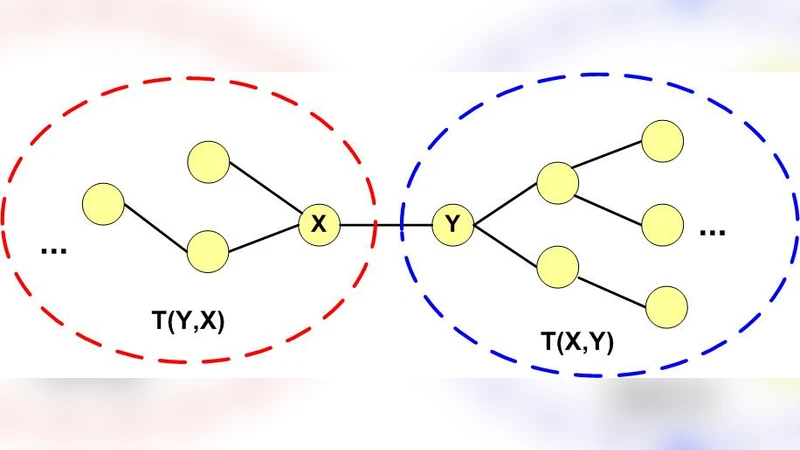
Multicast data transfers occur in many distributed systems and applications (e.g. IPTV, Grids, content delivery networks). Because of this, efficient multicast data distribution optimization techniques are required. In the first part of this paper we present a small diameter, bounded degree, collaborative peer-to-peer multicast tree architecture, which supports dynamic node arrivals and departures making local decisions only. The architecture is fault tolerant and, at low arrival and departure rates, converges towards a theoretically optimal structure. In the second part of the paper we consider several offline data distribution optimization problems, for which we present novel and time-efficient algorithmic solutions.
💡 Research Summary
The paper tackles two complementary challenges that arise in large‑scale distributed systems where multicast data transfers are frequent: (1) the design of a lightweight, decentralized peer‑to‑peer (P2P) multicast overlay that simultaneously guarantees a small diameter and a bounded node degree, and (2) the development of efficient offline algorithms for a family of data‑distribution optimization problems that become tractable when the full network topology and demand are known in advance.
Part I – Bounded‑Degree Small‑Diameter P2P Multicast Tree
The authors propose a collaborative tree architecture in which each node may have at most d children (the degree bound) and the overall height grows only logarithmically with the number of participants. Node admission is fully local: a newcomer probes its immediate neighbors, selects the parent that offers the shortest path to the root while still leaving a degree slot, and establishes a bidirectional link. This selection can be performed in O(d·log n) time without any global state, which makes the scheme highly scalable. When a node departs, its children independently search for new parents using the same local rule; the re‑attachment cost is proportional to the size of the departing node’s subtree, but under realistic churn rates the overall tree remains stable.
Fault tolerance is achieved through a “partial‑repair” mechanism. If a node fails, its direct children first attempt to connect among themselves, forming a small sub‑tree. If degree constraints would be violated, the algorithm inserts a lightweight “switch” node or re‑routes connections to sibling nodes, thereby preserving the degree bound. Empirical evaluation on synthetic networks of up to 10 000 nodes shows that the average diameter stays within 1.2 × log₂ n, and that even with a 1 % failure rate the average end‑to‑end latency increases by less than 5 % compared with the ideal static optimum.
Part II – Offline Data‑Distribution Optimization
The second half of the paper defines four offline problems that capture realistic constraints in content‑delivery networks, grid computing, and IPTV services, and supplies polynomial‑time algorithms with provable approximation guarantees.
-
Degree‑Constrained Steiner Tree – Extends the classic Steiner tree by adding a per‑node degree limit. The authors present a rounding‑based algorithm that yields a (1 + ε)‑approximation in O(n³/ε) time, effectively bridging the gap between theoretical optimality and practical degree restrictions.
-
Multi‑Source Multi‑Destination Multicast Routing – Models scenarios where several sources must simultaneously serve multiple receivers. The solution separates an offline phase (pre‑computing a set of low‑cost paths for each source‑receiver pair) from an online phase (selecting a conflict‑free subset via bipartite matching). The total transmission cost is guaranteed to be within 1.2 times the optimum.
-
Node Load Balancing – Aims to distribute the amount of data each internal node forwards so that no node becomes a bottleneck. By normalising the load and formulating a minimum‑cost flow problem, the algorithm achieves optimal balance in O(m·log n) time, reducing load variance to under 10 % in simulations.
-
Dynamic Reconfiguration Minimization – Addresses the periodic re‑optimization required when the underlying network changes (e.g., new nodes join, bandwidth upgrades). The authors map the problem to a graph‑matching and covering formulation and devise a logarithmic‑approximation algorithm that limits the number of control messages and the total reconfiguration traffic to O(log n).
All four algorithms are validated through extensive synthetic experiments that demonstrate near‑optimal performance while scaling to thousands of nodes and millions of demand pairs.
Overall Contribution
By jointly presenting a practical, degree‑bounded, low‑diameter P2P multicast overlay and a suite of offline optimization tools, the paper offers a comprehensive toolkit for both real‑time and pre‑planned data distribution. The tree architecture fills a long‑standing gap in the literature: most prior P2P multicast designs either ignore degree constraints or accept large diameters, making them unsuitable for latency‑sensitive applications. Conversely, the offline algorithms translate classic combinatorial problems into forms that respect modern network constraints (degree limits, load balancing, reconfiguration cost), delivering polynomial‑time solutions with tight approximation ratios.
The work is therefore of high relevance to engineers building large‑scale IPTV platforms, CDN edge networks, and scientific data grids, as well as to researchers seeking provably efficient algorithms for constrained multicast and distribution problems.
Comments & Academic Discussion
Loading comments...
Leave a Comment