Pathway Toward a Mid-Infrared Interferometer for the Direct Characterization of Exoplanets
We recognize the need for the characterization of exoplanets in reflected light in the visible and in the IR termal emission. But for the thermal infrared we also recognize the difficulty of an interferometric nuller We nevertheless endorse the need for future interferometers. We propose a new, realistic, pathway to satisfy both goals, thermal infrared studies and interferometric architectures.
💡 Research Summary
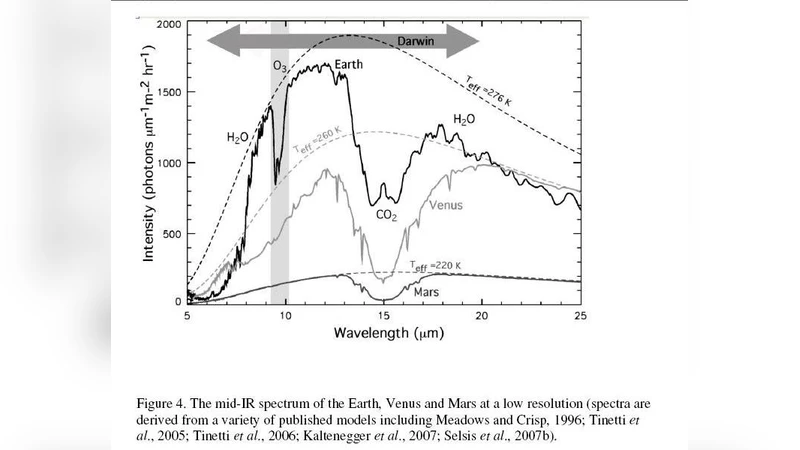
The paper addresses the growing demand for comprehensive exoplanet characterization in both reflected visible light and thermal infrared emission. While visible‑wavelength coronagraphy can retrieve albedo, cloud properties, and orbital geometry, it cannot directly probe a planet’s temperature, atmospheric pressure, or molecular composition. Mid‑infrared (5–20 µm) observations, by contrast, capture the planet’s own thermal radiation, providing access to key biosignature gases (CO₂, H₂O, O₃, CH₄) and surface temperature, but they pose severe technical challenges. The long wavelength demands baselines of hundreds of meters to achieve the angular resolution required for nearby Earth‑like planets, and the required star‑planet contrast (10⁻⁷–10⁻⁸) far exceeds the capability of current coronagraphs.
Nulling interferometry—combining the light from two or more apertures with a 180° phase shift to cancel stellar photons—offers a theoretically elegant solution. However, practical implementation is hampered by the need for picometer‑level optical path difference (OPD) control, broadband phase stability across the entire mid‑IR band, cryogenic operation at ≤ 40 K, and the precise formation‑flying of multiple spacecraft over baselines ranging from tens to thousands of meters. Existing laboratory demonstrations have achieved null depths of only ~10⁻⁴ on 10‑m baselines, far short of the performance required for Earth‑analog detection.
To bridge this gap, the authors propose a realistic, step‑wise roadmap that gradually scales the interferometer’s complexity while maturing the necessary technologies.
Phase 1 – Small‑scale, single‑satellite nuller (10–20 m baseline). This concept leverages the cryogenic platform of a JWST‑class telescope, integrating a compact beam‑combiner and a high‑performance mid‑IR detector (TES or KID). The goal is to demonstrate stable nulling at the 10⁻⁵ level on a bright nearby system (e.g., a super‑Earth around a K‑type star) and to validate OPD control using electro‑mechanical actuators and a simple feedback loop.
Phase 2 – Formation‑flying intermediate array (≈ 100 m baseline). Two or three spacecraft equipped with laser metrology and micro‑propulsion maintain precise separations. A distributed optical metrology network provides real‑time OPD measurements with picometer precision, feeding a high‑speed phase‑control algorithm that drives the null depth to 10⁻⁶. Science objectives expand to include the detection of CO₂ and H₂O absorption bands in the atmospheres of temperate planets within 10 pc.
Phase 3 – Full‑scale multi‑element interferometer (≥ 1 km baseline). A constellation of 4–6 spacecraft forms a sparse aperture array capable of delivering the angular resolution needed to resolve Earth‑size planets at 10 pc. Advanced laser ranging, autonomous formation‑keeping, and a hierarchical control architecture enable null depths of 10⁻⁸ across the full 5–20 µm band. This final stage aims to obtain high‑resolution spectra of true Earth analogues, simultaneously probing temperature, pressure, and multiple biosignature gases.
Key technology development items identified include:
- Ultra‑low‑noise mid‑IR detectors with noise‑equivalent power < 10⁻¹⁹ W Hz⁻¹ᐟ², scalable to large arrays.
- Broadband phase‑control optics—low‑dispersion beam splitters, achromatic phase shifters, and high‑stability fiber or waveguide networks.
- Cryogenic structural materials with near‑zero thermal expansion (e.g., carbon‑fiber composites, Al‑Li alloys) to maintain alignment under deep‑space temperature swings.
- Laser metrology and formation‑flight control capable of sub‑centimeter ranging and micro‑arcsecond attitude knowledge, integrated with autonomous navigation algorithms.
- Data‑processing pipelines that combine nulling interferometry models with machine‑learning–based spectral retrieval to extract weak planetary signals from residual stellar leakage.
The roadmap emphasizes leveraging existing and planned missions (ESA’s LISA, NASA’s HabEx, JAXA’s SPICA) for technology validation, adopting modular spacecraft designs to reduce cost, and employing shared launch opportunities to mitigate risk. By progressing through incremental demonstration phases, the program can de‑risk the most challenging aspects—OPD control, broadband nulling, and formation‑flight—while delivering scientifically valuable results at each step.
In conclusion, the authors argue that a phased, technology‑driven approach offers the most feasible path to a mid‑infrared interferometer capable of directly characterizing exoplanet atmospheres. This strategy balances scientific ambition with realistic engineering constraints, positioning the community to eventually obtain the definitive thermal spectra needed to assess habitability and search for life beyond the Solar System.
Comments & Academic Discussion
Loading comments...
Leave a Comment