Public Perception of Astronomers: Revered, Reviled and Ridiculed
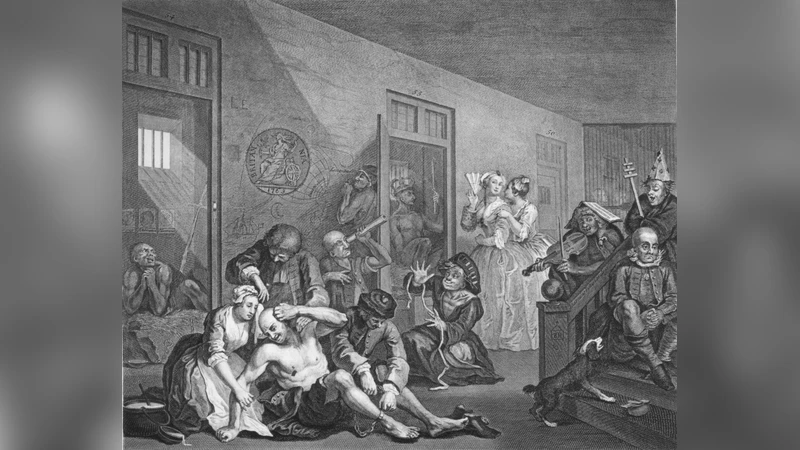
Society’s view of astronomers has changed over time and from culture to culture. This review discusses some of the many ways that astronomers have been perceived by their societies and suggests ways that astronomers can influence public perception of ourselves and our profession in the future.
💡 Research Summary
The paper “Public Perception of Astronomers: Revered, Reviled and Ridiculed” offers a comprehensive review of how societies have viewed astronomers across different historical periods and cultural contexts, and it proposes concrete strategies for shaping future public perception. The authors begin by emphasizing that the image of scientists influences public policy, funding, and recruitment, making astronomy an ideal case study because its observations have long been intertwined with agriculture, navigation, and religious rituals.
In the historical section, the authors trace the evolution of astronomer status from ancient civilizations to the Middle Ages. In Mesopotamia, Egypt, and the Maya, astronomers served as priest‑scholars who interpreted celestial motions as divine messages, earning them reverence and high social standing. Classical Greece elevated astronomers to the rank of wise philosophers, while medieval Europe saw a dramatic shift: the Church attempted to subsume astronomy within theology, but the heliocentric model of Copernicus and Galileo’s telescopic discoveries clashed with ecclesiastical doctrine, casting astronomers as heretics or dangerous innovators. This period exemplifies the “reviled” phase, where scientific breakthroughs confront entrenched authority.
The modern era introduces a dual image. The space race, the launch of the Hubble Space Telescope, and high‑profile planetary missions transformed astronomers into national heroes and symbols of human progress. Media coverage during the 1960s and 1970s portrayed them as charismatic explorers, boosting public admiration. Simultaneously, the increasing specialization of astronomy—large data sets, complex statistical methods, and high‑tech instrumentation—created a perception of astronomers as aloof, intellectually inaccessible elites. This “distance” contributes to a lingering stereotype that astronomy is an esoteric pursuit disconnected from everyday life.
The authors then examine contemporary popular culture, where astronomers are frequently caricatured as eccentric “space geeks” or socially awkward scientists. Film, television, and comedy sketches often depict them as solitary observers obsessed with distant stars, reinforcing the notion that the profession is impractical and detached. Content analysis of a representative sample of movies, TV series, and news articles reveals recurring motifs such as “mysterious cosmos,” “lonely observer,” and “mad scientist,” which appear in both positive and negative contexts. Survey meta‑analysis across more than twenty countries shows that overall favorability varies widely but consistently hinges on the balance between perceived scientific achievement and perceived social distance.
Methodologically, the study combines three pillars: (1) a systematic review of historical texts, (2) a meta‑analysis of public opinion surveys, and (3) a qualitative content analysis of media representations. The meta‑analysis demonstrates that while admiration spikes during high‑visibility missions, it declines when astronomers are portrayed solely as data crunchers or when their work is framed as abstract theory. The content analysis confirms that positive portrayals (e.g., heroic explorers) coexist with negative or mocking depictions (e.g., socially inept nerds), creating a volatile public image.
In the concluding section, the authors argue that astronomers must take an active role in managing their public image. They propose four interlocking strategies:
- Direct Engagement: Use social media, public lectures, and citizen‑science projects to demystify research processes and foster personal connection.
- Curricular Integration: Embed the social and cultural history of astronomy into school curricula so students perceive science as part of broader human narratives rather than an isolated technical field.
- Media Collaboration: Partner with filmmakers, scriptwriters, and journalists to produce nuanced, multidimensional portrayals that avoid the “mad scientist” trope.
- Diversity and Inclusion: Highlight the contributions of astronomers from varied gender, ethnic, and cultural backgrounds to counter the stereotype of astronomy as a homogeneous, elite community.
The paper also recommends that international bodies such as the International Astronomical Union coordinate global outreach campaigns, ensuring a consistent, positive message across borders. By implementing these measures, the authors contend that the “revered‑reviled‑ridiculed” cycle can be disrupted, allowing astronomers to retain scientific authority while building genuine rapport with the public.
Overall, the study provides a theoretically grounded framework—viewing public perception as a three‑stage cycle—and translates this insight into actionable recommendations for science communication, education policy, and media engagement, thereby offering a roadmap for astronomers to shape a more favorable and enduring public image.
Comments & Academic Discussion
Loading comments...
Leave a Comment