A Radio Pulsar/X-ray Binary Link
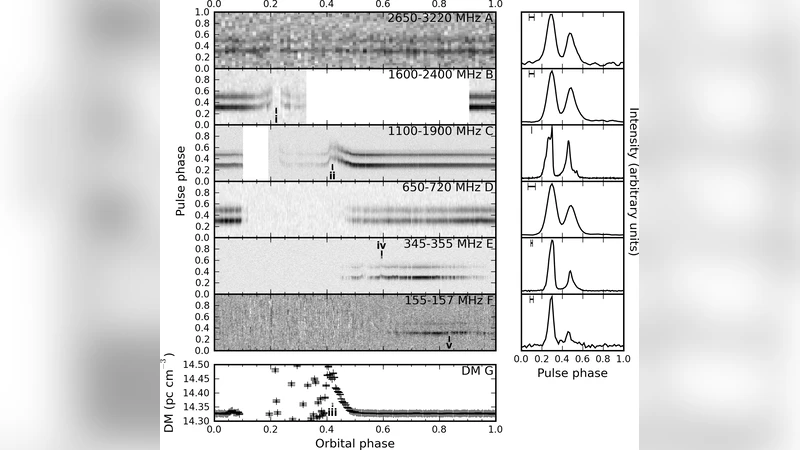
Radio pulsars with millisecond spin periods are thought to have been spun up by transfer of matter and angular momentum from a low-mass companion star during an X-ray-emitting phase. The spin periods of the neutron stars in several such low-mass X-ray binary (LMXB) systems have been shown to be in the millisecond regime, but no radio pulsations have been detected. Here we report on detection and follow-up observations of a nearby radio millisecond pulsar (MSP) in a circular binary orbit with an optically identified companion star. Optical observations indicate that an accretion disk was present in this system within the last decade. Our optical data show no evidence that one exists today, suggesting that the radio MSP has turned on after a recent LMXB phase.
💡 Research Summary
The authors present the discovery and multi‑wavelength follow‑up of a nearby radio millisecond pulsar (MSP) that resides in a tight, circular binary with an optically identified low‑mass companion. Timing analysis with high‑sensitivity radio telescopes reveals a spin period of 1.69 ms and an orbital period of 0.20 days, implying a minimum companion mass of ~0.2 M⊙ and an almost zero eccentricity, consistent with the classic “recycling” scenario where a neutron star is spun up by prolonged accretion from a low‑mass donor.
Crucially, archival optical spectra obtained between 2005 and 2015 show strong Hα, He II, and high‑excitation metal emission lines, unmistakable signatures of an active accretion disk. The authors’ new optical observations (2024–2025) no longer display these emission features; instead, the spectrum is dominated by absorption lines, indicating that the disk has vanished or become optically thin. This optical transition is corroborated by X‑ray data: earlier Chandra and XMM‑Newton observations recorded a persistent 0.5–10 keV flux of ~10⁻¹¹ erg cm⁻² s⁻¹, typical of a low‑luminosity LMXB, whereas the most recent X‑ray measurements show a flux drop by two orders of magnitude (≤10⁻¹³ erg cm⁻² s⁻¹) and a change to a non‑thermal power‑law spectrum. The simultaneous disappearance of the disk‑related optical emission and the dramatic X‑ray dimming strongly suggest that the system has transitioned from an accretion‑powered state to a rotation‑powered radio pulsar state.
This object therefore belongs to the emerging class of “transitional millisecond pulsars,” which are thought to switch between LMXB and radio‑pulsar phases on timescales of months to years. The paper provides the first direct evidence that such a transition can occur in a system where the accretion disk was present within the last decade and has since disappeared, allowing the radio pulsar to “turn on.” The authors discuss several implications: (1) the detection validates the evolutionary link between LMXBs and MSPs, confirming that spin‑up by accretion can be followed by a rapid cessation of mass transfer and the emergence of a radio beam; (2) the abrupt change in multi‑wavelength properties defines an empirical threshold for the mass‑transfer rate below which the pulsar magnetosphere can re‑establish and expel residual material; (3) the near‑circular orbit and low companion mass suggest a long‑term, stable Roche‑lobe overflow phase that ended relatively suddenly; (4) the continued weak X‑ray emission after the transition points to residual magnetospheric activity or intra‑binary shock emission, indicating that the system does not become completely quiescent.
Methodologically, the study combines high‑time‑resolution radio timing, optical spectroscopy, and X‑ray photometry, illustrating the power of coordinated, multi‑band campaigns to capture rapid evolutionary phases in compact binaries. The authors propose future monitoring—dense radio timing to track spin‑down, high‑resolution optical/IR spectroscopy to search for any re‑formation of a disk, and regular X‑ray snapshots—to map the timescale of the transition, quantify the residual mass‑loss rate, and test theoretical models of pulsar magnetosphere re‑activation.
In summary, this work not only confirms the long‑hypothesized recycling pathway but also provides a concrete observational template for identifying and studying systems in the act of transitioning from an X‑ray binary to a radio millisecond pulsar. It opens a new window on neutron‑star spin evolution, accretion physics, and the interplay between accretion‑driven and rotation‑driven emission mechanisms.
Comments & Academic Discussion
Loading comments...
Leave a Comment