Models of the non-thermal emission from early-type binaries
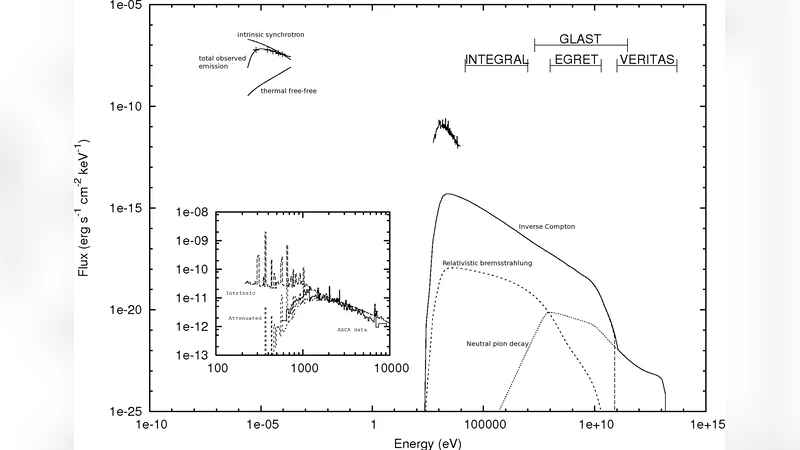
The powerful wind-wind collision in massive star binaries creates a region of high temperature plasma and accelerates particles to relativistic energies. I briefly summarize the hydrodynamics of the wind-wind interaction and the observational evidence, including recent $\gamma$-ray detections, of non-thermal emission from such systems. I then discuss existing models of the non-thermal emission and their application to date, before concluding with some future prospects.
💡 Research Summary
The paper provides a concise yet comprehensive review of non‑thermal emission processes in massive star binaries where the winds of the two stars collide at supersonic speeds. The author begins by outlining the hydrodynamics of the wind‑wind collision region (CWR). The location of the contact discontinuity is set by the ram‑pressure balance of the two stellar winds, which are characterized by their mass‑loss rates (Ṁ) and terminal velocities (v∞). The collision generates strong shocks that heat the plasma to temperatures of 10⁷–10⁸ K, producing the well‑known thermal X‑ray component. In parallel, a fraction of the shock‑accelerated particles—both electrons and ions—reach relativistic energies via diffusive shock acceleration (DSA). Relativistic electrons emit synchrotron radiation in the amplified magnetic fields of the CWR and up‑scatter the intense stellar UV/optical photon field through inverse‑Compton (IC) scattering, creating a broadband spectrum that can extend from radio frequencies to GeV–TeV γ‑rays. Relativistic ions (mainly protons) interact with the dense post‑shock gas, leading to neutral‑pion (π⁰) production and subsequent γ‑ray emission, as well as a flux of high‑energy neutrinos.
Observational evidence for these processes has accumulated over the past two decades. Radio interferometry has revealed non‑thermal synchrotron components in several colliding‑wind binaries (e.g., WR 140, WR 147, η Carinae), often showing orbital‑phase‑dependent variability that traces the changing geometry of the CWR. X‑ray spectroscopy with Chandra and XMM‑Newton distinguishes a hard, non‑thermal tail from the dominant thermal emission, especially near periastron when the shock is strongest. The most compelling recent breakthroughs are the detections of GeV–TeV γ‑rays by space‑based instruments (Fermi‑LAT, AGILE) and ground‑based Cherenkov arrays (H.E.S.S., MAGIC, VERITAS). η Carinae, for instance, exhibits a persistent 0.1–10 GeV component that can be modeled as a combination of IC scattering and π⁰‑decay, while WR 11 (γ² Vel) shows a tentative TeV signal, suggesting that particle acceleration to multi‑TeV energies is not exceptional.
The paper then surveys the evolution of theoretical models. Early one‑dimensional, steady‑state treatments assumed a planar shock and prescribed particle spectra, providing a first order fit to radio and γ‑ray data but ignoring orbital motion and asymmetries. Two‑dimensional axisymmetric models introduced curvature of the shock front, allowed for spatially varying magnetic fields, and incorporated radiative cooling, thereby improving fits to multi‑wavelength light curves. The latest generation of three‑dimensional magnetohydrodynamic (MHD) simulations couples full orbital dynamics, anisotropic wind launching, and magnetic field amplification, while embedding test‑particle or kinetic modules that follow electron and proton populations in time. These sophisticated models have successfully reproduced the phase‑locked γ‑ray light curves of η Carinae and WR 140, and they highlight the importance of parameters such as the acceleration efficiency (ε_acc), the post‑shock magnetic field strength (B), and the competition between radiative (IC, synchrotron) and hadronic (p‑p) loss timescales.
Despite these advances, significant uncertainties remain. The acceleration efficiency inferred from observations spans orders of magnitude (10⁻⁴–10⁻²), magnetic field configurations are poorly constrained, and the relative contributions of leptonic versus hadronic processes are still debated. The author emphasizes four future directions: (1) coordinated multi‑wavelength campaigns (radio, X‑ray, GeV/TeV γ‑ray, and neutrino) to capture simultaneous spectral snapshots across orbital phases; (2) higher‑resolution 3D MHD‑particle simulations that explicitly model magnetic reconnection and turbulence, which may boost particle injection rates; (3) exploitation of next‑generation γ‑ray observatories (CTA) and neutrino detectors (IceCube‑Gen2) to search for the predicted hadronic signatures; and (4) development of non‑linear DSA frameworks that self‑consistently treat magnetic field amplification and back‑reaction of accelerated particles on the shock structure. By pursuing these avenues, the community aims to quantify the role of colliding‑wind binaries as Galactic sources of cosmic rays, high‑energy photons, and neutrinos, and to integrate them into broader models of stellar feedback and galactic energetics.
Comments & Academic Discussion
Loading comments...
Leave a Comment