A dynamical network approach to uncovering hidden causality relationships in collective neuron firings
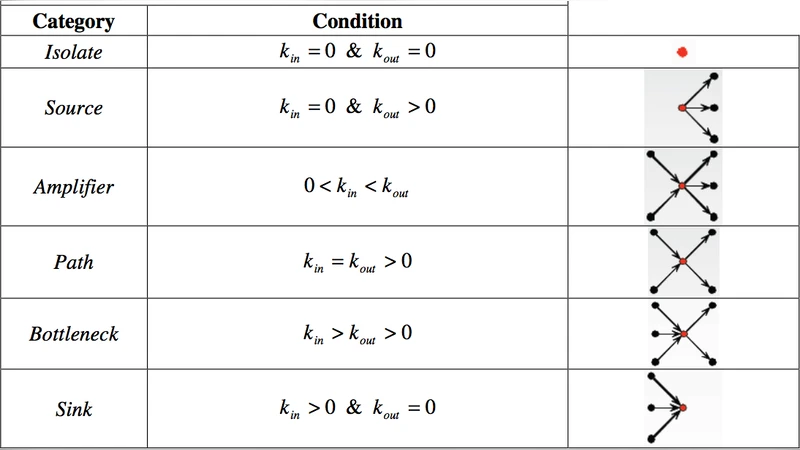
We analyze the synchronous firings of the salamander ganglion cells from the perspective of the complex network viewpoint where the network’s links reflect the correlated behavior of firings. We study the time-aggregated properties of the resulting network focusing on its topological features. The behavior of pairwise correlations has been inspected in order to construct an appropriate measure that will serve as a weight of network connection.
💡 Research Summary
**
The paper presents a novel framework for analyzing collective neuronal firing patterns by treating the spike train data as a dynamical complex network. The authors focus on recordings from salamander retinal ganglion cells, obtained with a multi‑electrode array at sub‑millisecond resolution. After standard preprocessing (spike detection, alignment, and noise removal), each neuron is represented as a node, and directed edges are constructed based on a quantitative measure of pairwise causal influence.
To capture causality, the authors compute the probability distribution of inter‑spike time differences Δt for every ordered pair (i, j). Specifically, they estimate P₍ᵢⱼ₎(Δt) – the likelihood that neuron i fires and neuron j fires Δt milliseconds later – using kernel density estimation on the full dataset. The asymmetry between P₍ᵢⱼ₎(Δt) and P₍ⱼᵢ₎(Δt) reflects a directional bias: if spikes from i tend to precede those from j more often than the reverse, a causal influence from i to j is inferred. The authors formalize this bias as a weight
f₍ᵢⱼ₎ = ∫₀^{τ}
Comments & Academic Discussion
Loading comments...
Leave a Comment