General-purpose and dedicated regimes in the use of telescopes
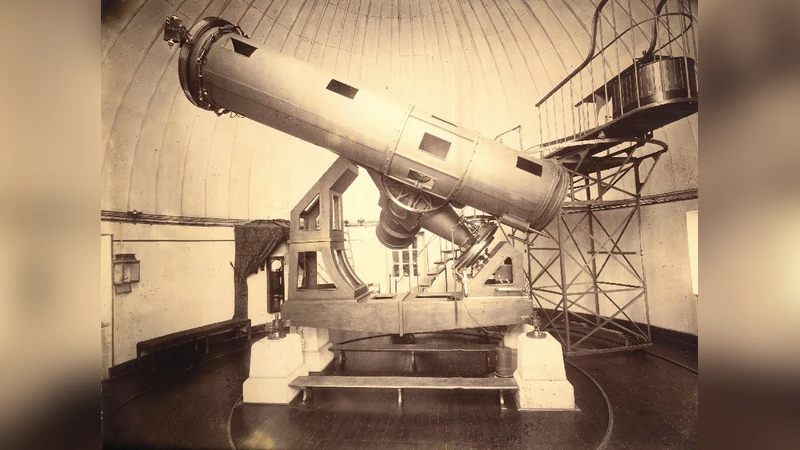
We propose a sociohistorical framework for better understanding the evolution in the use of telescopes. We define two regimes of use : a general-purpose (or survey) one, where the telescope governs research, and a dedicated one, in which the telescope is tailored to a specific project which includes a network of other tools. This conceptual framework is first applied to the history of the 80-cm telescope of Toulouse Observatory, which is initially anchored in a general-purpose regime linked to astrometry. After a transition in the 1930s, it is integrated in a dedicated regime centered on astrophysics. This evolution is compared to that of a very similar instrument, the 80-cm telescope of Marseille Observatory, which converts early on to the dedicated regime with the Fabry-Perot interferometer around 1910, and, after a period of idleness, is again used in the survey mode after WWII. To further validate our new concept, we apply it to the telescopes of Washburn Observatory, of Dominion Astrophysical Observatory and of Meudon Observatory. The uses of the different telescopes illustrate various combinations of the two regimes, which can be successive, simultaneous or alternating. This conceptual framework is likely to be applicable to other fields of pure and applied science.
💡 Research Summary
The paper introduces a socio‑historical framework for interpreting the evolution of telescope use, distinguishing two regimes: a “general‑purpose” (or survey) regime in which the telescope itself drives the research agenda, and a “dedicated” regime in which the instrument is configured to serve a specific scientific project that typically involves a network of auxiliary tools. In the general‑purpose regime the telescope is the primary research driver; standardised programmes such as astrometric cataloguing, stellar position measurements, or satellite orbit tracking dominate, and the instrument’s capabilities dictate the questions asked. In the dedicated regime the research question precedes the instrument: a particular problem (e.g., high‑resolution spectroscopy, interferometric mapping, or planetary atmosphere studies) determines the modifications, accessories, and supporting infrastructure that are attached to the telescope, turning the telescope into a specialised tool within a broader project.
The authors first apply this dichotomy to the 80‑cm refractor of the Toulouse Observatory. From its installation in the late 19th century until the early 1930s the telescope operated almost exclusively in the general‑purpose mode, supporting French astrometric programmes and contributing to star‑position catalogues. With the rise of astrophysics in the 1930s, the observatory retrofitted the instrument with spectrographs, new photographic plates, and a dedicated data‑reduction pipeline, integrating it into a project‑oriented network focused on stellar spectra, galactic dynamics and later on planetary studies. This shift was not merely technical; it required a reallocation of staff, a change in funding priorities, and a redefinition of the observatory’s scientific identity.
A contrasting case is the 80‑cm telescope of the Marseille Observatory. By 1910 it had already been equipped with a Fabry‑Pérot interferometer and was employed almost exclusively for a dedicated programme measuring rotation curves of nebular objects. The instrument’s design was therefore driven by a specific scientific goal from the outset, illustrating that a dedicated regime can be established at the very beginning of an instrument’s life. After World War II, however, damage to the hardware and a shortage of resources forced a return to a more general‑purpose use, with the telescope again participating in star‑position surveys and photometric programmes. This reversal demonstrates that dedicated regimes are vulnerable to external shocks and that a latent general‑purpose infrastructure can act as a fallback.
Further validation comes from three additional observatories. At Washburn Observatory (USA) the 15‑inch refractor simultaneously supported a long‑term variable‑star survey (general‑purpose) and a targeted project that required a custom photometric attachment, showing that the two regimes can coexist. The Dominion Astrophysical Observatory’s 1.8‑m reflector was used for a massive spectroscopic survey while also feeding high‑resolution imaging of star‑forming regions, again exemplifying a hybrid operation. At Meudon Observatory the 1‑m telescope began with astrometric work, shifted in the 1920s to a dedicated solar‑physics programme after a major optical upgrade, and later returned to catalogue work in the 1950s, illustrating a cyclical alternation of regimes.
Across all cases the authors observe that transitions between regimes are driven by a combination of scientific priorities, technological breakthroughs, funding environments, and institutional cultures. Dedicated regimes tend to be sustained when they are embedded in a larger project network that provides stable resources and clear scientific deliverables. General‑purpose regimes, by contrast, function as a baseline infrastructure that preserves the observatory’s relevance during periods of uncertainty or when new scientific questions emerge. The paper argues that the two regimes are not mutually exclusive; they can be layered, sequential, or interleaved depending on context.
Finally, the authors suggest that this conceptual framework is transferable beyond astronomy. Fields such as particle physics, molecular biology, and Earth sciences also rely on large, expensive instruments whose use can be parsed into general‑purpose survey modes versus dedicated, project‑specific configurations. Recognising which regime dominates at a given time can help policy makers and research managers allocate funds more efficiently, design flexible instrumentation strategies, and anticipate the institutional changes required when a field pivots from exploratory surveys to hypothesis‑driven investigations.
In sum, by articulating the dynamics of general‑purpose and dedicated regimes and mapping their historical trajectories across several telescopes, the paper provides a robust analytical tool for understanding how scientific instruments shape, and are shaped by, evolving research agendas. This insight has practical implications for future telescope design, observatory management, and the broader governance of large‑scale scientific infrastructure.
Comments & Academic Discussion
Loading comments...
Leave a Comment