Finding new sub-stellar co-moving companion candidates - the case of CT Cha
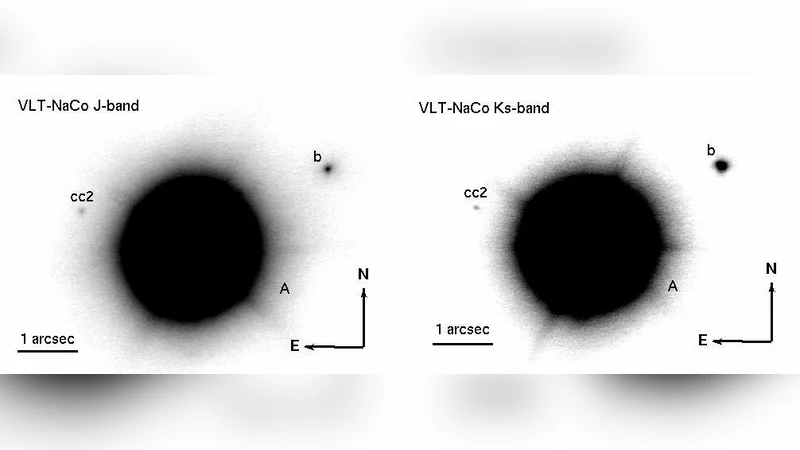
We have searched for close and faint companions around T Tauri stars in the Chamaeleon star forming region. Two epochs of direct imaging data were taken with the VLT Adaptive Optics instrument NaCo in February 2006 and March 2007 in Ks band for the classical T Tauri star CT Cha together with a Hipparcos binary for astrometric calibration. Moreover a J band image was taken in March 2007 to get color information. We found CT Cha to have a very faint companion (Ks{0} = 14.6 mag) of ~ 2.67" separation corresponding to ~ 440 AU. We show that CT Cha A and the faint object form a common proper motion pair and that the companion is not a non-moving background object (with 4 sigma significance).
💡 Research Summary
The authors present a systematic search for faint, close companions around young T Tauri stars in the Chamaeleon I star‑forming region, focusing on the classical T Tauri star CT Cha. Using the VLT’s adaptive‑optics imager NaCo, they obtained high‑resolution near‑infrared images in the Ks band at two epochs (February 2006 and March 2007). A contemporaneous observation of a Hipparcos binary provided an astrometric reference to calibrate the pixel scale and detector orientation with sub‑mas precision. In addition, a J‑band image taken in March 2007 supplied colour information for any detected source.
In the combined data a very faint object (Ks ≈ 14.6 mag) was identified at an angular separation of 2.67″ from CT Cha, corresponding to a projected physical distance of roughly 440 AU at the assumed distance of ~165 pc. The authors measured the relative position of the candidate with respect to CT Cha in both epochs. By propagating CT Cha’s known proper motion (≈ −21 mas yr⁻¹ in right ascension, −2 mas yr⁻¹ in declination) and parallax, they calculated the expected motion of a stationary background star over the 1.1‑year baseline. The observed shift of the candidate is consistent with zero within the measurement uncertainties and deviates from the background‑star hypothesis by 4 σ, establishing common proper motion at a high confidence level.
Photometric analysis using the J‑band data yields J ≈ 15.8 mag, giving a J−Ks colour of about 1.2 mag. This red colour is typical of cool, low‑mass objects (effective temperatures of 2500–3000 K). Assuming the age of the Chamaeleon I association (≈ 2–3 Myr) and the distance, evolutionary models place the companion’s mass in the brown‑dwarf to massive‑planet regime (roughly 10–30 M_Jup), although the exact value remains uncertain without spectroscopy.
The study demonstrates the power of adaptive‑optics imaging combined with rigorous astrometric calibration to discriminate between true companions and background contaminants, even at separations of several hundred AU. The detection of a sub‑stellar object at such a wide orbit challenges traditional core‑accretion models, which predict planet formation primarily within ~30 AU, and instead supports scenarios such as gravitational instability in the outer disk or formation via dynamical interactions in a clustered environment.
The authors conclude by recommending follow‑up high‑resolution near‑infrared spectroscopy (e.g., with VLT/CRIRES+, JWST/NIRSpec, or future ELT instruments) to determine the companion’s spectral type, surface gravity, and atmospheric composition. Such data would refine the mass estimate, confirm its sub‑stellar nature, and provide a benchmark for testing formation theories of wide‑orbit brown dwarfs and giant planets around young stars. The work thus adds an important data point to the emerging census of wide, low‑mass companions and underscores the need for continued deep, high‑contrast imaging surveys of nearby star‑forming regions.
Comments & Academic Discussion
Loading comments...
Leave a Comment