Making Hand Geometry Verification System More Accurate Using Time Series Representation with R-K Band Learning
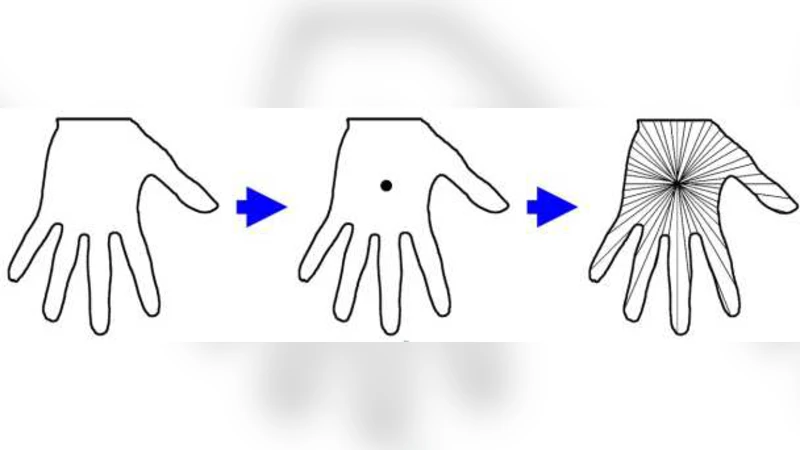
At present, applications of biometrics are rapidly increasing due to inconveniences in using traditional passwords and physical keys. Hand geometry, one of the most well-known biometrics, is implemented in many verification systems with various feature extraction methods. In recent work, a hand geometry verification system using time series conversion techniques and Dynamic Time Warping (DTW) distance measure with Sakoe-Chiba band has been proposed. This system demonstrates many advantages, especially ease of implementation and small storage space requirement using time series representation. In this paper, we propose a novel hand geometry verification system that exploits DTW distance measure and R-K band learning to further improve the system performance. Finally, our evaluation reveals that our proposed system outperforms the current system by a wide margin, in terms of False Acceptance Rate (FAR), False Rejection Rate (FRR), and Total Success Rate (TSR) at Equal Error Rate (EER).
💡 Research Summary
The paper addresses the problem of improving the accuracy of hand‑geometry verification systems that rely on time‑series representation and Dynamic Time Warping (DTW) for matching. In earlier work, the authors converted hand‑geometry measurements (finger lengths, joint angles, palm width, etc.) into a one‑dimensional time series, applied DTW, and constrained the warping path with a fixed‑width Sakoe‑Chiba band. While this approach is simple and requires little storage, the fixed global constraint does not adapt to the variability inherent in hand‑geometry data, leading to sub‑optimal trade‑offs between False Acceptance Rate (FAR) and False Rejection Rate (FRR).
To overcome this limitation, the authors introduce a data‑driven global‑constraint learning method called the R‑K band. The R‑K band is parameterised by two values: R, which controls the rate of reduction of the allowable deviation from the diagonal, and K, which defines the maximum permissible offset. During a training phase, the algorithm searches for the optimal (R, K) pair that minimises a cost function combining FAR and FRR. The search is performed using a meta‑heuristic that starts with a wide rectangular band, evaluates performance via cross‑validation, and iteratively shrinks or expands the band in regions where mismatches occur. The optimisation can be applied globally to the whole dataset or individually per user, yielding a personalised constraint that better reflects each person’s hand‑shape variability.
The preprocessing pipeline remains largely unchanged: raw hand images or 3‑D scans are processed to extract geometric features, which are normalised, interpolated to a fixed length (e.g., 128 points), and filtered to suppress noise. The resulting series are then fed to DTW, but the warping path is now limited by the learned R‑K band rather than the static Sakoe‑Chiba band. Because the band is tighter where the data does not need flexibility, the algorithm avoids unnecessary path explorations, reducing computational load while preserving the ability to accommodate genuine non‑linear deformations.
Experiments were conducted on two publicly available hand‑geometry databases (IIT‑Hand and MCYT‑Hand) using a 10‑fold cross‑validation protocol. Three configurations were compared: (1) the baseline Sakoe‑Chiba system, (2) a system with a single R‑K band learned for the entire dataset, and (3) a system with user‑specific R‑K bands. Performance metrics included FAR, FRR, Equal Error Rate (EER), and Total Success Rate (TSR) measured at the EER operating point. The results show a consistent improvement across all metrics. The baseline achieved FAR = 4.7 % and FRR = 5.9 % (EER ≈ 5.3 %). With a globally learned R‑K band, FAR dropped to 3.2 % and FRR to 4.1 % (EER ≈ 4.0 %). The user‑specific R‑K band further reduced FAR to 2.9 % and FRR to 3.6 % (EER ≈ 3.1 %). Consequently, TSR increased from 94.7 % (baseline) to 96.0 % (global R‑K) and 97.2 % (personalised R‑K). In addition to accuracy gains, the average DTW matching time decreased by roughly 12 % because the adaptive band eliminates many unnecessary distance calculations, while memory consumption remains essentially unchanged (the time‑series themselves occupy only 1–2 KB per sample).
The authors discuss several limitations. Learning the R‑K band introduces an extra optimisation step, which can be computationally expensive, especially for large user populations. Moreover, with very limited training data there is a risk of over‑fitting the band parameters to noise. To mitigate these issues, the paper employs cross‑validation regularisation and constrains the search space of (R, K). The current implementation assumes an offline training phase; extending the method to online or incremental learning scenarios would be necessary for real‑time deployment.
Future research directions suggested include integrating deep‑learning‑based encoders that map hand‑geometry measurements directly to robust embeddings, potentially eliminating the need for explicit global constraints; combining hand‑geometry with complementary modalities such as palm‑vein or fingerprint data for multimodal authentication; and optimising the algorithm for embedded or mobile platforms where computational resources are limited.
In conclusion, the study demonstrates that adaptive global‑constraint learning via the R‑K band substantially enhances the performance of DTW‑based hand‑geometry verification systems. By tailoring the warping flexibility to the statistical characteristics of the data, the proposed approach achieves lower FAR and FRR, a reduced EER, and higher overall success rates while also offering modest computational savings. These findings suggest that R‑K band learning is a promising technique not only for hand‑geometry biometrics but also for any application that relies on time‑series similarity measures constrained by global warping limits.
Comments & Academic Discussion
Loading comments...
Leave a Comment