Paradigm shifts in solar dynamo modeling
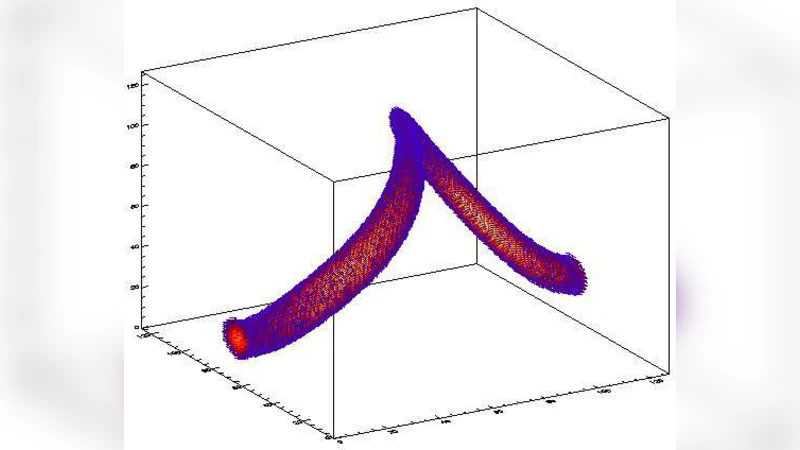
Selected topics in solar dynamo theory are being highlighted. The possible relevance of the near-surface shear layer is discussed. The role of turbulent downward pumping is mentioned in connection with earlier concerns that a dynamo-generated magnetic field would be rapidly lost from the convection zone by magnetic buoyancy. It is argued that shear-mediated small-scale magnetic helicity fluxes are responsible for the success of some of the recent large-scale dynamo simulations. These fluxes help in disposing of excess small-scale magnetic helicity. This small-scale magnetic helicity, in turn, is generated in response to the production of an overall tilt in each Parker loop. Some preliminary calculations of this helicity flux are presented for a system with uniform shear. In the Sun the effects of magnetic helicity fluxes may be seen in coronal mass ejections shedding large amounts of magnetic helicity.
💡 Research Summary
The paper provides a concise yet comprehensive overview of recent advances in solar dynamo theory, focusing on three interrelated mechanisms that together resolve longstanding difficulties in modeling large‑scale magnetic field generation in the Sun. First, the authors highlight the importance of the near‑surface shear layer (NSSL), a thin region just beneath the photosphere where the rotation rate drops sharply. Unlike the deep tachocline, the NSSL supplies a substantial Ω‑effect locally, allowing strong toroidal fields to be produced close to the surface when combined with the α‑effect from helical turbulence. This challenges the traditional view that only the deep shear zone can sustain the solar dynamo.
Second, the paper revisits the problem of magnetic buoyancy, which in earlier models caused dynamo‑generated fields to rise rapidly out of the convection zone, effectively quenching the dynamo. By incorporating turbulent downward pumping—an effect whereby anisotropic convective turbulence preferentially transports magnetic flux downward—the authors demonstrate that the net transport can outweigh buoyant rise. Numerical experiments and analytic estimates show that the pumping velocity exceeds the buoyant rise speed for realistic solar parameters, thereby retaining the toroidal field within the convection zone and permitting sustained dynamo action.
Third, and most innovatively, the authors discuss shear‑mediated small‑scale magnetic helicity fluxes. When a Parker loop is tilted by the Coriolis force, it acquires a small‑scale helicity of opposite sign to the large‑scale helicity generated by the α‑Ω process. In the presence of uniform shear, this small‑scale helicity is advected horizontally, creating a helicity flux that carries excess helicity out of the dynamo region. The paper presents a simple analytical model that quantifies this flux as proportional to the shear rate S and the turbulent magnetic diffusivity η_t. By exporting the small‑scale helicity, the system avoids the catastrophic quenching predicted by helicity conservation arguments, allowing the large‑scale magnetic field to grow to amplitudes observed in the Sun. This mechanism aligns with recent high‑resolution 3‑D MHD simulations that have successfully produced strong, cyclic large‑scale fields when helicity fluxes are permitted.
Finally, the authors connect these theoretical insights to observable solar phenomena. Coronal mass ejections (CMEs) are identified as a natural outlet for the helicity fluxes predicted by the model. CMEs are known to carry substantial magnetic helicity into interplanetary space, and their occurrence rates and helicity signs are consistent with the helicity transport required to sustain the solar dynamo. The paper therefore proposes a unified picture: the NSSL supplies shear energy, turbulent pumping retains magnetic flux, and shear‑driven helicity fluxes, manifested as CMEs, prevent helicity buildup that would otherwise suppress the dynamo.
In conclusion, the work argues that a paradigm shift is needed: solar dynamo modeling must move beyond deep‑seated shear and simple α‑Ω formulations to incorporate near‑surface shear, anisotropic turbulent transport, and helicity fluxes. The authors suggest future research directions, including non‑uniform shear profiles, realistic turbulence spectra, and fully coupled magneto‑hydrodynamic simulations that self‑consistently generate CMEs, to further validate and refine this emerging framework.
Comments & Academic Discussion
Loading comments...
Leave a Comment