Global alignment of protein-protein interaction networks by graph matching methods
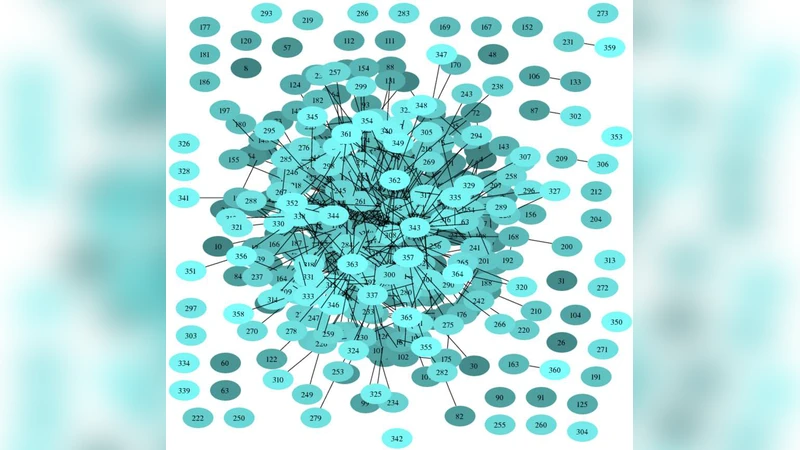
Aligning protein-protein interaction (PPI) networks of different species has drawn a considerable interest recently. This problem is important to investigate evolutionary conserved pathways or protein complexes across species, and to help in the identification of functional orthologs through the detection of conserved interactions. It is however a difficult combinatorial problem, for which only heuristic methods have been proposed so far. We reformulate the PPI alignment as a graph matching problem, and investigate how state-of-the-art graph matching algorithms can be used for that purpose. We differentiate between two alignment problems, depending on whether strict constraints on protein matches are given, based on sequence similarity, or whether the goal is instead to find an optimal compromise between sequence similarity and interaction conservation in the alignment. We propose new methods for both cases, and assess their performance on the alignment of the yeast and fly PPI networks. The new methods consistently outperform state-of-the-art algorithms, retrieving in particular 78% more conserved interactions than IsoRank for a given level of sequence similarity. Availability:http://cbio.ensmp.fr/proj/graphm_ppi/, additional data and codes are available upon request. Contact: jean-philippe.vert@mines-paristech.fr
💡 Research Summary
The paper tackles the challenging problem of aligning protein‑protein interaction (PPI) networks from different species by reformulating it as a graph‑matching task. Traditional approaches have relied on sequence similarity heuristics or on spectral methods such as IsoRank, which often struggle to balance computational tractability with biological relevance when networks become large. The authors propose a unified framework that treats the alignment of two undirected graphs G₁(V₁,E₁) and G₂(V₂,E₂) as a node‑mapping problem π:V₁→V₂. Two distinct scenarios are considered. In the “strict” setting, only protein pairs whose sequence similarity exceeds a user‑defined threshold τ are allowed to be matched, thereby enforcing a hard orthology constraint. In the “flexible” setting, a weighted objective function combines interaction conservation and sequence similarity:
maxπ λ·|{(u,v)∈E₁ : (π(u),π(v))∈E₂}| + (1‑λ)·∑i∈V₁ S(i,π(i)),
where S(i,j) denotes normalized BLAST‑derived similarity and λ∈
Comments & Academic Discussion
Loading comments...
Leave a Comment